Main Points
- Most teams face four or five of these challenges at once, and they feed each other.
- Fixing the release path first makes every later fix cheaper and safer.
- Rank challenges by monthly cost in developer days and by how cheap the first fix is.
- Measure the same number before and after each fix, and share it with the whole team.
Software teams rarely fail for lack of talent. They fail because the same eight problems show up in different forms, and each one feeds the others. Slow releases lead to bigger batches, bigger batches cause failures, and failures make everyone cautious.
These are the challenges I see most often in software engineering consulting work, with what each one looks like from the inside and the first moves that help. The order is roughly the order in which they hurt growing teams.
| Challenge | First sign | First move |
|---|---|---|
| 1. Unclear and Shifting Requirements | Rework after demos | One decision maker and a first demo in week one |
| 2. Technical Debt That Compounds | Estimates growing every quarter | Rank debt by change and failure frequency |
| 3. Slow, Manual Releases | Releases people dread | Automate the slowest repeated step |
| 4. Weak or Missing Test Coverage on Critical Paths | Fear of changing code | Tests on the five riskiest paths |
| 5. Knowledge Locked in a Few Heads | Single points of failure | Pair on every single-owner task |
| 6. Architecture That No Longer Fits the Product | Changes that ripple widely | Fix the worst seam first |
| 7. Communication and Handoff Gaps Between Teams | Tickets waiting between teams | Measure wait time per state |
| 8. Hiring, Onboarding and Retention Pressure | Long ramp-up for new hires | Script the local setup |
Unclear and Shifting Requirements
Developers build the wrong thing, then rebuild it. Work that looked finished in sprint two gets reopened in sprint five because a stakeholder saw the result for the first time.
The cost is not only rework. Trust drops, estimates inflate and developers start to guard themselves with padding. Most of the damage comes from the gap between the first conversation and the first demo.
What Helps First
- Write the problem and the success test before any design talk.
- Show a rough working slice within the first week.
- Name one person who can say yes or no for the business.
- Keep a visible list of what is out of scope.
Technical Debt That Compounds
Every shortcut from an old deadline sits in the code and charges interest. New features take longer because they touch fragile areas, and estimates grow while output stays flat.
The trap is treating debt as a single pile. Some of it costs you every sprint and some of it sits quietly in code nobody changes. Teams that fund all of it fail, and teams that fund none of it slow down.
Moves That Work
- List debt items by how often the code changes and breaks.
- Reserve a fixed share of every sprint for the top of the list.
- Fix debt next to a feature that touches the same code.
- Stop adding new debt knowingly without writing it down.
Slow, Manual Releases
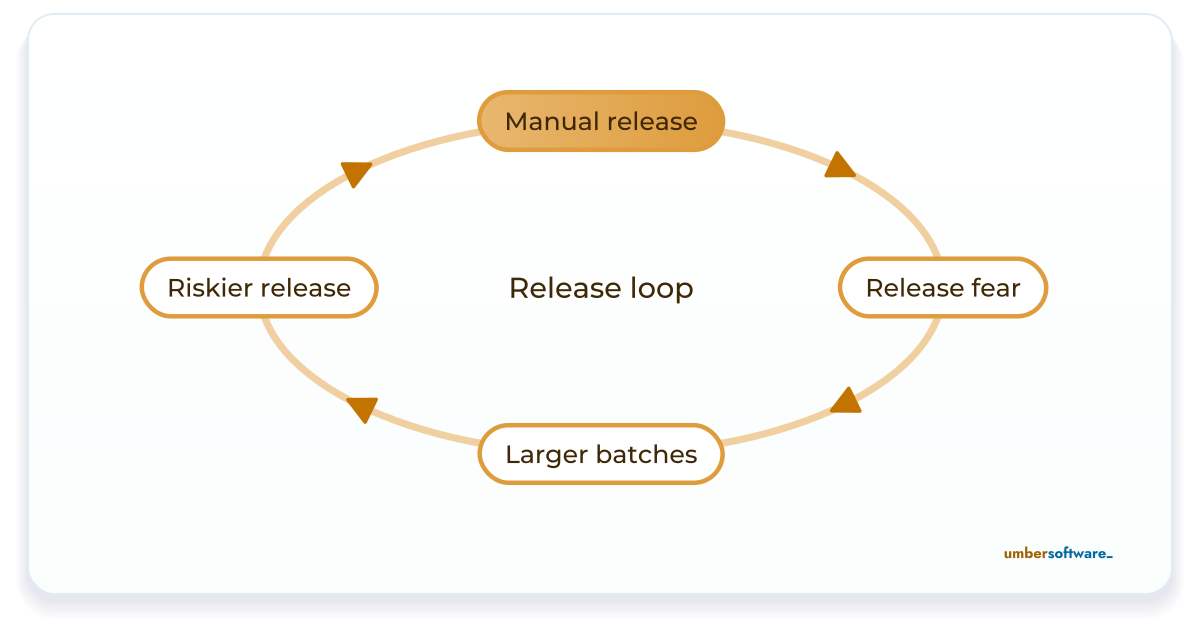
A release that needs a checklist, a weekend and two people on call makes everybody release less often. Bigger batches then raise the risk, which makes the next release scarier.
This loop is one of the most common and the easiest to break. Automating one repeated step at a time gives faster releases within a few months and reduces fear along the way. The software engineering roadmap puts release work in months three and four for that reason.
Where to Start
- Time every step of your last release and rank them.
- Automate the slowest repeated step first.
- Add a one-command rollback.
- Shrink batch size before adding more checks.
Weak or Missing Test Coverage on Critical Paths
When tests are thin, every change feels dangerous. Developers hesitate, reviews grow longer and bugs reach customers.
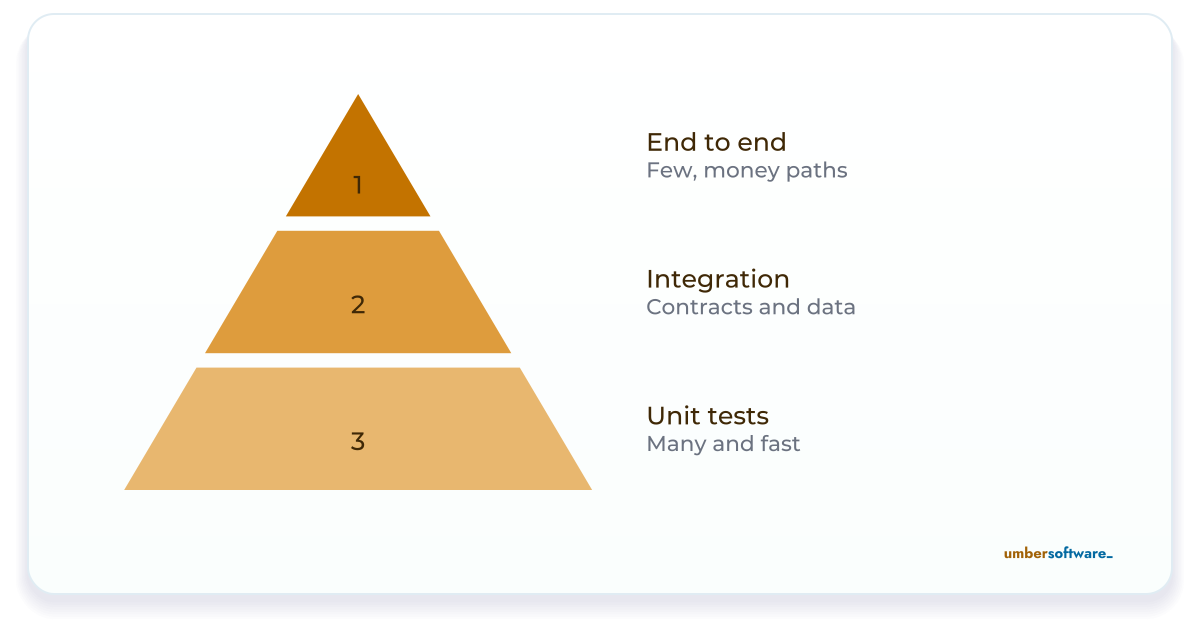
Chasing a coverage percentage does not solve it. A small suite aimed at the five code paths that cost you the most when they fail beats a large suite of shallow tests.
First Fixes
- Use your incident list to pick the riskiest five paths.
- Write tests at the lowest level that proves the behavior.
- Keep the end-to-end set small.
- Fix or delete flaky tests within a week.
Knowledge Locked in a Few Heads
If two developers understand the build, the deploy and the oldest service, a holiday becomes a risk and a resignation becomes a crisis. Everybody else works around them.
The fix is not more documentation for its own sake. It is spreading real work: pairing on incidents, rotating on-call and making one person explain a system to another every month.
Practical Steps
- Map who can change and deploy each system.
- Pair a second person on every task in the single-owner areas.
- Rotate on-call so everybody sees production.
- Write one-page system maps, not manuals.
Architecture That No Longer Fits the Product
A structure that worked for the first customers can strain at ten times the load or three times the team. Symptoms are coupling, slow builds and changes that ripple through unrelated parts.
A rewrite is rarely the answer. Start by finding which boundaries cause the most pain and fix those, a step at a time. An architecture review can tell you whether targeted fixes are enough.
Getting Unstuck
- Map the dependencies between the main parts.
- Find the modules that change together most often.
- Introduce clear interfaces at the worst seams.
- Move one piece at a time and check after each move.
Communication and Handoff Gaps Between Teams
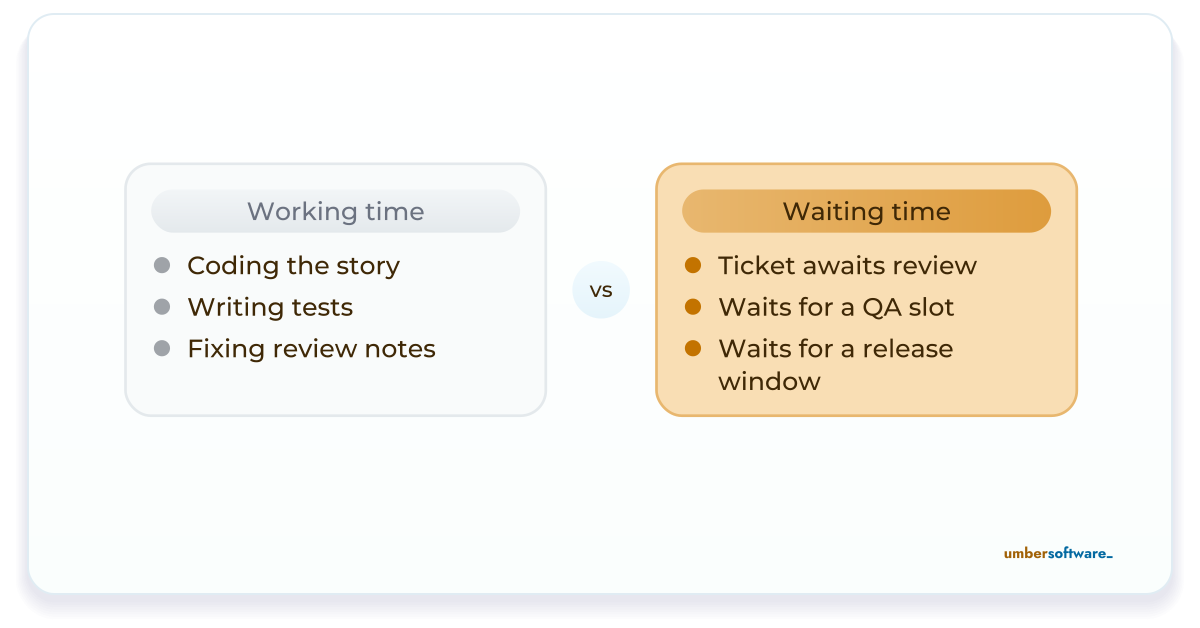
Work waits in queues between product, development, testing and operations. Each handoff loses context, and each team optimizes for its own part.
Measure the wait, not the work. A story that takes two days to code and six days to cross three handoffs has a flow problem. Cross-functional teams and shared ownership of production remove most of it. Tracking software engineering metrics such as review turnaround makes the waiting visible.
Changes to Try
- Map the states and handoffs of a typical ticket.
- Measure the waiting time in each state.
- Merge the two handoffs with the longest wait.
- Share one board and one definition of done.
Hiring, Onboarding and Retention Pressure
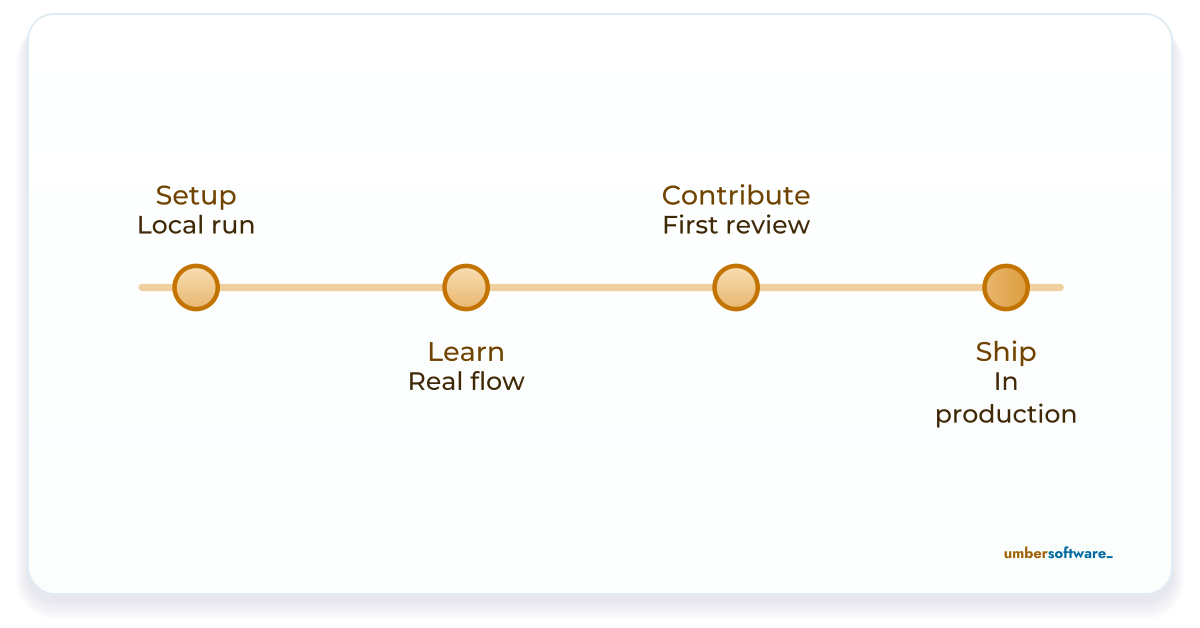
Good engineers are costly to hire, and a new hire who needs two months to ship a first change delays the benefit. Meanwhile your best people get recruiter messages every week.
Teams with clear practices, small releases and modern tooling keep people longer, because daily work feels good. Onboarding speed is a quiet health signal for the whole system. The engineering KPIs leaders watch, such as lead time, also show whether the fixes help.
Early Wins
- Automate local setup with one script.
- Assign a buddy and a small first task.
- Track days to the first merged change.
- Ask each new hire what blocked them and fix the list.
How These Challenges Feed Each Other
The eight problems above form loops, and seeing the loop is more useful than seeing any single item. Manual releases push teams toward big batches. Big batches carry more risk, so failures rise, and each failure makes leaders add approvals. Approvals slow releases further. The loop tightens until the team ships once a month and dreads it.
Technical debt has a similar loop with requirements. Unclear scope produces rushed code, rushed code produces debt, and debt makes every later estimate worse. When estimates grow, stakeholders push for fixed dates, and fixed dates squeeze the time for clarifying scope. Pressure replaces conversation, and the cycle repeats.
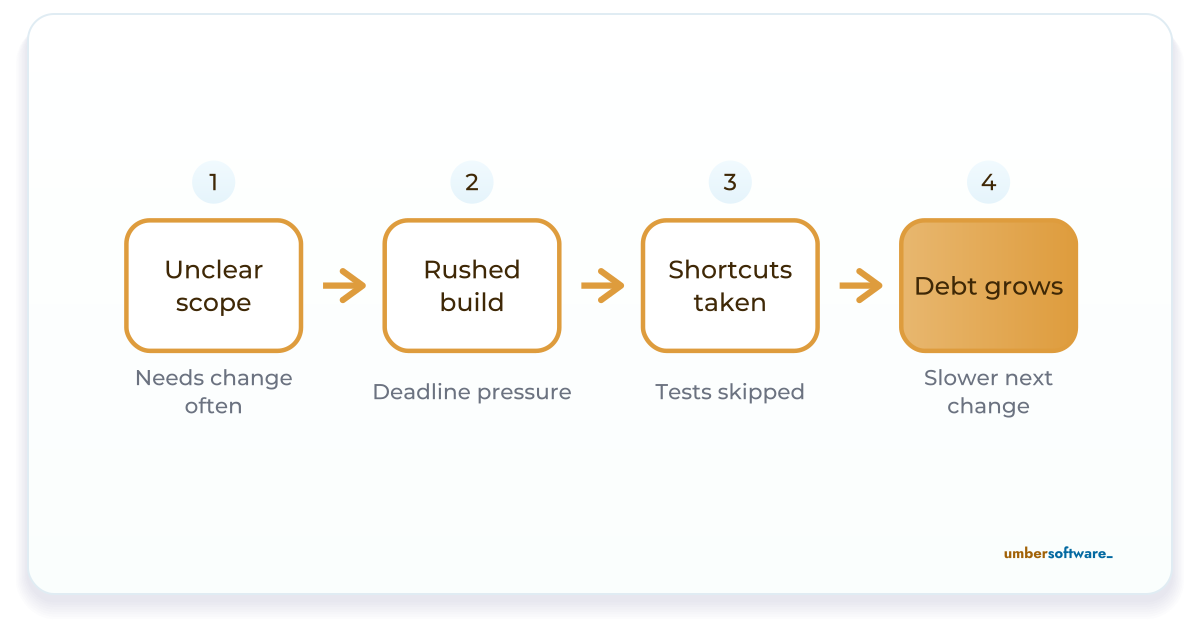
Breaking a loop needs one decisive change at its weakest link. For the release loop that is automation of the slowest step. For the debt loop it is a fixed slice of each sprint and a visible list. The point is to pick a single place where a small input changes the whole cycle, then show the effect in a number everyone trusts. Once the first loop starts to unwind, the team believes the others can too.
How to Decide Which Challenge to Tackle First
Do not try to fix all eight at once. Score each one that applies to you on two questions: how many developer days it costs you per month, and how cheap the first fix is. Start with the highest cost and the cheapest fix.
- Pick the challenge that blocks the most other work, which is usually release speed.
- Choose a first fix that fits in one sprint and shows a number moving.
- Give the fix one owner and one review date.
- Measure the same number before and after, and report it to the whole team.
Write the choice down with the date, the cost estimate and the number you expect to move, so that you can check the result three months later. Teams that do this learn quickly which of their guesses about cost were right, and their next choice gets better. Tool choices can help or distract here. Before you buy anything, read how teams use the software engineering tools that sit behind these fixes, because a tool rarely solves a problem the team has not named.
Questions About Software Engineering Challenges
What Is the Biggest Challenge in Software Engineering Today?
For most product teams it is the cost of change: every feature takes longer as the code, the team and the number of customers grow. Slow releases, technical debt and unclear requirements all feed it. The most useful first step is to measure lead time, so you know how big the problem is.
How Do You Manage Technical Debt Without Stopping Feature Work?
Reserve a fixed share of each sprint, commonly 15 to 20 percent, and spend it on debt in code that changes often. Fix debt next to a feature that touches the same area, so the work has a clear reason. Keep a short, ranked list so the team knows what comes next.
Why Do Software Projects Miss Deadlines?
The usual causes are unclear scope, hidden dependencies, work waiting between teams and estimates that ignore interruptions. Developer speed is rarely the main cause. Measure where work waits and fix the longest queue first, and dates become much more reliable.
How Can a Small Team Handle These Challenges?
Small teams feel the same problems with fewer people to spread them across. Focus on automation of releases and tests, keep batches small and make sure two people understand every critical system. Skip heavy process and pick one measurable improvement per quarter.
When Should We Bring in an Outside Engineering Consultant?
When the same problems keep returning, when nobody has time to lead the fix or when you need an independent view before a big decision. A consultant helps most with the baseline and the first pipeline changes. Your team should own everything afterwards.
How Do You Keep Developers from Burning Out?
Remove the sources of avoidable pain: manual releases, noisy alerts, unclear priorities and heroics during incidents. Rotate on-call fairly, limit work in progress and make sure incident reviews look at the system, not the person. Teams with calm releases rarely struggle to keep people.
Is a Rewrite Ever the Right Answer?
Sometimes, when the technology is unsupported or the structure blocks every important change. Most of the time, targeted fixes at the worst seams cost less and carry less risk. Compare a rewrite, a step-by-step improvement and doing nothing, each with cost and risk, before you decide.
Please note: this guide is general information and not legal, financial or tax advice. Numbers and examples are typical-project estimates; confirm current details with your providers and advisers.
Did this article help you?
Thanks, noted.
Whitney Sorensen
Whitney leads the Umber editorial team and works with the consultants to turn real client projects into practical guides on software selection, custom development, integration and legacy modernization. Before joining Umber, she spent years writing and editing for engineering and IT teams. She has since reviewed architecture audits, system selections and modernization plans from client projects across industries from manufacturing to healthcare. She works remotely from the USA.