Main Points
- Decide in order: customer value, value metric, packaging, price points, testing, then governance.
- Cost sets your floor, competitors give context and customer value sets your ceiling.
- A value metric that grows with customer success matters more than the exact price.
- Test with a small group first and write the rules for discounts before the launch.
Most software companies set their first price in an afternoon and live with it for years. The price then drifts: a discount here, a new plan there, a grandfathered customer base that is quietly paying a rate from three releases ago. A strategy replaces drift with decisions made in a sensible order. If you want a second opinion on yours, software pricing consulting covers the same phases with your own data.
This playbook has six phases. Each one has a goal, the questions to answer and the output you should have at the end. The phases build on each other, so skipping ahead to price points before you settle the metric usually means doing the work twice. If you need the basics first, start with my software pricing guide.
The Six Phases in Short
| Phase | Main question | Output | Typical time |
|---|---|---|---|
| 1. Value | What do customers get, and what is it worth to them? | Segments with value ranges | 2 to 3 weeks |
| 2. Metric | What should the price grow with? | One chosen value metric | 1 to 2 weeks |
| 3. Packaging | Which features go in which plan? | Plan structure with limits | 2 to 3 weeks |
| 4. Price points | What number goes on each plan? | Price list and discount bands | 1 to 2 weeks |
| 5. Testing | Will customers accept and pay this? | Test results and a go or no-go | 3 to 6 weeks |
| 6. Governance | Who may change what, and when? | Rules, owners and a review rhythm | Ongoing |
The times are what I see for a product with a few hundred customers. A larger customer base needs more segments and more care in testing, while an early-stage product can move faster.
Phase 1: Work Out What Your Product Is Worth to Each Segment
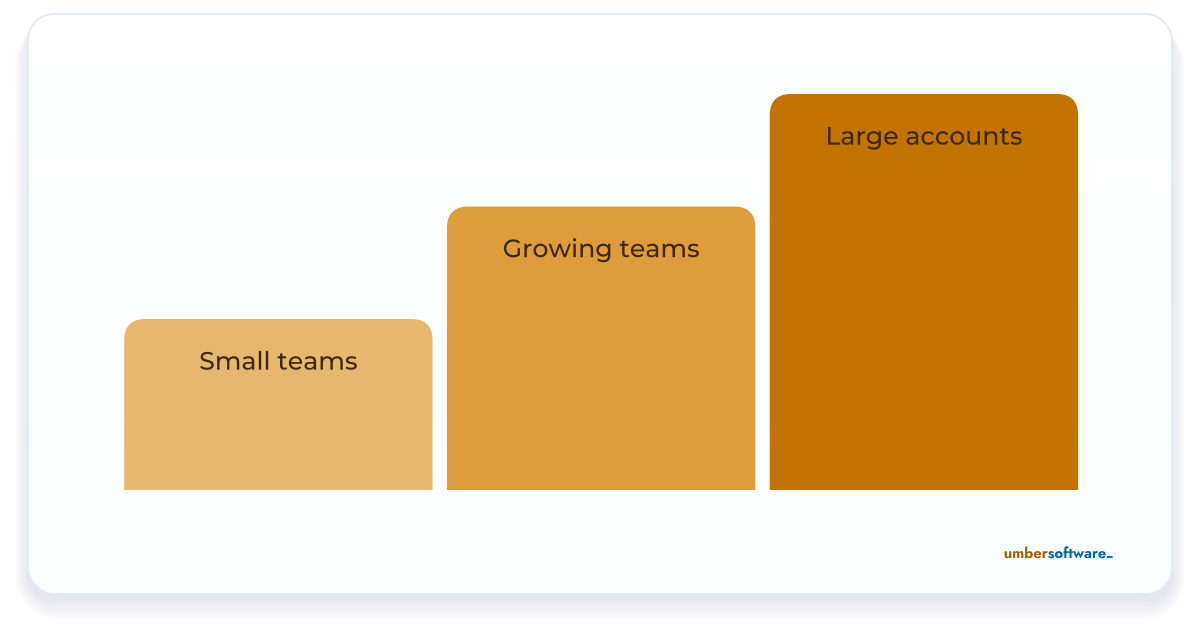
Start with customers, not with a competitor's price page. List your three or four main segments, such as small teams, mid-sized companies and large enterprises, and write down the job each one hires your product to do. Then estimate what that job is worth: hours saved, errors avoided, revenue gained.
Interview ten to fifteen customers, and include some who left. Ask what they used before, what they would do without you and which feature they would miss most. Their answers set the ceiling for your price and tell you which features carry the value. The costs to serve each segment, including support and hosting, set the floor.
A short worked example: a scheduling tool saves a clinic front desk about six hours a week. At a loaded cost of thirty dollars an hour, that is roughly nine hundred dollars a month of value. A price of one hundred and fifty dollars captures a sixth of the value, which leaves the customer plenty of reason to say yes.
Phase 2: Choose a Value Metric That Grows With Your Customer
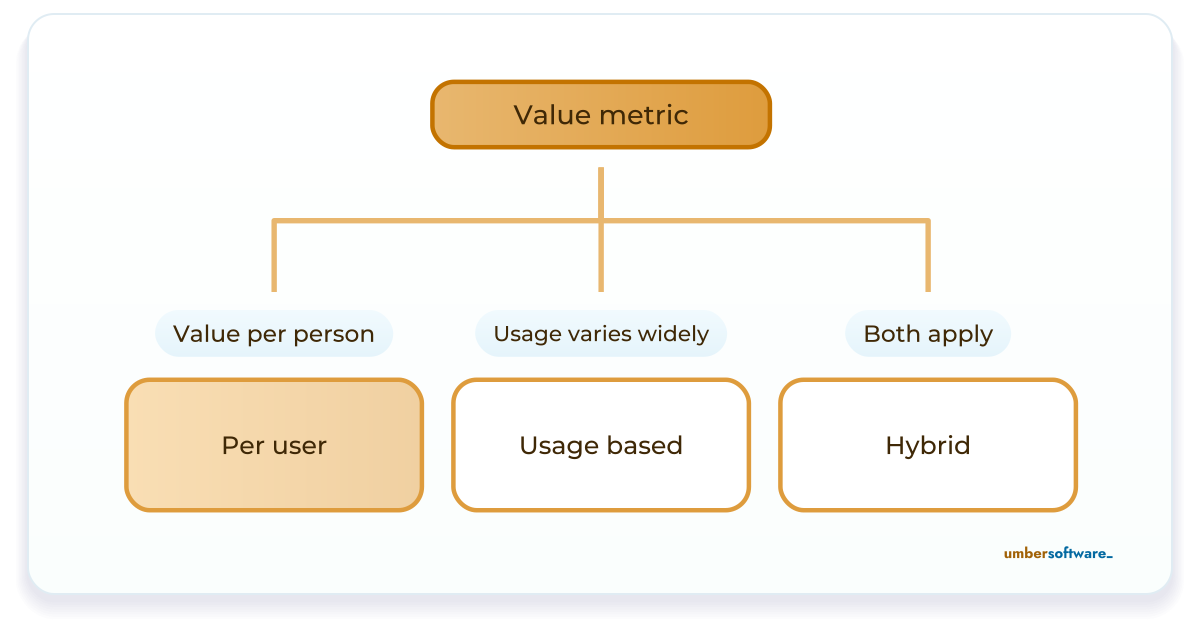
A value metric is the unit you charge by. Seats, projects, transactions, records, locations and API calls are common. A good one rises when the customer gets more value, is easy to understand and is hard to game.
Test each candidate against three questions. Does the customer feel the cost is fair when it rises? Can you measure it without disputes? Does it align with your own costs, so that heavy users do not make you lose money? Per-seat pricing is easy to explain but punishes companies that add occasional users. Usage pricing aligns with value but makes bills harder to predict.
Many products end up with a hybrid: a platform fee that covers the base, plus a metric for growth. This brings predictability for the customer and a path to expansion revenue for you. If you are on the buying side, the same logic helps you ask whether a vendor's metric suits your growth,, which is also the first question I raise in software contract negotiation consulting work.
Phase 3: Package Features Into Plans People Can Choose Between
Packaging answers which features sit in which plan and what limits apply. Start with the segments from phase one and give each one a plan that fits its job. Place features by who needs them: basics for everyone, team features in the middle, security and administration controls for the top.
Watch for two traps. The first is giving the most valuable feature to the cheapest plan, which leaves you with no upgrade path. The second is building so many plans and add-ons that buyers cannot compare them. Three plans and a small set of add-ons is a sensible limit for most products.
Name the limits that drive upgrades, such as users, projects or history length, and set them where your lighter customers stay comfortable and your heavier ones feel the pinch.
Phase 4: Set Price Points and Discount Bands
Now you can write numbers. Place the middle plan first, since most buyers choose it. Then price the lower and higher plans in relation to it, so that each step feels proportionate to the extra value. Check each price against your floor and against the value range from phase one.
Add discount rules at the same time. Decide the discount for annual billing, the size of volume breaks and who can approve exceptions. Without bands, every discussion starts from zero and your list price loses meaning.
| Input | What it reveals | How it sets the price |
|---|---|---|
| Cost to serve | The lowest price that makes a profit | Floor |
| Competitor prices | What buyers compare you with | Context and range |
| Customer value | What the product is worth to the buyer | Ceiling |
| Willingness to pay research | Where acceptance falls off | Target inside the range |
Phase 5: Test Before Every Customer Sees the Change
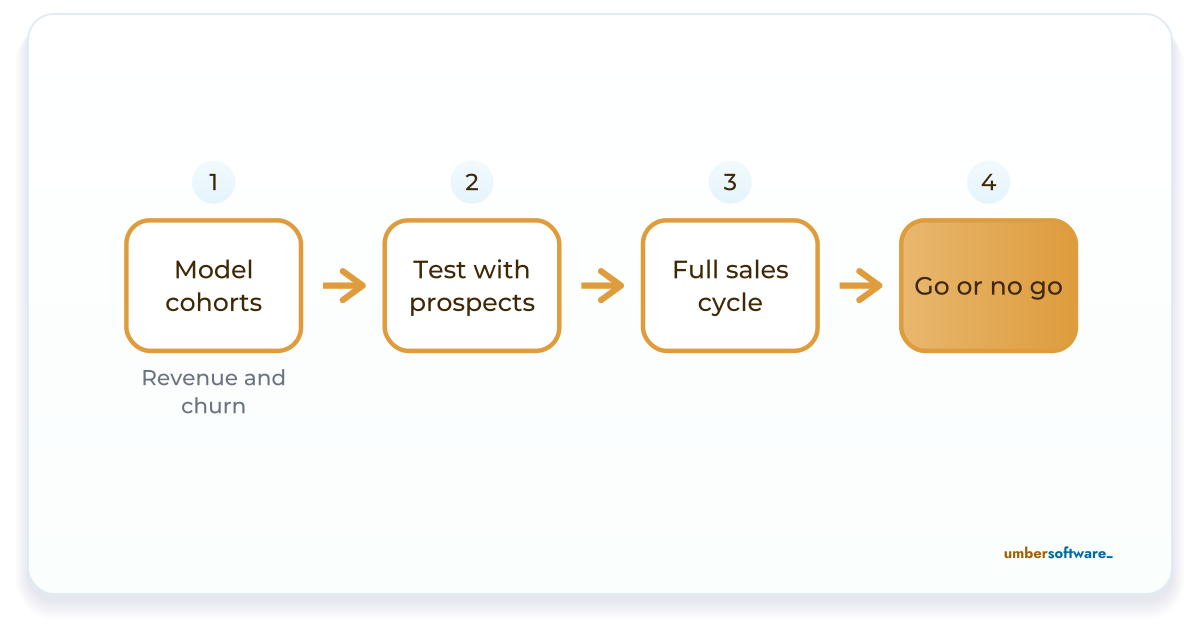
A pricing test can be simple. Show the new packaging to new prospects in one region or one channel, and compare conversion and deal size with the control group. Use customer interviews and short surveys for qualitative signals, such as which plan felt confusing.
For existing customers, model the effect on revenue and churn by cohort before you announce anything. Decide in advance what result counts as a pass, such as conversion within a few points of the current level and no rise in cancellations. Then stick to it.
Keep tests long enough to include a full sales cycle. A test that ends in two weeks on a product with a six-week sales cycle tells you very little.
Phase 6: Write the Rules That Keep Prices in Order
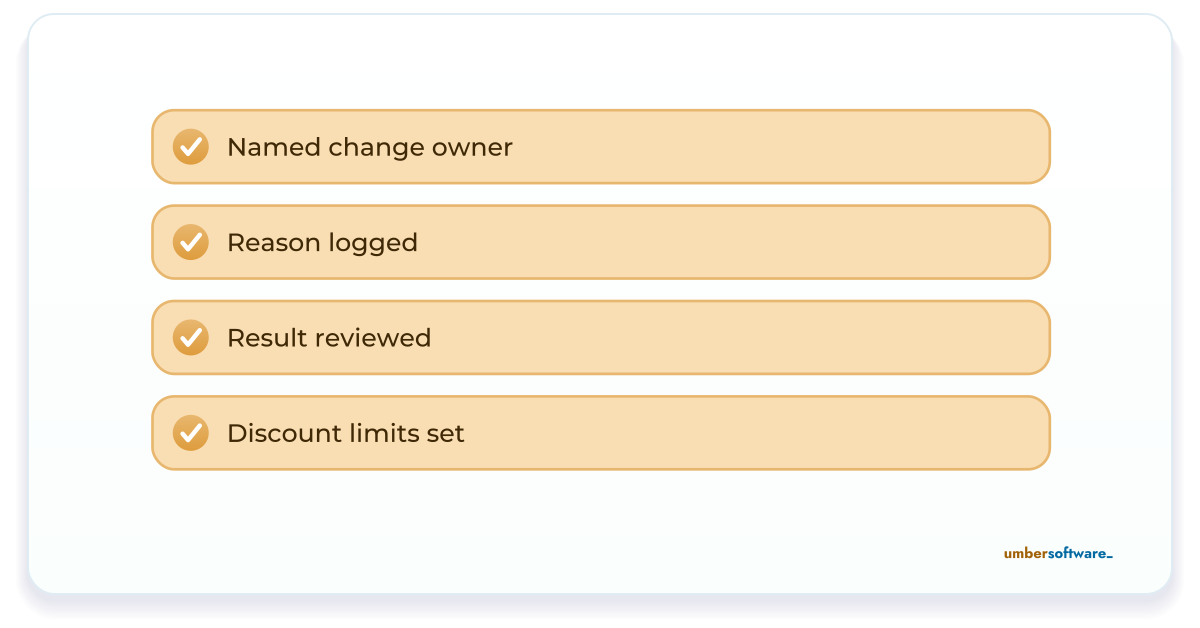
Governance sounds dull, and it protects most of the revenue you worked for. Name an owner for pricing, usually in product or finance. Write who can approve discounts at which size, how new plans get added, when you review prices and what data the review uses.
Keep a short log of every change with the date, the reason and the result. After a year it becomes the history that stops the next person from repeating an old mistake. A quarterly review of discount levels, plan mix and expansion revenue takes an hour and catches drift early.
For the forces that will affect your next review, such as usage-based models and AI features, see my overview of software pricing trends.
A Worked Example: Repricing a Small Project Tool
A team I worked with sold a project tool at twenty-nine dollars per user a month in one flat plan. Revenue had stalled even though usage grew, and sales reps gave a fifth off most deals. The audit showed that a few large accounts used the product daily with forty users, while many small accounts had three users who logged in once a week.
The value interviews showed that large accounts valued reporting and permissions most, and small ones valued simple task lists. The team kept the seat metric, since customers understood it, and split the product into three plans. The table shows the structure and the reasoning, with the numbers rounded.
| Plan | Who it serves | Price per user per month | Reasoning |
|---|---|---|---|
| Starter | Teams up to ten users | $15 | Low entry price, task lists and basic boards only |
| Team | Growing teams | $29 | Keeps the old price for the main audience, adds timelines |
| Business | Large accounts | $49 | Reporting, permissions and audit history, where value is highest |
The new plans went to new prospects first. After one full sales cycle, win rates held and average deal size rose, mostly because large buyers picked the top plan. Discount bands came last: ten percent for annual billing, with larger exceptions approved by one named person. Existing customers kept their price for twelve months, then moved with a notice and a clear explanation of what the plan now included.
Common Traps in Pricing Strategy
Three mistakes show up in nearly every project. The first is copying a competitor's structure without understanding why it works for them. Their metric may suit their costs and customers, not yours. The second is changing price and packaging in one move, which makes it impossible to know which change caused the result. The third is giving existing customers no notice, which damages trust far more than the price itself.
One more thing deserves mention: not every problem is a pricing problem. If customers leave because the product misses a need, a price cut hides the signal. Check the reasons for churn before you change numbers.
Choosing Where to Begin
You do not need to run all six phases at once. Pick the phase where your current weakness is greatest.
- Heavy discounting and shrinking margins: phase four and phase six.
- Revenue flat while usage grows: phase two.
- Buyers stuck choosing between plans: phase three.
- A change planned for next quarter: phase five, before anything else.
Questions About Software Pricing Strategy
What Is a Software Pricing Strategy?
It is the set of decisions about what you charge for, how you measure it, how you group features into plans and how you change prices over time. A strategy covers the model, the metric, the packages, the price points and the rules that keep them in order.
Should I Price on Cost, Competitors or Value?
Use all three, in the right roles. Cost gives you a floor, competitors give you context and customer value sets the ceiling. Most successful software prices sit between the floor and the ceiling, closer to value than to cost.
How Many Plans Should I Offer?
Three is common because it gives buyers a clear choice without overload, but the right number depends on your customer groups. Add a plan only when a real group of customers has needs that no existing plan serves.
How Often Should I Change Prices?
Review at least once a year and after any major release. Change only when data shows a gap between value delivered and price charged. Frequent small changes confuse customers, while years of silence leave revenue unclaimed.
How Do I Raise Prices Without Losing Customers?
Give notice, explain the added value, protect existing customers for a defined period and start with new customers. Watch churn and expansion by cohort for a few months, and keep a way to reverse the change.
Is Freemium a Good Idea?
It works when your product is easy to start, gains value with use and has a clear path to paid features. It hurts when free users cost a lot to serve and few convert. Model conversion and cost before you commit.
When Should I Hire a Pricing Consultant?
When revenue growth stalls, discounting is rising, you are entering a new market or launching a major product. An outside view with your billing data often finds leaks that an internal team has stopped seeing.
Please note: this guide is general information and not legal, financial or tax advice. Numbers and examples are typical-project estimates; confirm current details with your providers and advisers.
Did this article help you?
Thanks, noted.
Whitney Sorensen
Whitney leads the Umber editorial team and works with the consultants to turn real client projects into practical guides on software selection, custom development, integration and legacy modernization. Before joining Umber, she spent years writing and editing for engineering and IT teams. She has since reviewed architecture audits, system selections and modernization plans from client projects across industries from manufacturing to healthcare. She works remotely from the USA.