Main Points
- AI features pushed vendors toward credits, per-action fees and add-ons on top of seats.
- Hybrid pricing is now the practical default: a base fee plus usage or modules.
- Buyers should ask for caps, alerts and rate cards before agreeing to variable bills.
- Check every price in this article on the vendor's site, because plans change often.
For years, software pricing was a debate about seats against tiers. That debate has widened. AI features cost money for every request, customers want bills they can predict and vendors want revenue that grows with usage. The result is a set of changes you will see in quotes, renewals and pricing pages. If you need help applying them to a product or a contract, software pricing consulting is built for exactly that.
I picked ten trends I see in client work and in public vendor pricing. For each one I give the evidence, the catch and a first step. Sources are at the end, and prices are examples from vendor pages checked in November 2026, so confirm them before you rely on them. For the fundamentals behind these shifts, my software pricing guide explains the models.
The Ten Trends in One Table
| Trend | What changes for sellers | What changes for buyers |
|---|---|---|
| 1. Credits for AI actions | Meter costly features | Forecast usage, not seats |
| 2. Hybrid models | Base fee plus growth metric | Two cost drivers to watch |
| 3. AI add-ons per user | New upsell line | Decide who really needs it |
| 4. Outcome-based pricing | Price tied to results | Define outcomes precisely |
| 5. Bundles and suites | Defend share with packages | Compare against point tools |
| 6. Renewal uplifts | Automatic annual increases | Negotiate caps |
| 7. Price transparency | Public starting prices | Easier early comparison |
| 8. Commit and draw-down | Prepaid usage pools | Risk of unused commitments |
| 9. Licence rationalization | Churn from seat cuts | Regular usage reviews |
| 10. Open core and services | Free base, paid extras | Support and hosting become the price |
1. AI Features Brought Credits and Per-Action Fees
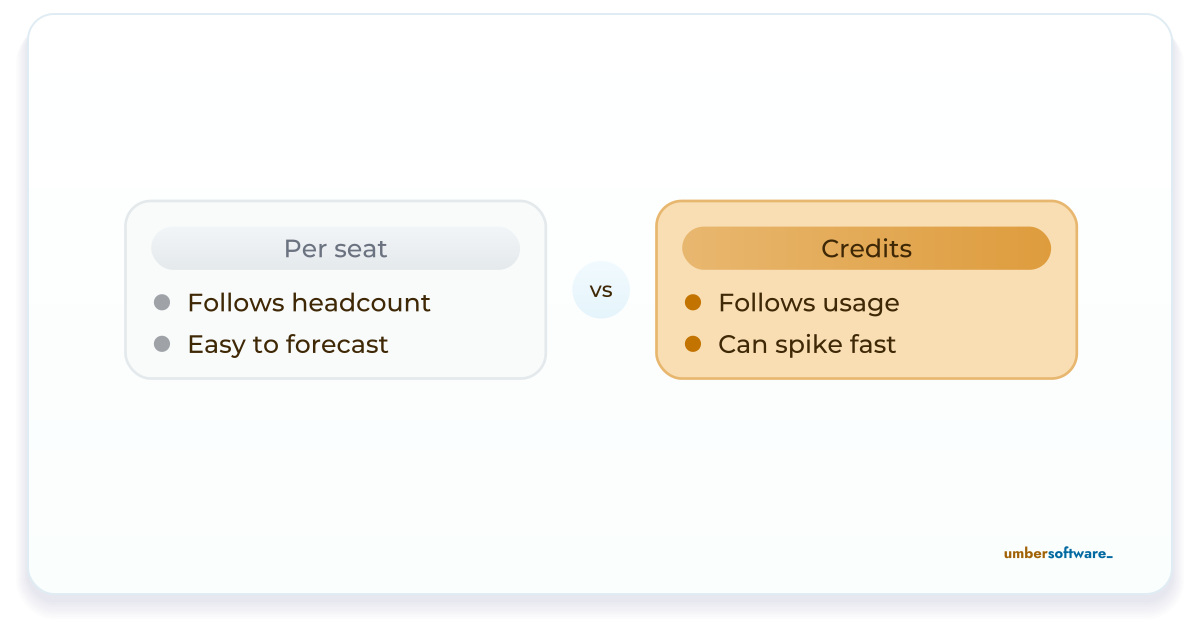
Generative features cost vendors money for each request, so a flat seat price can lose money on heavy users. Salesforce shows the pattern on its Agentforce pricing page: Flex Credits are listed at $500 per 100,000 credits, and most standard agent actions use 20 credits, or about ten cents each. The same page also lists per-user add-ons and conversation-based pricing.
The catch is predictability. A team that doubles its agent use doubles the variable part of its bill. Ask any vendor with credits for a usage forecast based on your own volumes, a spend alert and a cap. Sellers who add credits should explain in plain language what an action is, since buyers will compare it with other vendors.
2. Hybrid Models Became the Practical Default
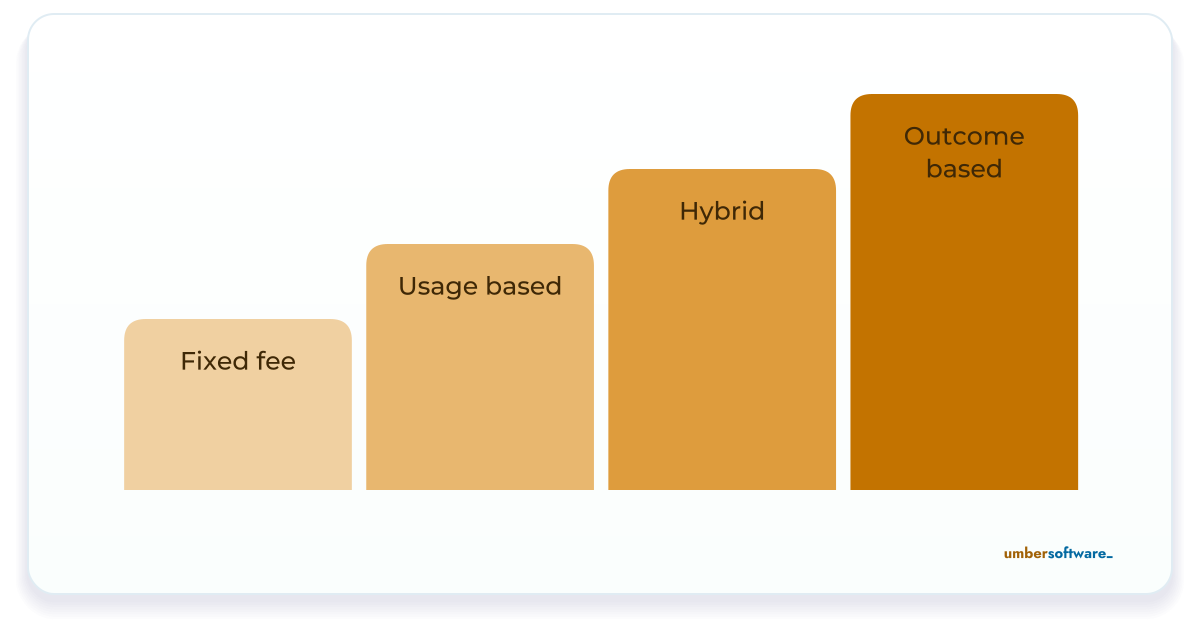
A pure seat model leaves growth on the table when usage rises faster than headcount. A pure usage model makes budgets hard. A hybrid, with a platform fee plus a seat or usage component, gives both sides some stability. I see more of my software clients move to this pattern each year, often in two steps: add a usage metric to the top plan first, then extend it.
The catch is complexity. Two meters mean two things a customer must understand. Start by testing the hybrid with new customers and measure conversion before you move the base.
3. AI Add-Ons Priced Per User
Another approach is a separate add-on per user. Microsoft lists Microsoft 365 Copilot Business at $18 per user per month on its pricing page, a promotional price for the first year on annual billing, reduced from $21, and it runs for a limited period. Salesforce lists add-ons of $125 per user per month for its Agentforce Sales and Service products.
For buyers, the question is who actually uses it. Giving the add-on to every user is expensive, and giving it to nobody loses the benefit. Pilot with a defined group and compare time saved with the cost before you extend it.
4. Outcome-Based Pricing Is Growing, Slowly
Some vendors charge when a result happens, such as a resolved conversation. Salesforce lists a per-conversation price of $2 for some agent use. The logic is attractive: you pay when value is delivered. The difficulty is definition. What counts as resolved, who decides and what happens in disputed cases?
If you are offered an outcome model, ask for the definition in writing, the measurement method and a dispute process. As a seller, start with a narrow outcome that both sides can measure without argument.
One more detail from client work: ask whether unused credits roll over. Credits that expire at the end of a month or a year behave like a use-it-or-lose-it tax, and they change which commitment level makes sense. The answer is often negotiable, particularly on larger deals.
5. Bundles and Suites Compete With Point Tools
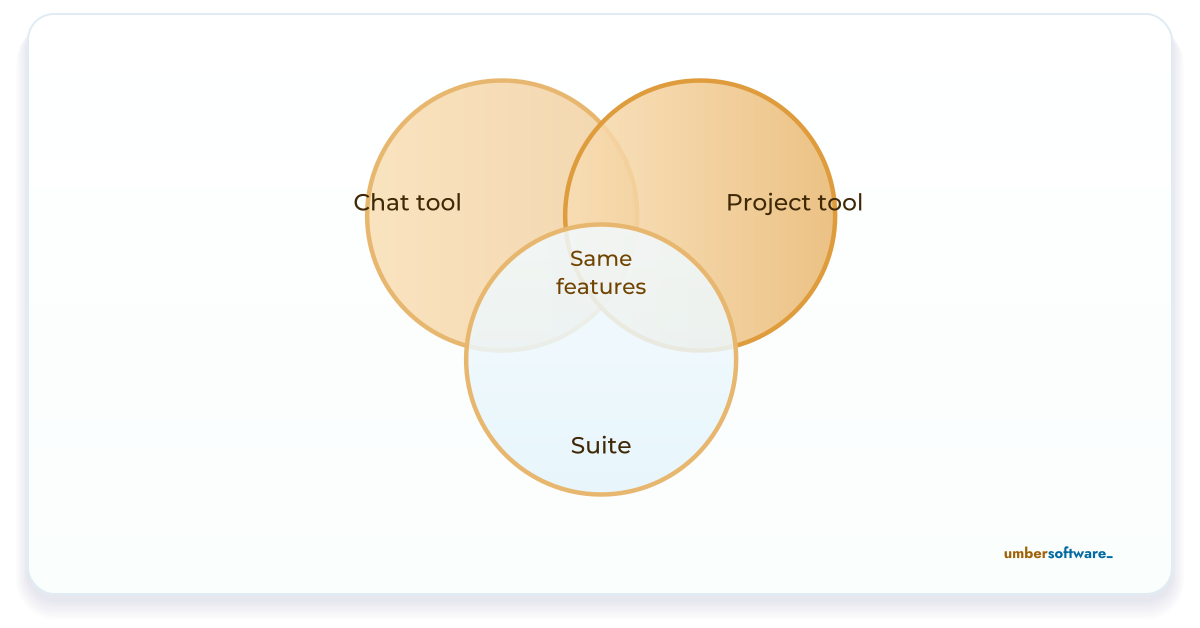
Large vendors package more into their suites and price the bundle below the sum of the parts. For buyers, the offer can be attractive if you use most pieces, and a trap if you use one. Compare the bundle with the cost of the tools you would otherwise keep, and include the cost of switching.
For smaller vendors, the answer is rarely a price war. Focus on depth in the area you serve and make integration with the big suites easy.
6. Renewal Uplifts Are Becoming Standard Contract Language
Many subscription contracts now include an automatic annual increase, or tie the renewal price to list price. Over three years, a few percent a year compounds into a large difference. This is the item I raise first in most renewals I support.
A negotiated cap, stated as a percentage and applied to every line item, removes the surprise. My guide to software contract negotiation tips shows how to ask for it and what to trade.
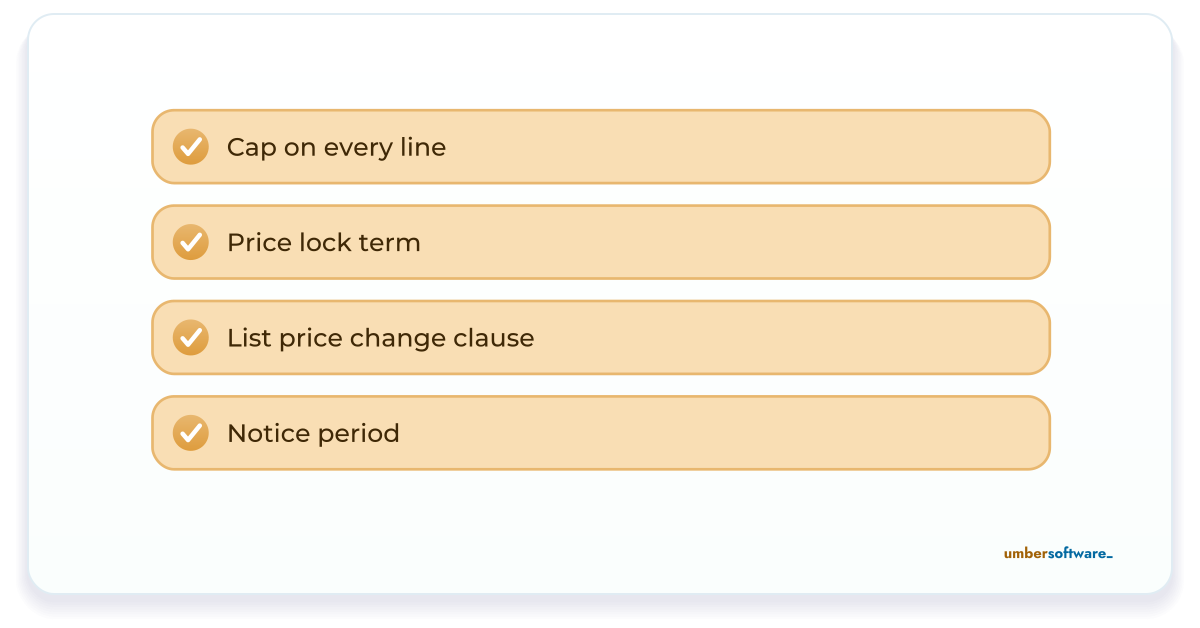
Another pattern is the clause that lets a vendor change list prices during the term for new add-ons while keeping existing prices fixed. Read the definitions carefully, because a new product name can fall outside your price protection even when it does the same job as an old one.
7. Pricing Pages Are Getting More Transparent
Buyers research before they talk to sales, and many dislike a page that says only "contact us". More vendors now show starting prices and plan limits publicly, keeping enterprise tiers by quote. The effect is shorter sales cycles and more qualified leads, at the cost of making comparisons easy for your competitors.
If you sell software, consider a public price for at least your entry plans. If you buy, use those numbers as a starting point for your own estimates.
8. Commit and Draw-Down Models
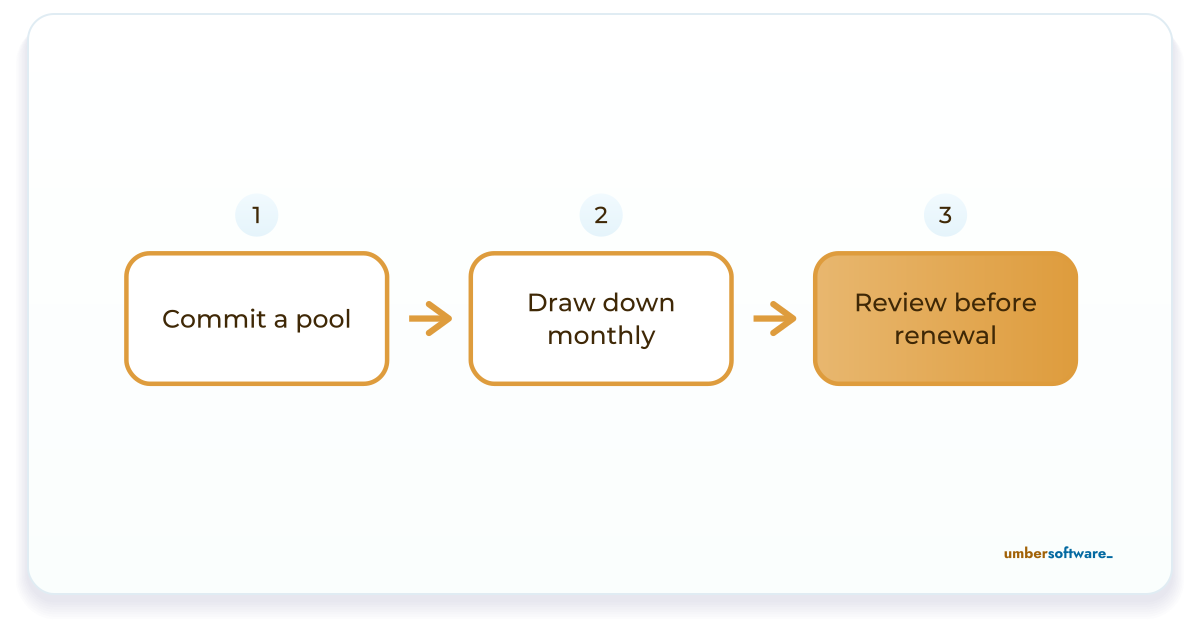
In a draw-down model, you prepay for a pool of usage and consume it over the term, often at a lower unit rate than pay-as-you-go. Salesforce lists both pay-as-you-go and pre-commit options for its credits. Vendors like the committed revenue. Buyers get a lower rate and take the risk of unused credits.
Size the commitment from actual data. A good rule is to commit to the volume you are confident in and pay the higher rate for the rest, rather than commit to a hopeful forecast.
9. Buyers Are Cutting Seats and Overlapping Tools
After years of growth in software subscriptions, many companies now review them every quarter. Unused seats, overlapping tools and abandoned trials get cut. For sellers, this means churn driven by usage reviews, not by dissatisfaction.
Sellers can respond by making value visible: usage reports that show a customer what they gained. Buyers should treat a seat review as routine hygiene, using pricing strategy thinking on their own side: match what you pay to the value you get.
10. Open Core and Paid Services
More products offer a free open base and charge for hosting, support, security features or enterprise controls. For buyers, the licence fee may be zero while the real price is the time of your team or the paid support contract. Compare total cost, not just the licence.
For sellers, the free base builds a community and a path to paid tiers, but only if the paid tier solves a problem free users actually have.
What These Trends Mean for Next Year's Budget
Seat-based budgets are easy: multiply the seats by the price. Hybrid and usage budgets need a range. A method I use with clients is to build three cases for each variable-priced tool: a low case based on last quarter's usage, an expected case with planned growth and a high case where adoption of a new feature doubles. The table shows the structure for an example tool with a platform fee and credits.
| Case | Assumption | Platform fee | Usage cost | Yearly total |
|---|---|---|---|---|
| Low | Usage stays at last quarter's level | $12,000 | $6,000 | $18,000 |
| Expected | Usage grows by half | $12,000 | $9,000 | $21,000 |
| High | A new AI feature doubles usage | $12,000 | $18,000 | $30,000 |
The numbers are invented to show the method, not to describe a real vendor. What matters is the gap between the low and high cases. If it is wide, ask for a cap, a commitment with a lower rate or a monthly alert, and review actual usage against the expected case every month.
For sellers, the same table works in reverse. If your customers cannot build a high case they trust, they will hesitate to adopt the features you most want them to use. Clear rate cards and usage reports are part of the product.
How to Choose Which Trends to Act On
You do not need to react to all ten. Act on the ones that touch your largest contracts or your fastest-growing cost.
- Your bills rise faster than headcount: trends one, two and eight.
- Renewals keep surprising you: trend six and trend nine.
- You sell software and growth has stalled: trends two, four and seven.
- You are rolling out AI add-ons: trend three, with a pilot group first.
Questions About Software Pricing Trends
What Is the Biggest Software Pricing Trend Right Now?
The move from pure per-seat pricing to hybrids that add usage or credit-based charges, driven by AI features that cost real money for every request. It affects how vendors price and how buyers forecast their bills.
Is Per-Seat Pricing Going Away?
Not soon. Seats remain easy to explain and forecast, and many products still deliver value per person. What changes is that seats are combined with usage, credits or platform fees, so the seat is one part of the bill.
What Is Outcome-Based Pricing?
It charges when a defined result happens, such as a resolved support case or a qualified lead, rather than for access. It aligns price with value, but it needs a clear definition of the outcome and a way both sides can measure it.
How Can Buyers Prepare for Usage-Based Bills?
Ask for usage dashboards, alerts and spending caps. Request a forecast based on your own volumes, a rate card for overage and the right to change commitment levels at renewal. Track usage monthly rather than at renewal.
Will Software Prices Keep Rising?
Many vendors raise prices at renewal, and AI add-ons carry their own fees. The size of the rise depends on the vendor and your leverage. Caps in the contract, usage reviews and credible alternatives limit it.
How Should Software Companies Respond to These Trends?
Review your value metric first, check whether AI features need their own pricing and decide how much bill variability your customers can accept. Test changes with a small group before you roll them out.
Where Can I Check Current Vendor Prices?
Use the vendor's own pricing page and ask for a written quote. Prices, plans and promotions change often, and the examples in this article may be out of date by the time you read them.
Sources
Please note: this guide is general information and not legal, financial or tax advice. Numbers and examples are typical-project estimates; confirm current details with your providers and advisers.
Did this article help you?
Thanks, noted.
Whitney Sorensen
Whitney leads the Umber editorial team and works with the consultants to turn real client projects into practical guides on software selection, custom development, integration and legacy modernization. Before joining Umber, she spent years writing and editing for engineering and IT teams. She has since reviewed architecture audits, system selections and modernization plans from client projects across industries from manufacturing to healthcare. She works remotely from the USA.