Main Points
- Tie every roadmap item to a goal with a number and a date.
- Weekly customer conversations beat any dashboard for finding real problems.
- Define the success measure before release and review it after.
- Start with the two practices that match your biggest current pain.
Good product management is mostly a handful of habits done every week. After years of software product management consulting, I see the same nine habits separate strong teams from struggling ones. None needs a special tool or a large budget.
Each practice below has a short explanation, one thing to do and one thing to avoid. Start with the two that match your biggest current pain, not with all nine at once.
The Nine Practices at a Glance
| # | Practice | The problem it prevents |
|---|---|---|
| 1 | Tie every item to a goal | Features with no purpose |
| 2 | Talk to customers every week | Decisions based on assumptions |
| 3 | Write problems, not solutions | Backlogs full of guesses |
| 4 | Score with written rules | The loudest voice winning |
| 5 | Plan in horizons, not dates | Broken promises |
| 6 | Work with engineers early | Late surprises and rework |
| 7 | Define success before release | Features nobody checks |
| 8 | Keep a decision log | Repeated debates |
| 9 | Review and remove | A product that only grows |
1. Tie Every Item to a Goal
Goals give your team a way to say no. Two or three goals with a number and a date are enough. When a request arrives, ask which goal it serves, and park it if the answer is none. This sounds harsh, but the alternative is a roadmap that serves everyone a little and nobody enough.
- Do this: write the goals where everyone sees them, and label each roadmap item with the goal it supports.
Avoid this: goals so broad that every idea fits, such as "grow the business".
2. Talk to Customers Every Week
Usage data tells you what happened. Conversations tell you why. A product manager who speaks to three customers a week builds a sense for the market that no dashboard gives. Invite an engineer or designer along now and then, since they hear things you miss.
- Do this: keep a shared notes file and tag each note with the account and the problem.
Avoid this: relying on the sales team to relay what customers want, since their view depends on the deals they chase. A software product management framework shows where discovery fits in the loop.
3. Write Problems, Not Solutions
A backlog full of solutions hides the question of whether they are the right ones. Write items as a user, a problem and a cost of the problem. "Admins spend two hours a week exporting reports" opens several possible answers, while "add an export button" closes them.
- Do this: phrase new items as problems and attach the evidence behind them.
Avoid this: accepting a feature request as written without asking what the person is trying to do.
4. Score With Written Rules
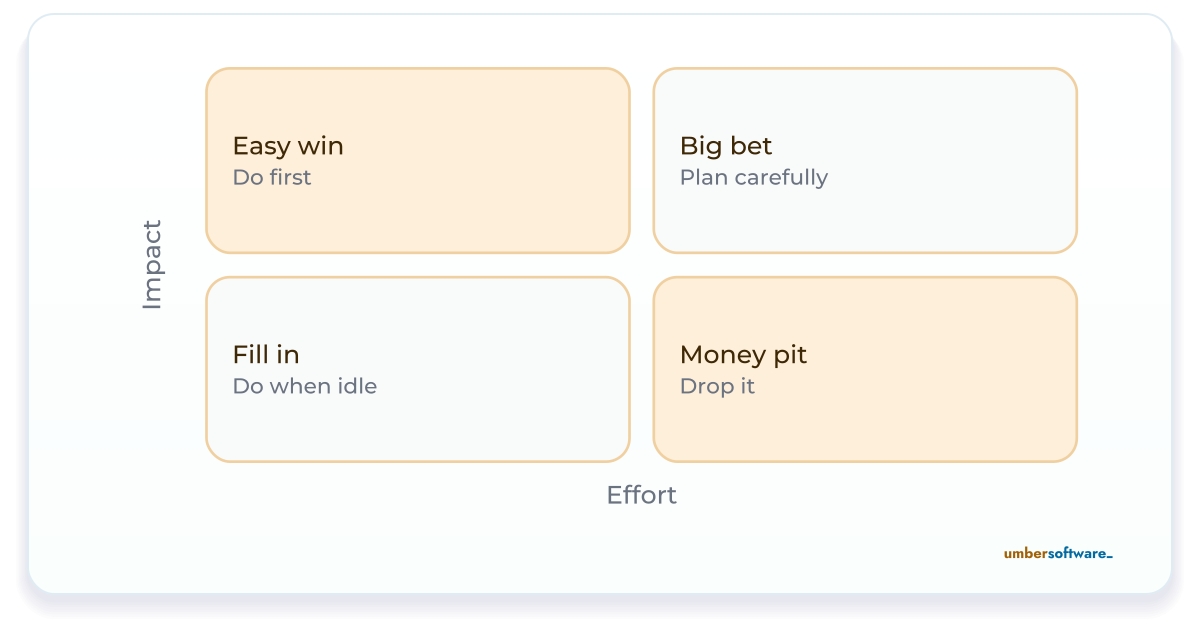
A scoring model does not make decisions, but it makes them visible. Reach, impact, confidence and effort work for most teams. The confidence score is the one that does the most good: it pushes weakly supported, exciting ideas below solid, modest ones.
- Do this: write one sentence of reasoning next to each score.
Avoid this: treating the final number as the truth. A score of 41 against 39 is a tie, so decide by judgment.
5. Plan in Horizons, Not Dates
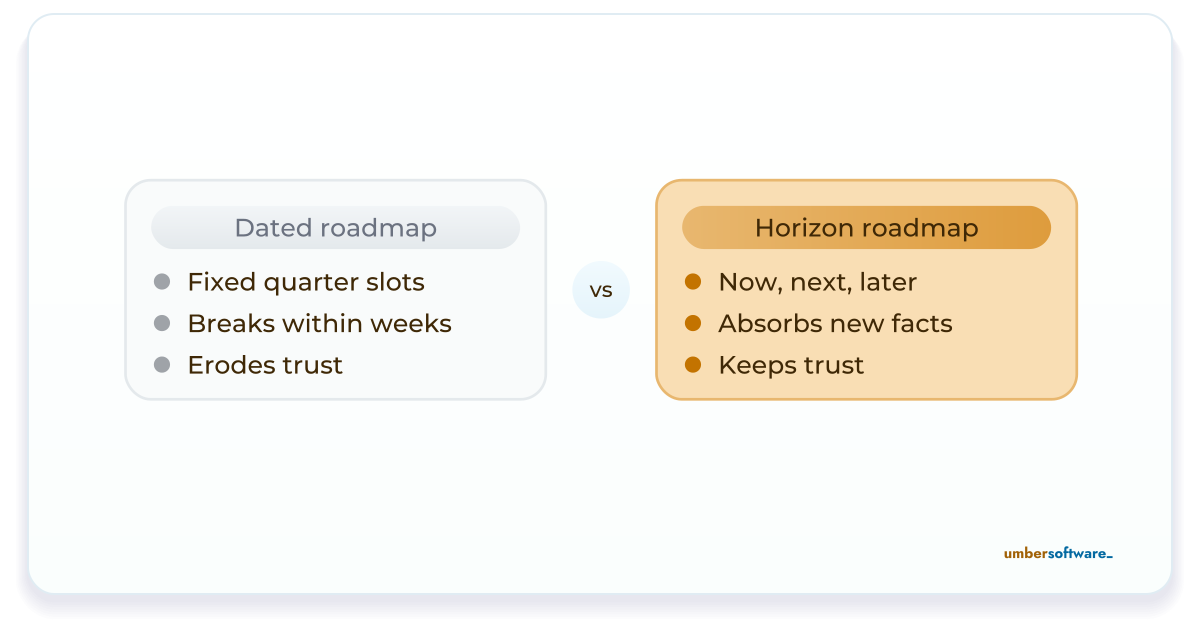
Dates on a roadmap turn into promises, and promises turn into pressure to ship the wrong thing on time. Use now, next and later columns, and give dates only where another party depends on them. Customers and sales colleagues accept this once you explain that it protects quality.
- Do this: show a firm scope only for what is in progress.
Avoid this: publishing a quarter-by-quarter plan that you know will change by week six.
6. Work With Engineers Early
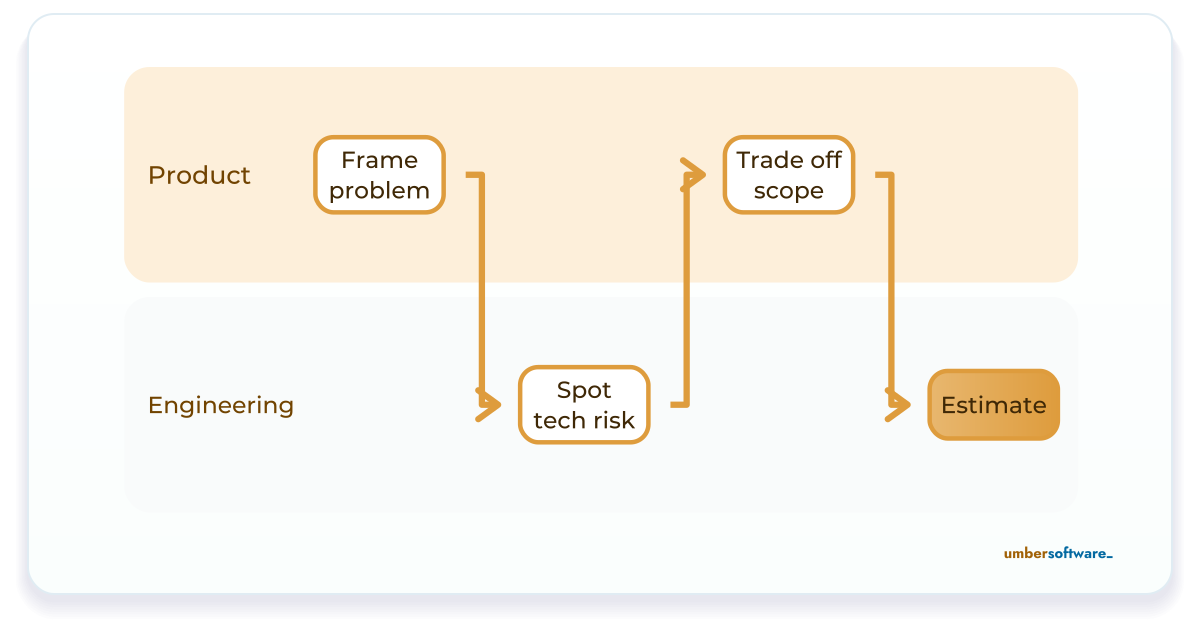
Engineers see risk before it appears on a plan: a shared database, a slow integration or a library nearing end of support. Involve an engineering lead before scope is fixed, and ask what the smallest version would be. Early talks cut rework far more than faster sprints do.
- Do this: hold a short shaping session before an item enters a sprint.
Avoid this: handing over a finished specification and expecting estimates by tomorrow. For delivery routines beyond the product side, see how software project management consulting handles schedules and risks.
7. Define Success Before Release
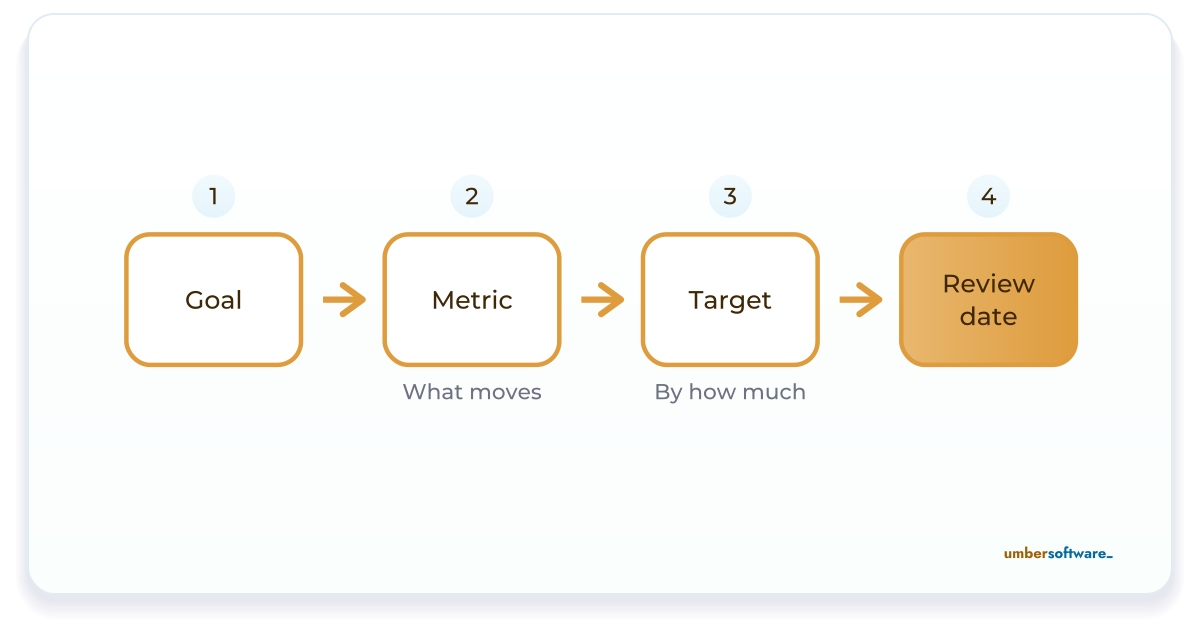
Write the target number before the feature ships: adoption by a named group, fewer tickets of one type or a conversion step. Then set a review date. Without both, nobody can tell whether the release worked, and unused features stay for years.
- Do this: record a baseline and a target for every release that matters.
Avoid this: declaring success because the release went out on time. Shipping is the start of the learning, not the end.
8. Keep a Decision Log
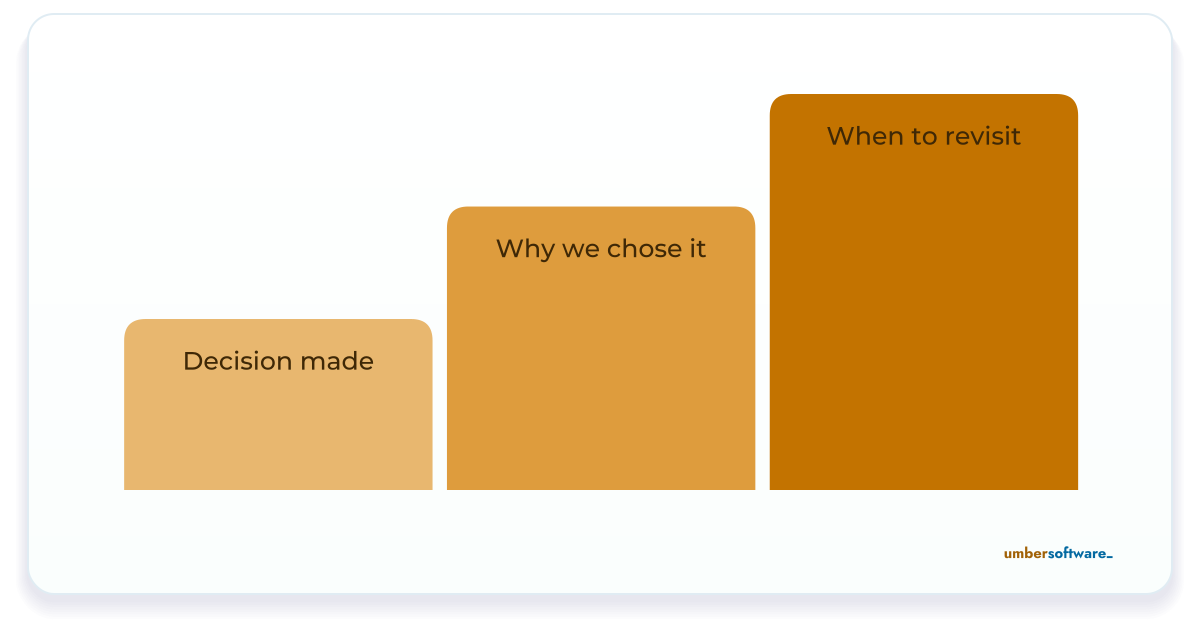
A decision log is a short file with the date, the decision, the reasons and the people involved. It saves hours, because the same debates stop recurring, and new colleagues learn why things are the way they are. It also protects the product manager from being second-guessed from memory.
- Do this: write three lines per decision at the time you make it.
Avoid this: long documents nobody reads. Three lines are enough.
9. Review and Remove
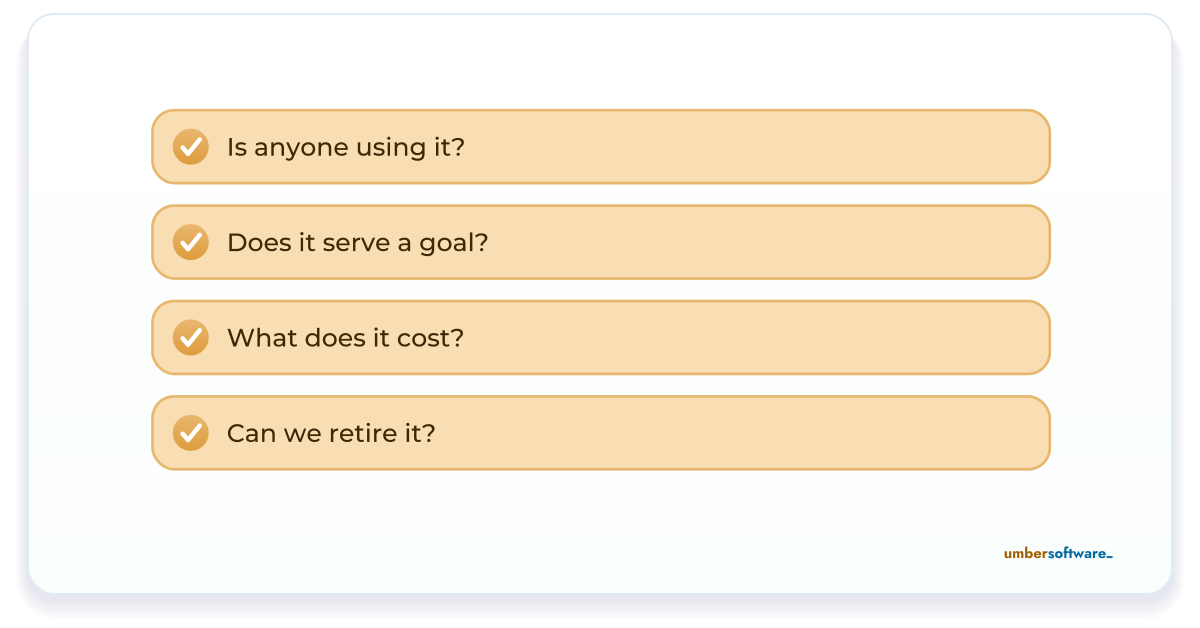
Products only grow unless someone removes things. Every quarter, list features with low use and ask whether to improve, hide or retire each one. Removing a feature frees engineering time and lowers support load. Tools that track usage, compared in my list of software product management tools, make the list easy to build.
- Do this: hold a quarterly review of low-use features and retire at least one.
Avoid this: keeping everything because someone once asked for it.
Which Practice to Start With
Pick by symptom. If your roadmap changes weekly, start with goals and horizons, practices one and five. If features ship without effect, start with success measures and reviews, practices seven and nine. If decisions turn into arguments, start with scoring rules and the log, practices four and eight. Teams with little customer contact should begin with practice two, since the rest depends on it.
| Symptom | Start with | Expect to see in a quarter |
|---|---|---|
| Roadmap changes every week | Practices 1 and 5 | Fewer reversals and calmer planning meetings |
| Features ship with no visible effect | Practices 7 and 9 | Adoption numbers for every release |
| Priority fights in meetings | Practices 4 and 8 | Shorter debates, written reasons |
| Little contact with customers | Practice 2 | Backlog items with real evidence |
Give each new habit a month before judging it, and measure one thing: how often decisions get reversed. If that number falls, the habits are working. Teams that adopt two practices well usually pick up the others on their own, because the gaps become visible.
A 90-Day Rollout You Can Actually Finish
Spread adoption over a quarter, so each habit has time to settle. In the first month, set goals and run the weekly customer calls, practices one and two. Hold the first three conversations in week one, even if the notes are rough. By the end of the month, you should have a short list of customer problems and a goal page that fits on one screen.
In the second month, add scoring rules, a now, next and later roadmap and the decision log, practices four, five and eight. Score the problem list together with engineering and write the reasons down. Expect the first scoring session to take twice as long as the later ones, because people are agreeing on definitions as well as on numbers.
In the third month, add success measures, engineering shaping sessions and the first removal review, practices six, seven and nine. Pick one released feature and check it against its target. This first review often brings the sharpest lesson, since it shows how many past features had no target at all. Finish the quarter by looking at your decision reversals, and note which practice would have prevented each one.
| Month | Practices | Visible result |
|---|---|---|
| 1 | 1 and 2 | Goal page and a customer problem list |
| 2 | 4, 5 and 8 | Scored backlog, horizon roadmap and decision log |
| 3 | 6, 7 and 9 | Success measures and the first removal review |
How Teams Get These Practices Wrong
The most common failure is turning each practice into paperwork. A decision log that takes twenty minutes will be skipped by week three. A scoring sheet with fifteen columns will be gamed. Keep each artifact to a page or less, and check at the end of the first month which ones people actually use.
The second failure is doing the practices alone. A product manager who scores, plans and reviews without engineers and support in the room creates a private system that nobody trusts. Invite the others to the reviews, even when it feels slower.
The third is copying another company. A practice that fits a two-hundred-person consumer app may be wrong for a business-to-business team with twelve large customers. Adapt the cadence and the detail to your size, and keep the purpose of each practice intact.
How to Make the Practices Stick
Habits last when someone owns them. Name one person to run the weekly customer-call routine, one to keep the decision log and one to run the quarterly review. Rotate the roles twice a year so knowledge does not sit with one person.
- Put the routines in the calendar, not in a document.
- Share one number per practice at the monthly product meeting.
- Remove one old process whenever you add a new one.
Questions About Software Product Management Best Practices
What Are the Most Important Software Product Management Best Practices?
Tie every item to a goal, talk to customers weekly, write problems instead of solutions and define success before release. These four give the most return for the least effort. The remaining practices add fairness and learning once the base is in place.
How Often Should a Product Manager Talk to Customers?
Weekly is a good target, with about three conversations. Even one a week builds the habit. Quality matters more than volume, so ask about what customers did last time they faced the problem, not what they would like.
How Many Goals Should a Product Have?
Two or three. More goals dilute focus, and fewer may leave out something important. Each goal needs a number and a date so progress can be checked.
Should a Roadmap Have Dates?
Only where another party depends on a date, such as a contractual commitment. For everything else, use now, next and later. Dates on a roadmap turn into promises and push teams to ship the wrong thing on time.
How Do I Stop Stakeholders from Adding Requests to the Roadmap?
Give them a clear way to submit requests and a clear answer, with reasons. When a request is scored with the same rules as everything else, it is easier to accept a no. Share the decision log so that past answers are visible.
Do These Practices Work for a Small Team?
Yes, in a lighter form. A team of four can keep goals, a problem list, a scoring column and a decision log on one shared page. Keep each practice to its minimum and add detail only when a problem appears.
How Do I Know Product Management Is Improving?
Track how often decisions are reversed, how many shipped features hit their target and how long it takes to go from problem to a decision. Compare them quarter by quarter, and ignore small changes within a single month.
Please note: this guide is general information and not legal, financial or tax advice. Numbers and examples are typical-project estimates; confirm current details with your providers and advisers.
Did this article help you?
Thanks, noted.
Whitney Sorensen
Whitney leads the Umber editorial team and works with the consultants to turn real client projects into practical guides on software selection, custom development, integration and legacy modernization. Before joining Umber, she spent years writing and editing for engineering and IT teams. She has since reviewed architecture audits, system selections and modernization plans from client projects across industries from manufacturing to healthcare. She works remotely from the USA.