Main Points
- The framework has seven steps: frame, discover, decide, plan, build, launch and learn.
- Each step answers one question and produces one written output.
- Scoring with a confidence input keeps unproven ideas from crowding out solid ones.
- Every launch needs a success measure and a review date set in advance.
Most product teams do not lack ideas. They lack a repeatable way to turn ideas into decisions, and decisions into shipped software that changes customer behavior. I use the model below at the start of every software product management consulting engagement, and teams can adapt it in a few weeks.
The framework has seven steps. Each has one question to answer, one output to produce and one habit that keeps it alive. It is a loop, so the last step feeds the first. Read it through once, then pick the step where your team is weakest and start there.
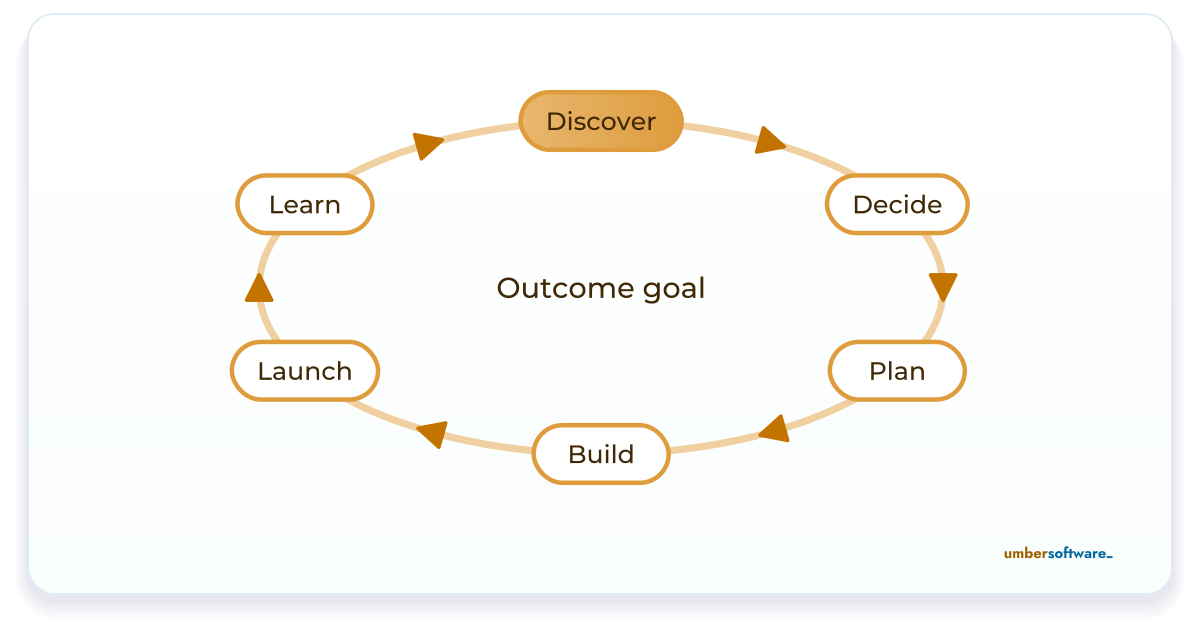
The Seven Steps in One Table
| Step | What it answers | Output | Typical owner |
|---|---|---|---|
| 1. Frame | What outcome does this product exist to create? | Product vision and 2 to 3 goals with numbers | Head of product |
| 2. Discover | Which customer problems are worth solving? | Ranked problem list backed by evidence | Product manager |
| 3. Decide | Which problems come first, and why? | Scored priorities with written reasons | Product manager with leads |
| 4. Plan | What happens now, next and later? | Outcome-based roadmap | Product manager |
| 5. Build | How is the work shaped with engineering? | Clear scope and acceptance checks | Product and engineering lead |
| 6. Launch | How do customers find and use the change? | Release plan and success measure | Product manager with support |
| 7. Learn | Did it work, and what changes next? | Review note and updated priorities | Whole product team |
Step 1: Frame the Product Around an Outcome
A framework starts with a destination. Write one sentence on what the product changes for the customer, then two or three goals with a number and a date. A goal such as "cut the time to first invoice from nine days to three by June" is usable. A goal such as "improve onboarding" is a wish.
I limit the list to three goals because every extra goal waters down the rest. If leadership gives you eight, ask which three would still matter if the others failed. That conversation is often the most valuable hour of the whole project, since it exposes disagreements that would otherwise surface as roadmap fights months later.
Step 2: Discover Problems Before Solutions
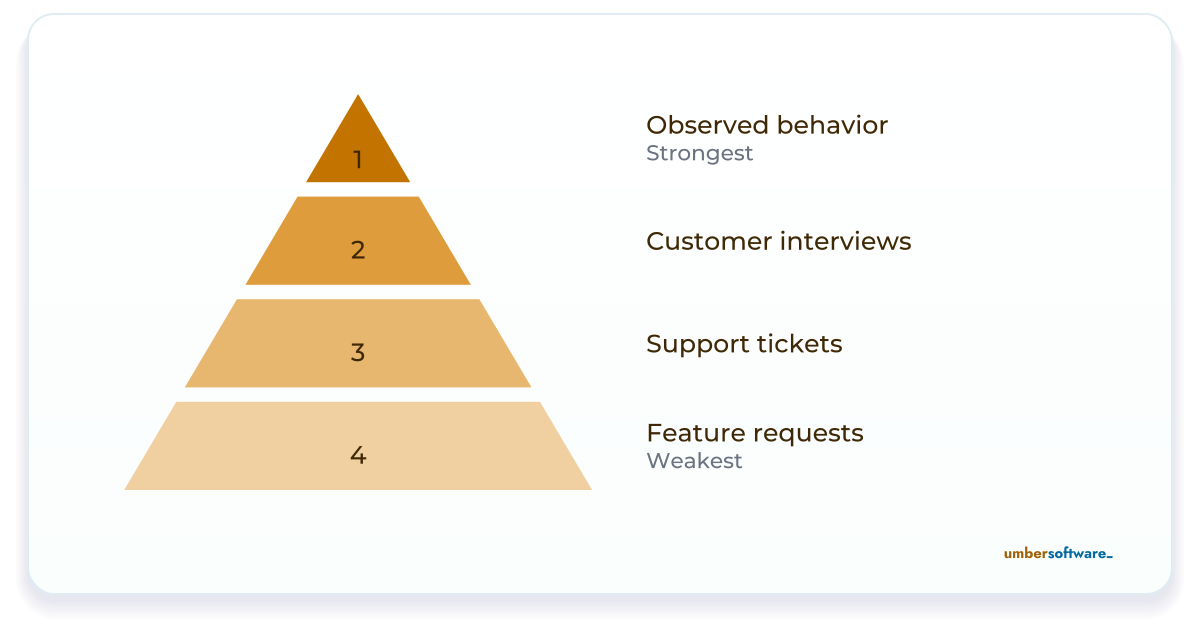
Discovery turns raw input into problems you understand. Sources include customer interviews, support tickets, sales call notes, usage data and churn reasons. The rule is to write problems, not features. "Admins spend two hours a week exporting data" is a problem. "Add a CSV button" is a guess at a solution.
Build a small routine: three customer conversations a week for one product manager is a realistic target, and many teams manage it. Keep the notes in one place so they are searchable. Tools help here, and my guide to software product management tools compares the ones I see used for feedback, research and analytics.
Bring numbers into the stories. A problem that three customers mention, all large accounts that renew next quarter, is a different kind of problem from one that thirty trial users mention. Both matter, and the framework asks you to say which kind you are looking at.
Step 3: Decide With Rules, Not Volume
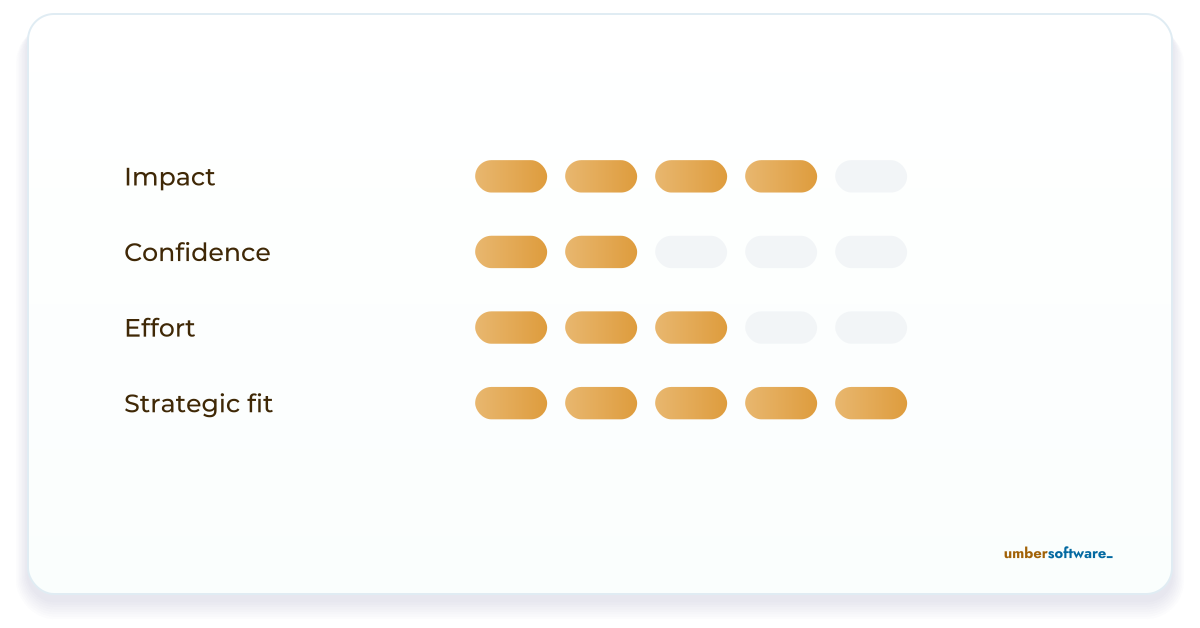
Without rules, the loudest voice wins. Pick a simple scoring model and apply it to every candidate. A common choice is reach, impact, confidence and effort, which rolls into one score. Use it as a conversation starter, not as an oracle, and always write one sentence of reasoning next to the score.
Confidence is the input teams skip. If you score impact at high but have no evidence, set confidence to low and the item drops. That one habit keeps big, exciting and unproven ideas from crowding out smaller, solid ones. When a small experiment can raise confidence cheaply, run it before committing a quarter of engineering time.
Rules That Keep Decisions Fair
Write down who decides, and by when. Product managers propose, a named lead decides and the reasoning goes into a decision log. Teams that skip the log relive the same debate every quarter, because nobody remembers why the answer was no.
Step 4: Plan the Roadmap Around Outcomes
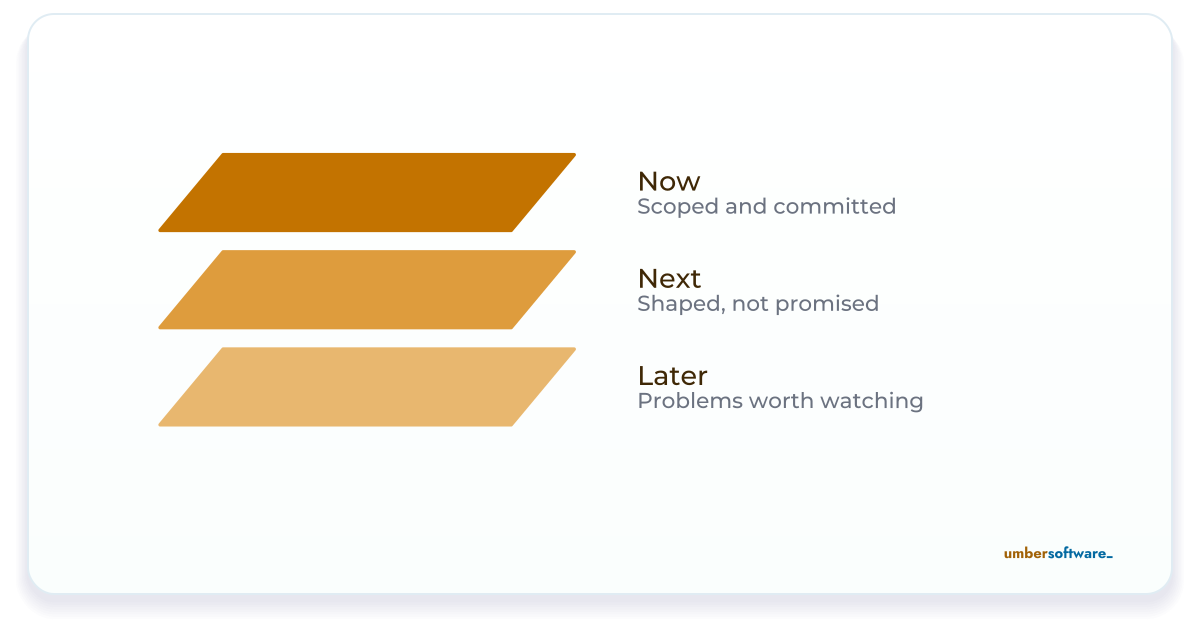
A roadmap is a statement of intent, not a promise of dates. I use three horizons: now, next and later. "Now" holds committed work with a firm scope. "Next" holds problems you plan to explore. "Later" holds themes, not features. Dates appear only for items where someone outside the company depends on them.
Each item names the problem, the goal it supports and the measure of success. That structure lets you say no with a reason, and it lets sales say "we are looking at that problem" without promising a feature. For the habits that keep a roadmap honest over time, my article on software product management best practices goes into more detail.
Step 5: Shape the Work With Engineering
Planning ends where shaping begins. Before work enters a sprint, the product manager and an engineering lead agree on the smallest version that tests the idea, the acceptance checks and the risks. I ask one question every time: what is the cheapest thing you could build that would tell you whether this works?
Engineers see technical risk that product managers miss, such as a shared database or a flaky integration. Bring them in before the scope is fixed, not after. Where delivery routines need tightening, a software project management consulting review can complement the product work.
Step 6: Launch With a Success Measure
A launch is more than a release note. Decide who needs to know, such as support, sales and the customers who asked, and what the change should do to your numbers. Write the measure before release: adoption by a specific group, a drop in a ticket type or a change in a conversion step.
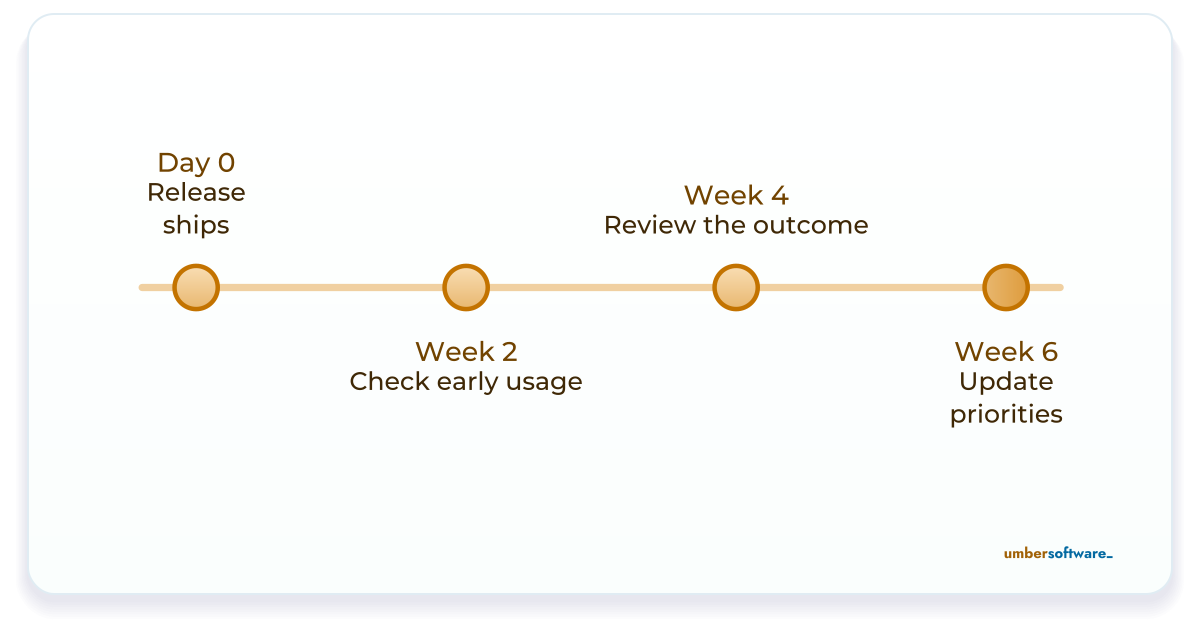
Set a review date at the same time. Two to six weeks after release is typical for adoption measures. Features that nobody opens deserve a hard look, and the review date forces it. Without one, unused features stay in the product for years, adding maintenance cost and clutter.
Step 7: Learn and Feed the Loop
The review answers three questions: did the number move, why or why not and what should change in the priorities. Keep it to thirty minutes, with the product manager, an engineer and someone from support or sales. Write two lines of notes and update the problem list.
A failed bet is cheap if you learn from it. A feature that missed its target and led to a better understanding of the customer has still paid for itself. What the framework protects against is the silent failure, where something ships, nobody checks and the roadmap moves on.
A Worked Example: A Mid-Sized Scheduling Product
A client with a scheduling product for clinics had 140 open feature requests and a roadmap that changed monthly. I ran the framework with the team over eight weeks. Step one produced two goals: reduce missed appointments for customers and cut onboarding time for new clinics.
Discovery turned 140 requests into 11 problems. Four were mentioned by customers worth most of the revenue, and two had usage data behind them. Scoring cut the list to three. One surprise: the most requested feature, a calendar view, scored low because it would reach few users and had no link to either goal. Reminder messages scored high and needed only moderate effort.
After launch, missed appointments fell in the pilot group, and the review confirmed the cause. The calendar view stayed in the "later" column with a written reason, which saved a long argument at the next planning meeting. The team's own numbers showed the change: planning meetings went from three hours to ninety minutes within two cycles.
Adapting the Framework to Your Team
Size changes the weight of each step. A team of five can run steps two to four in one working session, with a single page of notes. A company with several products needs a shared goal format and a portfolio view, because roadmaps that disagree create confusion at the top.
- If you are a startup, shorten discovery to weekly customer calls and keep the scoring model to two inputs.
- If you serve regulated customers, add a compliance check to step five and keep the decision log.
- If you maintain a platform used by other teams, treat those teams as customers in step two.
Common mistakes include skipping step seven, scoring everything as high and letting stakeholders edit the roadmap without a reason. A review of your first two cycles will show which one applies to you. If the framework feels heavy, remove a step for a quarter, then bring it back when the gap shows.
How to Start in the Next Four Weeks
In week one, write the goals and the problem list. In week two, hold five customer conversations and add the notes. In week three, score the list and draft a now, next and later roadmap. In week four, review it with engineering and decide what enters the next cycle. Keep every output on one page each, so that the whole system stays readable.
Do not buy a tool in the first month. A shared document is enough to prove the habits, and the tool choice becomes easier once you know what you need to store.
Questions About the Software Product Management Framework
What Is a Software Product Management Framework?
It is a repeatable way to move from goals to discovery, prioritization, planning, delivery and review. It gives your team the same steps and vocabulary for every product decision, so quality of decisions does not depend on one person.
How Is a Product Management Framework Different from a Project Plan?
A project plan lists tasks and dates for a defined deliverable. A framework covers the decisions before and after delivery: which problem to solve, how to rank it and whether the result worked. Many teams use both.
Which Scoring Model Should I Use for Prioritization?
Start with reach, impact, confidence and effort. It is simple, widely understood and forces you to state how sure you are. Switch to a weighted model only when you have several stakeholders who need to see how each criterion counts.
How Long Does It Take to Put a Framework in Place?
A small team can run a first cycle in four weeks. Larger organizations need two or three cycles to adjust goals, scoring and reviews. The habits matter more than the documents, so expect the real change to show after a quarter.
Do We Need OKRs for This Framework?
No. Goals with a number and a date are enough. OKRs work well when your company already uses them, because the product goals then plug into the same system. If you do not, do not add them just for the framework.
What If Engineers Resist the Extra Steps?
Show them the benefit: clearer scope, fewer reversals and fewer features built for nobody. Keep each output to one page and involve an engineering lead in steps four and five, so they shape the process instead of receiving it.
When Do I Need External Help?
Bring in help when decisions keep being reversed, when the roadmap has lost credibility or when new product managers have no method to follow. An outside review is quick and gives you a neutral view of where the process breaks.
Please note: this guide is general information and not legal, financial or tax advice. Numbers and examples are typical-project estimates; confirm current details with your providers and advisers.
Did this article help you?
Thanks, noted.
Whitney Sorensen
Whitney leads the Umber editorial team and works with the consultants to turn real client projects into practical guides on software selection, custom development, integration and legacy modernization. Before joining Umber, she spent years writing and editing for engineering and IT teams. She has since reviewed architecture audits, system selections and modernization plans from client projects across industries from manufacturing to healthcare. She works remotely from the USA.