Main Points
- Eleven points cover price, renewals, usage metrics, data, support, security, audit and exit.
- Price caps and renewal terms decide what you pay in years two and three.
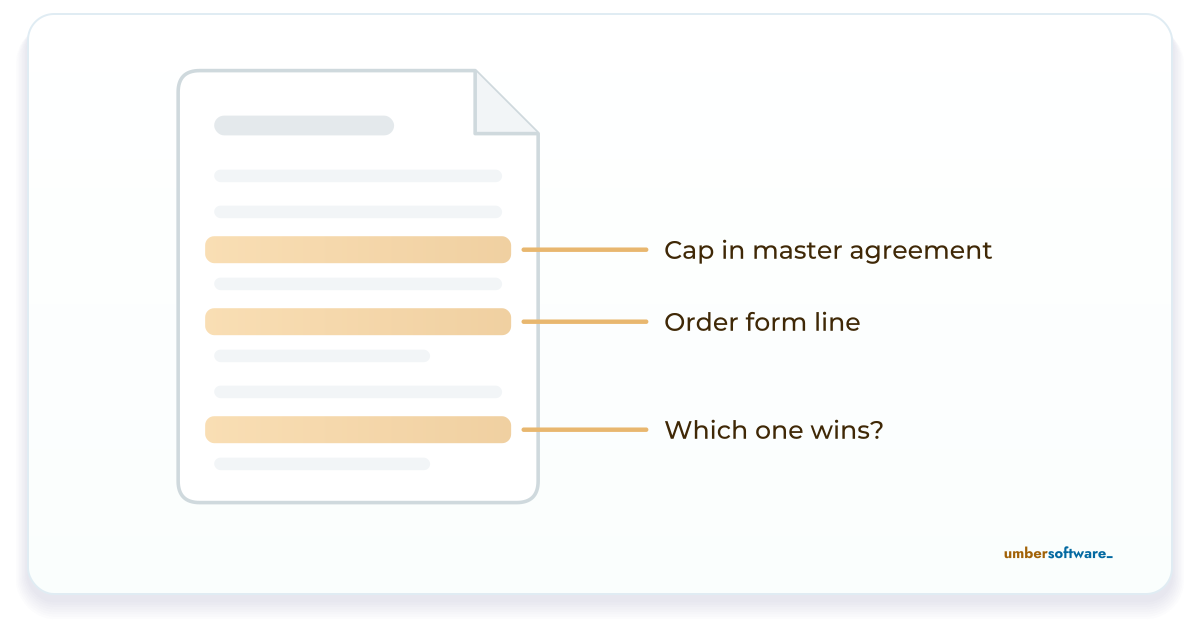
- Read order forms as closely as the main agreement, because they often override it.
- Start four to six months before a renewal so you keep the option to walk away.
A software contract is mostly boilerplate, with a handful of clauses that carry real money. The trick is to find those clauses before you are under time pressure. I use this checklist in software contract negotiation consulting work, and I give it to clients so they can run the first pass themselves.
The eleven points are grouped by theme. Each has the question to ask, what a good answer looks like and the trap I see most often. Use it for new purchases and for renewals, because many terms look different once you have a year of usage data.
The Checklist in One Table
| # | Check | What good looks like |
|---|---|---|
| 1 | Price and discount basis | Discount written as a percentage off a stated list price |
| 2 | Price increase cap | Annual cap tied to a fixed percentage or an index |
| 3 | Term and renewal | No silent auto-renewal, or a short notice window |
| 4 | Usage metric and quantity | Metric defined in plain words, with growth rules |
| 5 | Seat or volume flexibility | Right to reduce at renewal and add at the same price |
| 6 | Support and service levels | Response times and credits written into the agreement |
| 7 | Data ownership and export | Your data stays yours, with export in a usable format |
| 8 | Security and compliance duties | Named standards, breach notice and subprocessor list |
| 9 | Audit rights | Limited frequency, notice period and a dispute process |
| 10 | Liability and indemnity | Cap that reflects real exposure, with fair carve-outs |
| 11 | Exit and termination | Termination for cause, transition help and data return |
Checks 1 to 3: Price, Cap and Renewal
Start with the numbers. Ask what the discount is measured against. A "40 percent discount" on an inflated list price is smaller than it sounds, so insist that list price and discount are both written down. Then ask for the same discount to apply to additional seats and later years.
Check two is the price cap. Without one, a vendor can raise the price at renewal by whatever the market allows. A cap of a few percent a year, or an index-based limit, is common in negotiated deals. If the vendor refuses a cap, ask for a longer price lock instead.
Check three covers term and renewal. Many contracts renew automatically and need written notice 60 to 90 days ahead. Put the notice date in your calendar the day you sign. The renewal habits that prevent a missed window are listed in my article on software contract negotiation best practices.
Checks 4 and 5: Metric, Quantity and Flexibility
The usage metric tells you what is being counted: named users, concurrent users, devices, cores or transactions. It decides whether you are compliant, and it determines how cost grows. Make sure the definition is in plain words and that edge cases are covered: contractors, test environments, virtual machines and users in affiliates.
Check five asks whether you can change the quantity. Seats shrink when a team shrinks, and grow when it hires. Ask for the right to reduce by a set share at renewal and to add more at the same unit price. Vendors that refuse any reduction are telling you something about their own revenue.
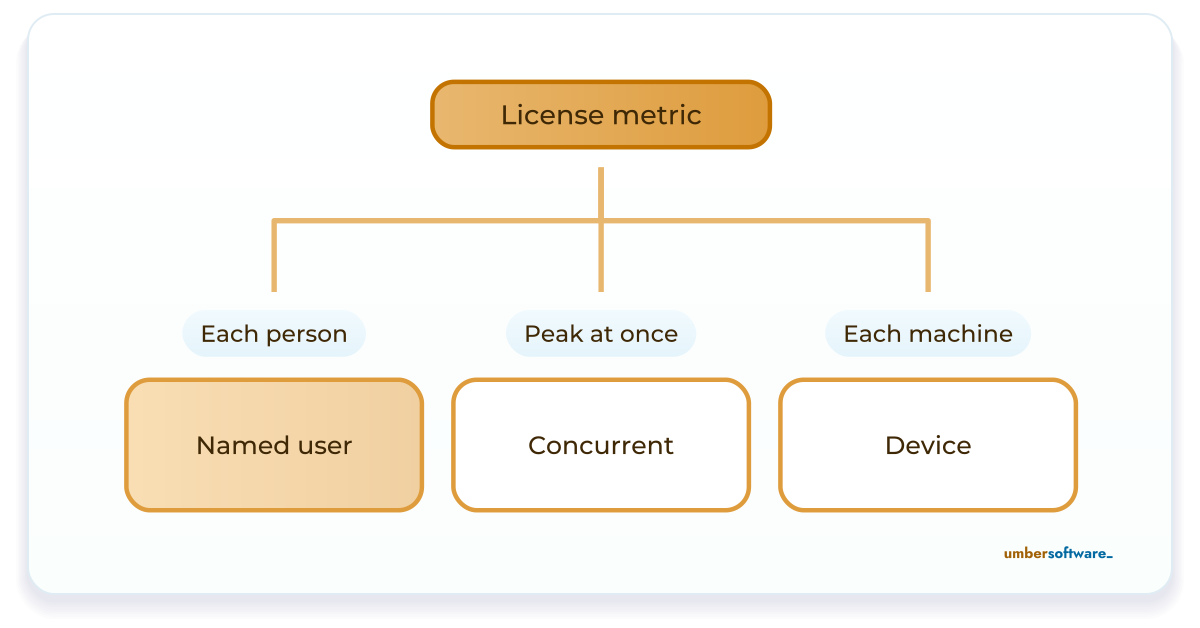
I once reviewed a contract that counted every employee, not every user. The company had 1,800 staff and 400 real users. A single definition change saved more than any discount we negotiated that year.
Checks 6 to 8: Support, Data and Security
Support terms are easy to skim and hard to enforce later. Look for response and resolution times by severity, service credits when the vendor misses them and the hours of coverage. A support promise that appears only on the website is not a contract term.
Data rights come next. Confirm that your data belongs to you, that you can export it in a usable format at any time and that the vendor deletes it after termination within a stated period. For regulated data, ask which security standards the vendor meets, how fast it must notify you of a breach and which subprocessors it uses.
A pricing structure also deserves a look in this section. Fees for exports, extra storage, API calls or sandbox environments often sit outside the headline price, so ask for the full list of chargeable items. These are the costs that stay invisible until the second year.
Checks 9 to 11: Audit, Liability and Exit
Audit clauses let the vendor verify your usage. Reasonable terms limit the frequency, require advance notice, protect confidential data and give you a dispute process. If your contract allows audits at any time with no limits, ask for an annual cap. To prepare your own position first, read my guide to a software asset management audit.
Liability and indemnity decide who pays when something goes wrong. Many vendors cap liability at a year of fees, which may be far below the cost of a data breach. Ask for higher caps on data and confidentiality breaches. Have counsel review this section, because the right level depends on your risk and on your jurisdiction.
The last check is exit. Can you terminate for cause, and what happens to your data and your service afterwards? Ask for transition help for a fixed period and a clear process for returning data. If leaving is hard, every future negotiation is weaker, and you pay for it in price.
A Worked Run: A Renewal for a Project Tool
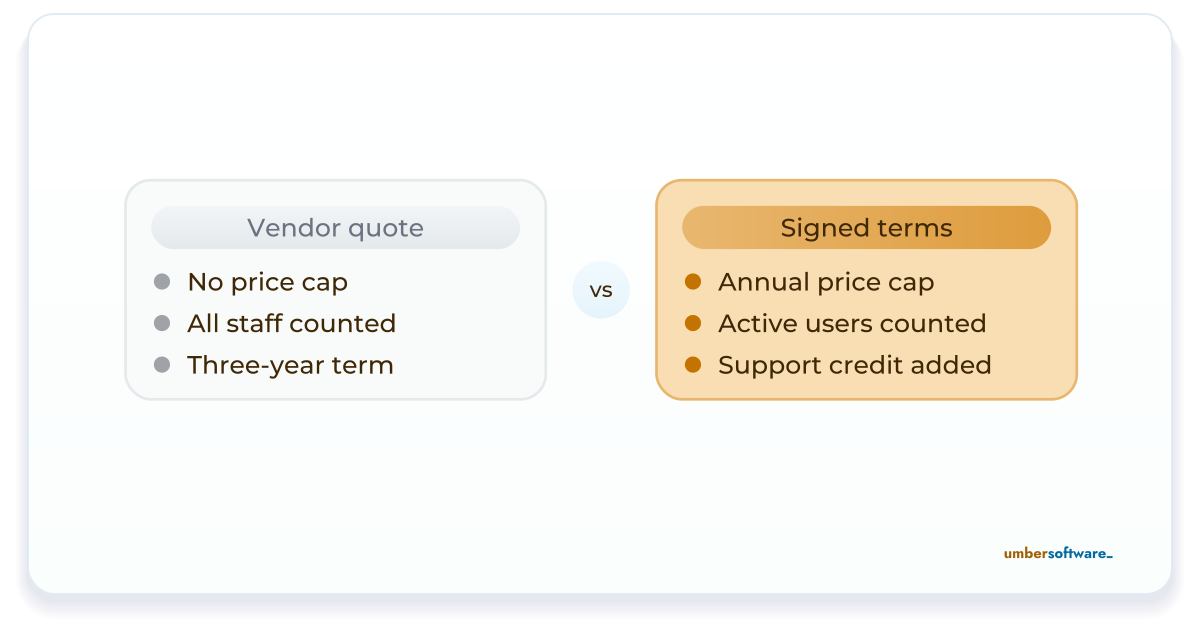
A professional services firm with 350 users faced a renewal for its project and billing platform. The vendor quoted a 14 percent increase and a three-year term. We ran the checklist against the contract, using usage data from the admin console.
Three checks failed. The renewal had no price cap, the metric counted all employees and not active users, and the notice window was 90 days. Usage showed 238 active users. The firm asked for a count of 250 users, a cap of 3 percent a year, a 60-day notice window and a termination right if support levels were missed twice.
The vendor moved on the count and the cap, kept the 90-day window and added a support credit instead of the termination right. The firm accepted. Total cost over three years came in below the first quote for one year of the old structure, with fewer surprises in years two and three.
Two lessons repeat. Your own usage data is your strongest argument, and a concession on one term is worth more when you ask for it in exchange for a commitment the vendor values, such as a longer term.
Trading Terms Instead of Fighting for Price
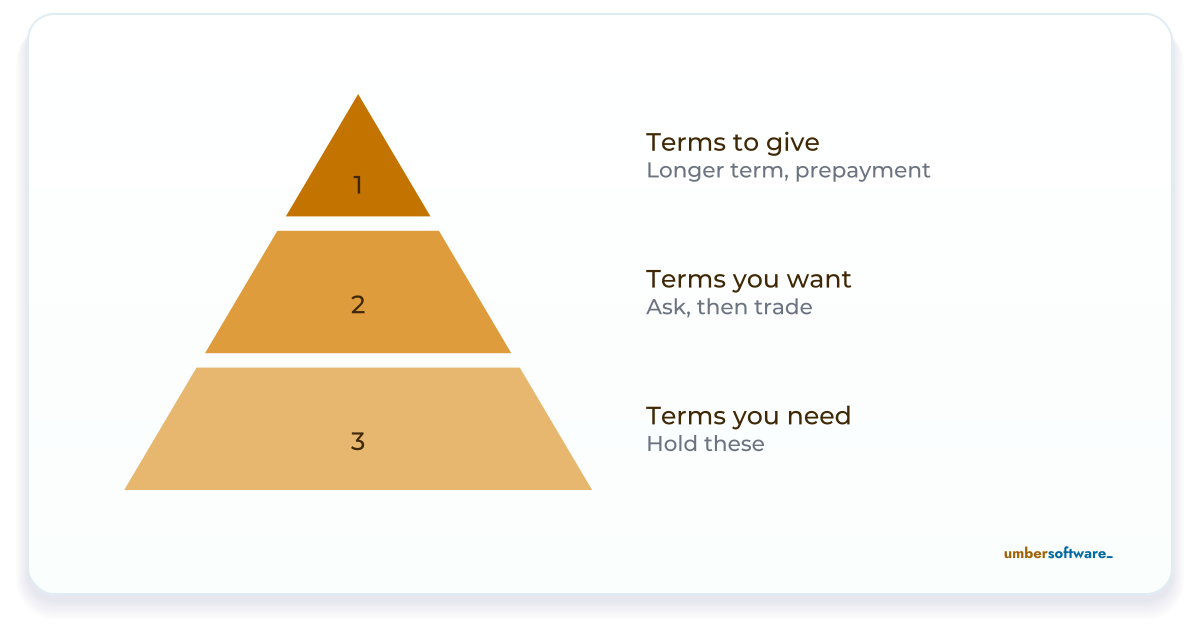
Vendors defend list price because it sets precedent. They are far more flexible on terms that cost them little. A shorter notice window, a support credit, a price lock for an extra year, a reduction right at renewal or a better payment schedule all have value to you, and several cost the vendor almost nothing.
Build a short list before the first call: three terms you need, three you want and two you can give. What you can give might be a longer term, a prepayment, a reference or a case study. A trade is easier to close than a demand, because the vendor gets something to take back to its manager.
Timing matters too. Vendors close their books on a quarter or year end, and a deal that fits their calendar can unlock a better price. Ask your account manager when their quarter ends and plan the signing a week before it, not a week after.
Keep a record of every concession in writing and in the contract itself. Verbal promises from a sales rep rarely survive a change in account manager, and the renewal team will not know what was agreed.
After the Signature
A contract only helps when someone uses it. Log the key terms in your records: renewal and notice dates, caps, metrics and contacts. Share a one-page summary with the budget owner and the system owner. When the next renewal comes, the summary saves days of searching.
Check the vendor against the terms as the year goes on, especially support levels and usage counts. A record of missed service levels is a strong item in the next talk, because it turns a vague complaint into dated evidence that the vendor has to answer. For more ways to prepare, see my short list of software contract negotiation tips.
How to Choose Who Reviews the Contract
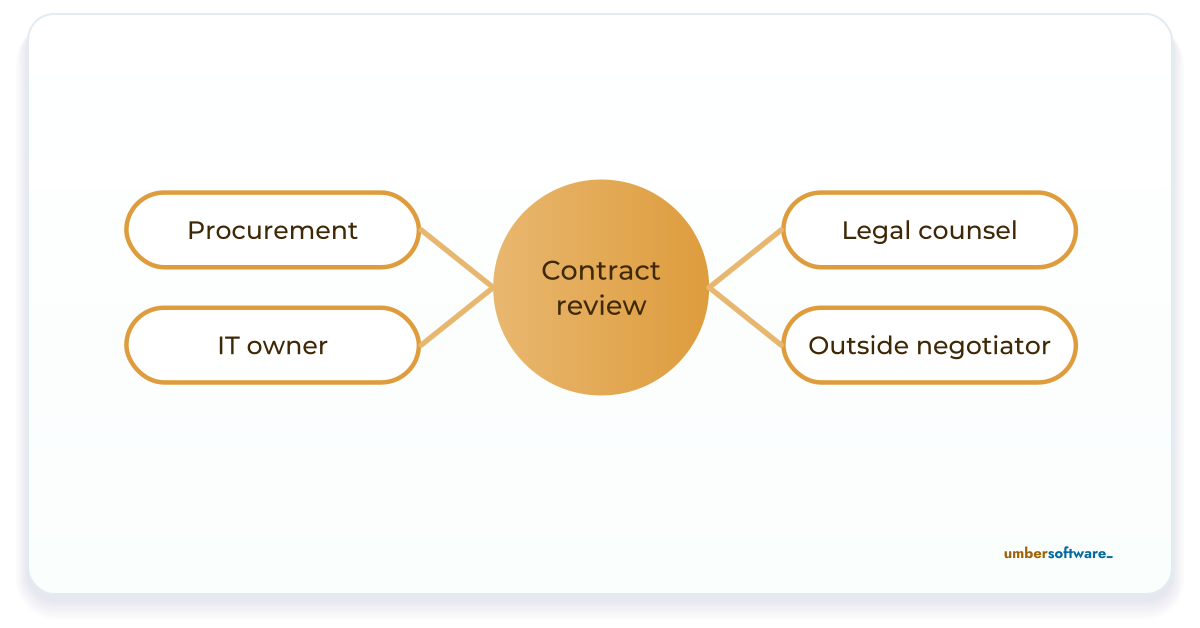
Use the checklist yourself for the first pass. Add other reviewers by risk:
- Procurement for price, term and renewal.
- IT or the system owner for metrics, support and exit.
- Legal or counsel for liability, data and audit clauses.
- An outside negotiator when spend is large or the vendor has a record of tough renewals.
Document who signed off on which point, so you can trace any later question back to a decision. Whoever reviews, ask each person to write down the three terms they would fight for. The overlap tells you where to spend your effort.
Questions About the Software Contract Negotiation Checklist
When Should I Start Negotiating a Software Contract?
Four to six months before a renewal, and as soon as the shortlist is final for a new purchase. Vendors move on price most easily when they believe you can walk away, and that belief needs time. Starting two weeks out leaves you with the vendor's first offer.
Can I Negotiate a Standard Click-Through Agreement?
Often yes, once the spend is meaningful. Standard terms are a starting point for the vendor, and many accept changes to price, term, data and liability for larger customers. Small purchases are less flexible, so choose the three terms that matter most and ask only for those.
Which Clause Is the Most Commonly Missed?
Auto-renewal with a long notice period, followed closely by price increase caps. Together they decide what you pay in years two and three, and both are cheap to fix at signing and expensive to fix later.
Should a Lawyer Review Every Software Contract?
Have legal review anything with significant spend, personal or regulated data, or unusual liability terms. For routine low-value purchases, a checklist reviewed by procurement is often enough. This article is not legal advice, so ask your counsel where the line sits for you.
How Do I Get a Discount Without a Competing Offer?
Use your own data. Show seat usage, offer a longer term or a prepayment, or agree to be a reference in return for price. A credible plan to reduce seats is a strong argument because the vendor risks losing the revenue.
What Should I Do If the Vendor Will Not Move on Price?
Trade on other terms: payment schedule, support level, extra services, a longer price lock or a shorter commitment. A concession in one area can be worth more than a few percent off the list price.
Do I Need to Read the Order Form as Carefully as the Main Agreement?
Yes. Order forms often override the main agreement for quantity, term, price and renewal. I have seen a price cap in the master agreement made meaningless by a line in the order form.
Disclaimer: This article is general information, not legal advice. Contract terms and laws differ by country and by vendor, so have your counsel review any agreement before you sign.
Did this article help you?
Thanks, noted.
Whitney Sorensen
Whitney leads the Umber editorial team and works with the consultants to turn real client projects into practical guides on software selection, custom development, integration and legacy modernization. Before joining Umber, she spent years writing and editing for engineering and IT teams. She has since reviewed architecture audits, system selections and modernization plans from client projects across industries from manufacturing to healthcare. She works remotely from the USA.