Main Points
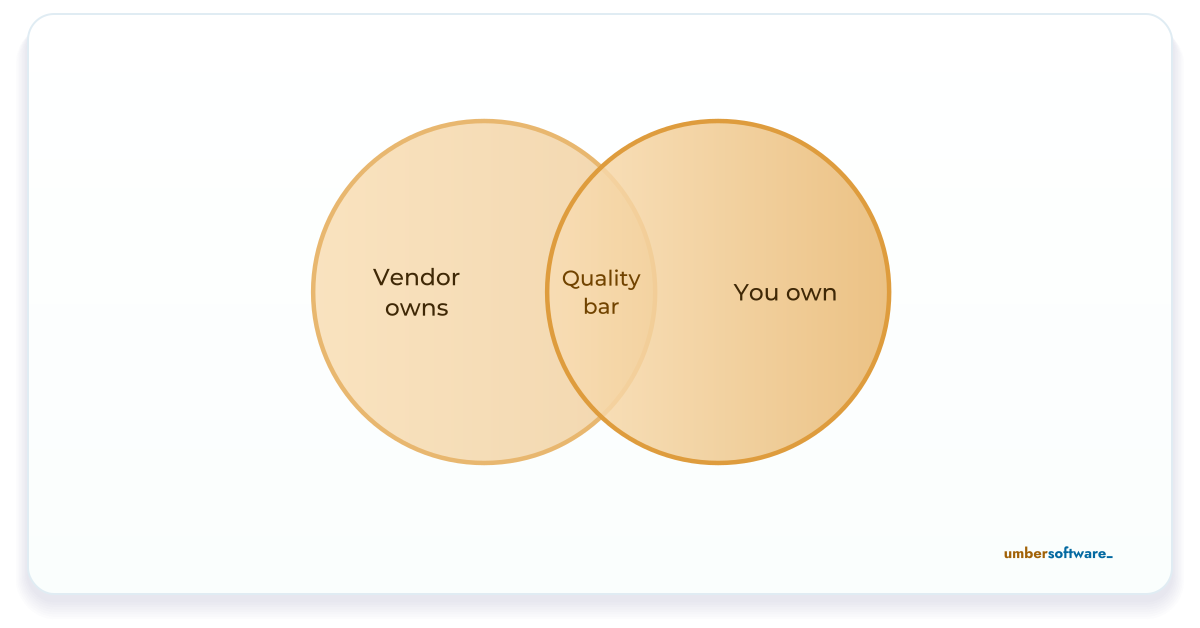
- Outsource QA execution and keep ownership of quality and release decisions inside your company.
- Three models exist: staff augmentation, a dedicated team and a managed service, each with a different management load.
- Compare total cost over a release cycle, including onboarding and your own management time.
- Start with a paid four to six week pilot and keep all test assets in your own repositories.
Outsourcing software testing is one of the easiest decisions to get half right. The price per hour looks attractive, the vendor sends an impressive deck, and three months later releases still slip because bugs are found late and nobody agrees on who owns quality. When I help teams through this choice as part of our software quality assurance consulting work, the model matters far less than how the handover and the metrics are set up.
You will find below the three outsourcing models, what each costs in practice, how to decide whether to outsource at all and the contract terms worth fighting for. Along the way I link to the guides on QA metrics, QA best practices and the QA checklist, which help you keep a vendor honest.
What You Can Actually Outsource in QA
QA is not one job. It is a bundle of activities with very different outsourcing profiles, and splitting them apart is the first step toward a sensible decision.
| QA activity | Outsource well? | Why |
|---|---|---|
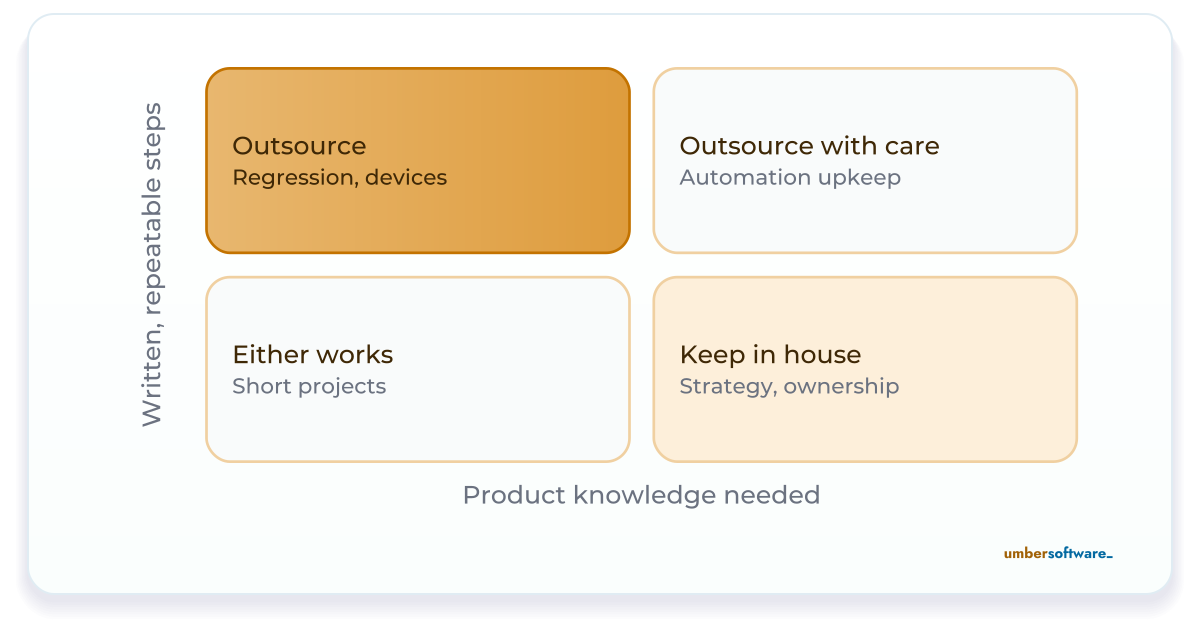
| Manual regression testing | Yes | Repetitive, well documented, easy to measure by cases run and defects found |
| Test automation build and upkeep | Often | Needs strong engineers and access to your code, so choose carefully |
| Performance and load testing | Yes | Short, specialist projects with a clear deliverable |
| Device and browser compatibility | Yes | Needs a large device pool that few teams want to own |
| Test strategy and quality ownership | Rarely | Depends on product knowledge and authority inside your company |
| Exploratory testing of new features | Sometimes | Works when the vendor learns the product, and fails when they never meet the developers |
The pattern is simple. Tasks with written steps and clear pass or fail results travel well. Tasks that depend on judgment about your product and your customers stay close to home.
Three Outsourcing Models Compared
Vendors sell their services under many names, but nearly every offer fits one of three shapes. Know which one you are buying before you compare prices.
| Model | How it works | Best for | Main risk |
|---|---|---|---|
| Staff augmentation | Individual testers join your team and follow your process | Teams with a solid QA lead who need extra hands | You carry all management effort |
| Dedicated team | A vendor team works only on your product with its own lead | Long-running products with steady release schedules | Knowledge sits with the vendor and leaves if the contract ends |
| Managed service or project | The vendor owns defined outcomes, such as a regression suite or a performance test | Clear, bounded needs and teams without QA staff | Scope disputes and weak product knowledge |
Staff augmentation
You hire time, not results. It is the cheapest model per hour and the most demanding to manage. It works well when you already have a strong QA lead and need capacity for a busy quarter.
Dedicated team
A stable group learns your product over months and builds up context. It costs more than augmentation and less than rebuilding in-house. The danger is dependency: if the group knows everything and your team knows nothing, switching vendors becomes painful. Insist that test cases, scripts and documentation live in your repositories and tools from the first day.
Managed service
You pay for an outcome, such as a regression suite run before every release with a report by noon the next day. The vendor chooses how to deliver it. This model suits you when the work is repeatable and you can describe the result precisely.
Should You Outsource at All?
Teams outsource for three real reasons: they cannot hire fast enough, they need skills for a short period, or they want to cover time zones. The wrong reasons are saving money on quality you do not yet measure, or hoping a vendor will fix a broken development process.
A quick test: if your developers regularly hand over half-finished features with no acceptance criteria, an outside tester will find the same chaos and bill you for it. Fix the intake first, using the guidance in the best practices guide, and outsource afterward.
What Outsourced QA Costs in Practice
Hourly rates vary widely by region, seniority and model, so I will not quote numbers that age badly. Compare total cost over a release cycle instead of rate cards. Three costs hide outside the rate: management time on your side, onboarding for the first one to two months and rework when a vendor misunderstands the product.
Here is a simple way to compare. Take the hours your internal team would need for the same work, multiply by the fully loaded cost of those people, then add recruiting and tool costs. Do the same for the vendor, adding your management time at a realistic 10 to 20 percent of the vendor's hours in the first quarter. The gap is often smaller than the quoted rates suggest.
| Cost item | In-house | Outsourced |
|---|---|---|
| Direct labor | Salaries and benefits | Vendor rate times hours |
| Recruiting and ramp-up | Months per hire | Weeks, but still an onboarding cost |
| Management overhead | Part of existing lead's time | Extra coordination time on your side |
| Tools and devices | You buy and maintain them | Often included, check the contract |
| Flexibility | Fixed capacity | Scales up and down with notice |
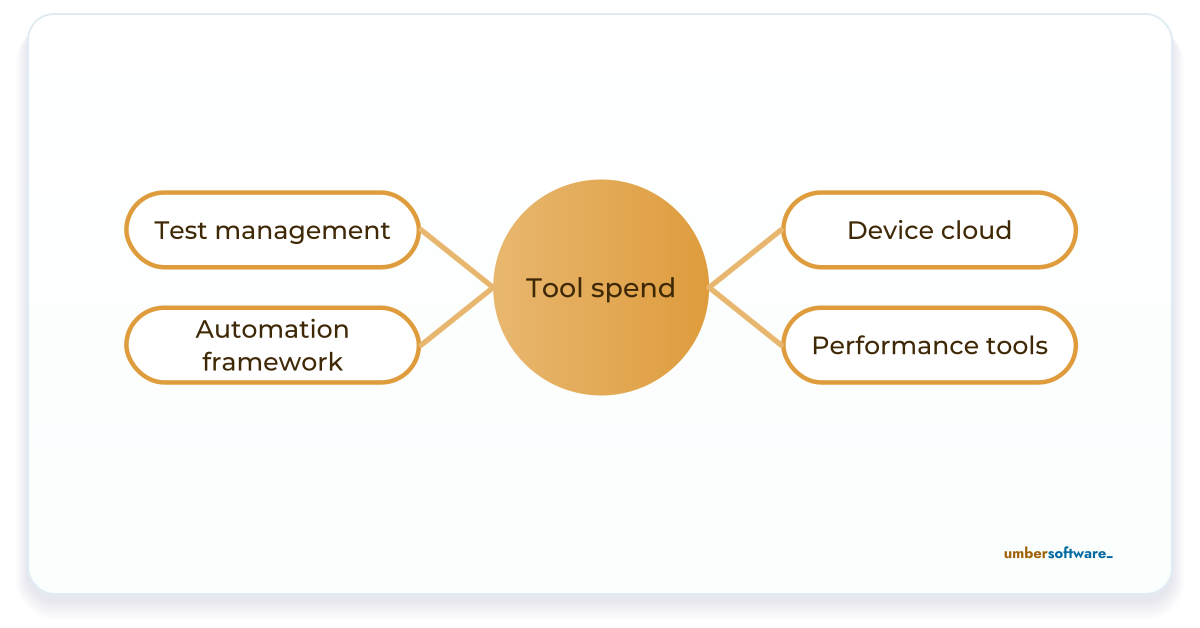
Tool spend deserves its own line. Test management, automation frameworks and device clouds can dwarf labor on small projects. See the ranked list of software quality assurance tools to understand what a vendor's tool bill should look like.
How to Choose a Vendor
Start with a paid pilot, not a long contract. Four to six weeks on a real slice of your product tells you more than any proposal. Give the vendor one feature, one regression area and one bug report review, then judge the results against your own standards.
- They ask about your release process and users before quoting a price.
- Their bug reports include steps, expected result, actual result and evidence.
- They name the people who will do the work and keep them stable.
- They report in the metrics you choose, not in their own vanity numbers.
- They accept that tests and scripts live in your tools and repositories.
Contract terms worth negotiating
Ask for a notice period of 30 days or less, ownership of all test assets from day one and a defined handover plan. Add service levels for turnaround, such as regression results within a set time after a build. Avoid minimum commitments longer than the pilot until you have evidence.
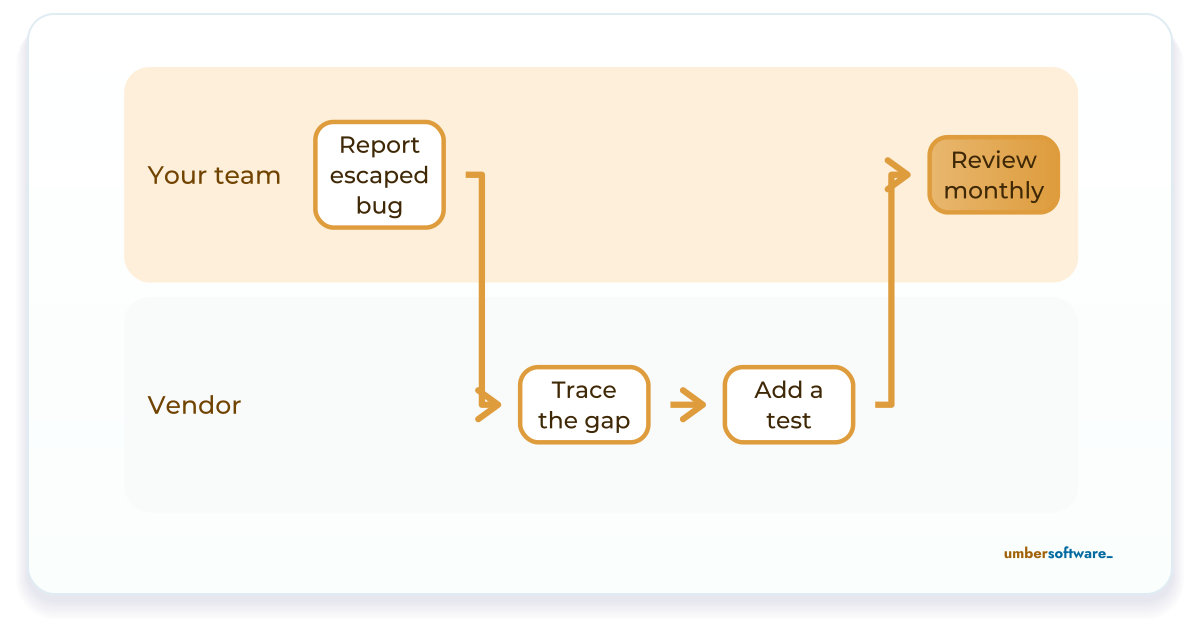
Agree on three to five numbers before the work starts. Defect escape rate shows bugs the vendor missed that reached customers. Test coverage of critical flows shows what is protected. Turnaround time shows speed. Each is defined in the QA metrics guide, so you can write them into the agreement with exact definitions.
The First 90 Days With a Vendor
The first quarter decides whether the relationship works. Treat it as a project with its own plan, not as a routine start.
Days 1 to 30: learn the product
Give the vendor access to the staging environment, product documentation, a list of the ten most important user flows and the last six months of bug history. Hold a half-day walkthrough with a developer and a product owner. Ask the vendor to write test cases for the top flows and review them with you. Mistakes here are cheap, and they show how the team thinks.
Days 31 to 60: run in parallel
Let the vendor run regression while your own people still do the same checks. Compare results. Every gap points to a missing test case or a misunderstood requirement. In one engagement for an insurance software team, the parallel run exposed that the vendor had never tested the policy cancellation flow, which the internal team did out of habit and had never documented.
Days 61 to 90: hand over and measure
Once results match, move the work fully to the vendor and start the monthly metric review. Keep one internal person responsible for reading the reports and attending the release meeting. Without that person, reports pile up unread and the arrangement quietly stops delivering value.
| Period | Main activity | Success signal |
|---|---|---|
| Days 1 to 30 | Onboarding and first test cases | Cases for top flows reviewed and agreed |
| Days 31 to 60 | Parallel regression runs | Vendor and internal results match |
| Days 61 to 90 | Full handover and metric review | Metrics reported and discussed monthly |
A Worked Example: Hybrid Model for a 25-Person Product Team
A software company with 25 people and two QA staff struggled with release regression, which took four days of manual work every two weeks. The team chose a hybrid: keep the two internal testers for new-feature testing and test strategy, and move regression to a managed service with a fixed result deadline.
The vendor took six weeks to reach stable results. Regression dropped from four days to one working day after build delivery, and the internal testers moved to exploratory work, where they found issues that scripts would never catch. The company kept ownership of the test cases in its own tool and reviewed three metrics monthly. Within two quarters the number of defects reported by customers fell by roughly a third, though some of that reflected other changes made in the same period.
The lesson is not that hybrid beats everything. It is that the company kept judgment in-house and sent repeatable work out, and that is the split that held up across most of the arrangements I have seen work.
Protecting Your Data and Code
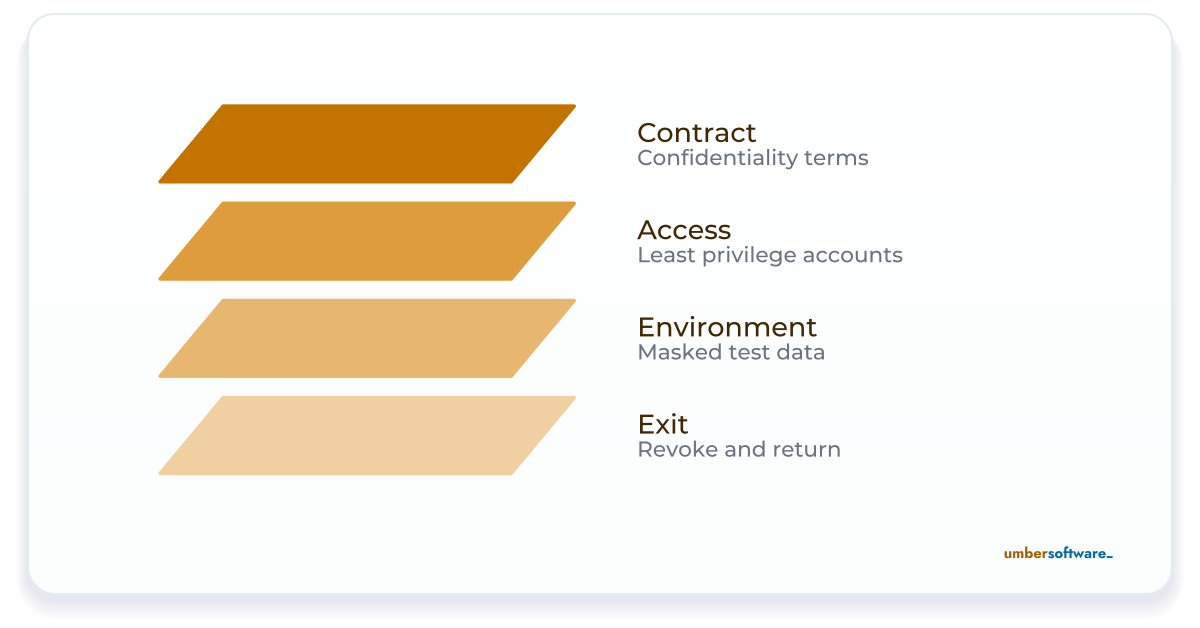
Giving outsiders access to staging systems means giving them access to your product's behavior and sometimes to real data. Use synthetic or masked test data, never production records. Grant access through named accounts with multi-factor sign-in and remove them on the day the engagement ends.
Put confidentiality terms in the contract and ask where the vendor stores test results, screenshots and recordings. Those files often contain screens from your product that you would not want public. If the work touches regulated data, such as health records, involve your security contact before the pilot starts, not after.
Mistakes I See Repeated
The most common mistake is isolating the vendor. Testers who never speak to developers file tickets into a void, and developers treat their work as noise. Put them in the same chat channel and invite them to planning.
The second is hiring on price alone. A cheap tester who misses one payment bug costs more than a month of better coverage. The third is skipping an exit plan. If you cannot pull your tests and documentation out within a week, you are locked in, whatever the contract says.
Questions About Software QA Outsourcing
Is Outsourcing Software Testing a Good Idea?
It can be, when you need extra capacity, specialist skills or time zone coverage and you keep ownership of quality yourself. It works poorly as a way to repair a broken development process.
What QA Work Is Best to Outsource?
Repetitive manual regression, performance testing and device compatibility testing travel well. Test strategy and decisions about release readiness are better kept inside your company.
How Do I Measure a QA Vendor?
Pick a few numbers before work starts, such as defect escape rate, coverage of critical flows and result turnaround time. Review them every month and tie service levels to them.
How Long Should a Pilot Last?
Four to six weeks on a real part of your product is usually enough to judge communication, bug report quality and speed. Avoid long commitments until the pilot ends.
Who Should Own the Test Cases and Scripts?
You should, from day one. Store them in your own repositories and tools, so you can change vendors or bring work in-house without losing them.
Can Outsourced QA Work with Agile Teams?
Yes, if testers join the daily conversation, planning and reviews. Problems appear when the vendor works in isolation and receives builds at the end of a sprint.
What Does Outsourced QA Cost?
Cost depends on region, seniority, model and tools. Compare total cost over a release cycle, including your management time and onboarding, rather than comparing hourly rates alone.
Sources
Please note: this guide is general information and not legal, financial or tax advice. Numbers and examples are typical-project estimates; confirm current details with your providers and advisers.
Did this article help you?
Thanks, noted.
Whitney Sorensen
Whitney leads the Umber editorial team and works with the consultants to turn real client projects into practical guides on software selection, custom development, integration and legacy modernization. Before joining Umber, she spent years writing and editing for engineering and IT teams. She has since reviewed architecture audits, system selections and modernization plans from client projects across industries from manufacturing to healthcare. She works remotely from the USA.