Main Points
- Buy what every company needs and build only what makes customers choose you.
- Consolidate tools by job and set cancellation dates, or old contracts renew quietly.
- Fund initiatives in stages with written kill criteria, so weak ideas stop early.
- Pick two or three of these patterns to start, not all eight at once.
Most software strategies fail by being too long. Forty pages of vision sit in a shared drive while teams keep buying overlapping tools and starting rewrites. The companies I see doing this well have a short set of decisions that people can recite. If you want help drafting yours, that is the core of my team's software strategy consulting work.
Here are eight patterns I see repeatedly in strong strategies. Each one shows what the decision is, why it works and the steps to set it up. They come from my client work, so the outcomes are examples of what happens, and your numbers will differ.
The Eight Patterns Compared
Use the table to see how much effort each one takes and how fast it pays off. Effort means organizational change, not engineering hours.
| Pattern | Area | Effort | Typical time to first gain |
|---|---|---|---|
| 1. Buy the Commodity, Build the Edge | Build or buy | Low | One quarter |
| 2. One Platform Per Job | Portfolio | Medium | Two quarters |
| 3. An API-First Integration Layer | Integration | Medium | Two quarters |
| 4. A Modular Monolith Before Microservices | Architecture | Low | One quarter |
| 5. Product Teams That Own Outcomes | Teams | High | Three quarters |
| 6. Security Built Into Delivery | Security | Medium | Two quarters |
| 7. One Source of Truth Per Data Domain | Data | Medium | Two quarters |
| 8. Stage-Gated Funding With Kill Criteria | Roadmap | Medium | One quarter |
Buy the Commodity, Build the Edge
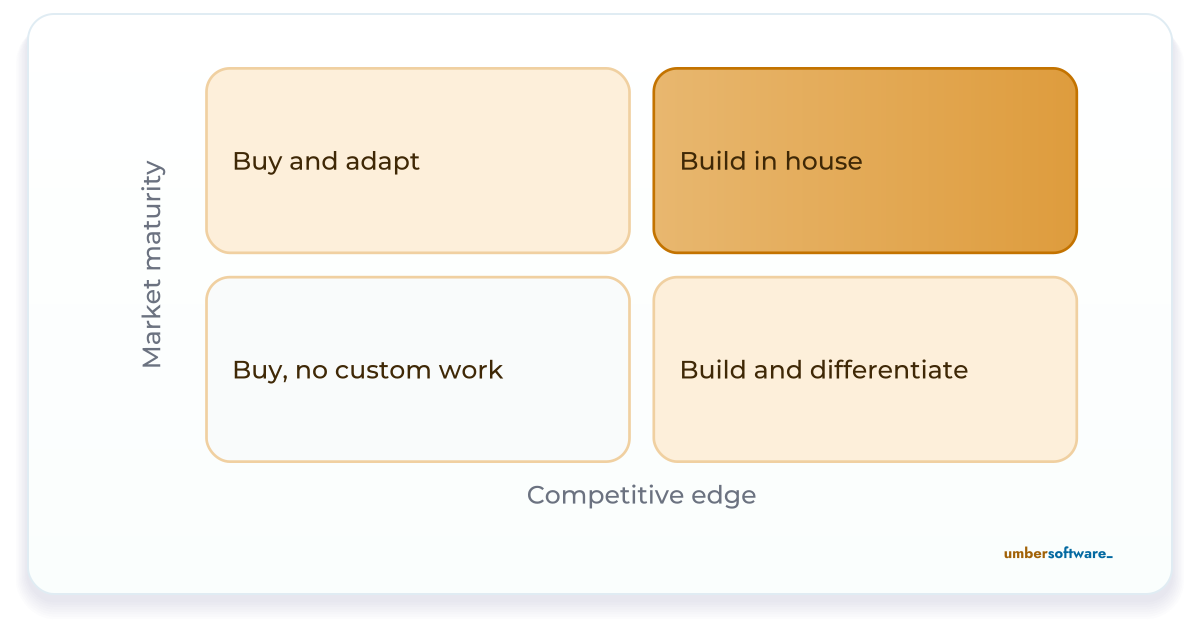
The cleanest software strategy I see splits the estate in two. Anything every company in your industry needs, such as payroll, ticketing or accounting, gets bought. Anything that makes customers choose you, such as a pricing engine, a scheduling method or a proprietary quality model, gets built and owned. Teams that skip this split end up maintaining a homegrown HR tool while their real differentiator waits in the backlog.
In my client work, the hard part is honesty about what counts as an edge. A manufacturer once listed 14 custom systems as strategic, and after two workshops only three survived the test of whether a customer would notice if it disappeared. The other eleven moved to products over 18 months, and the freed engineers went to the three that mattered.
How the Split Gets Made
- List every system and its yearly cost to run.
- Ask of each one whether a customer or regulator would notice if it was replaced by a standard product.
- Mark the yes answers as build candidates and the rest as buy.
- Write down the replacement path for each bought system, including data export.
- Review the list yearly, because yesterday's edge becomes tomorrow's commodity.
What Helps Here
A simple spreadsheet with cost, owner and differentiation score is enough to start. Add a software asset register later so renewal dates stay visible.
One Platform Per Job
Top performers keep a short list of approved tools and one platform per business job. If sales tracking lives in the CRM, nobody runs a second pipeline in a spreadsheet and a third in a project tool. Fewer overlapping products means fewer integrations, fewer licenses and one place to look for the truth.
The trick is to consolidate by job, not by vendor. Start by mapping what each tool does for whom, and you will find three tools doing the same work for three teams. Pick the one that fits the most users, migrate the others over two quarters and cancel renewals on a date you set in advance, or the old ones will quietly renew.
Consolidating Without a Revolt
- Map each tool to the job it does and the team that uses it.
- Find jobs covered by more than one tool.
- Score the candidates on fit, integration and cost per user.
- Pick one per job and announce the retirement dates.
- Migrate data first, then switch off access.
- Track license spend monthly until the old contracts end.
Tools That Make It Visible
SaaS management tools can discover what people actually use from login and billing data. Your finance system's vendor list is a good free alternative.
An API-First Integration Layer
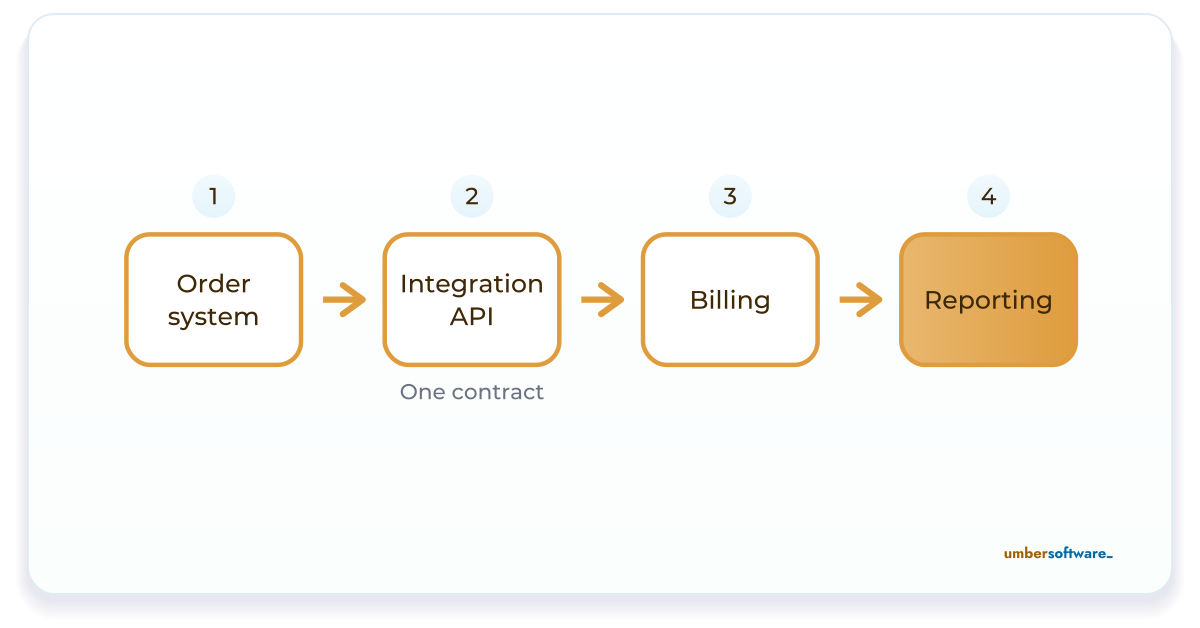
Strategy-led teams treat every system as something other systems will call. They publish documented interfaces first and build screens second. When orders, stock and billing talk through monitored APIs, a new warehouse tool plugs in within days instead of months.
I recommend this to teams whose staff retype data between systems, because the pain is visible and the payoff is quick. Be careful to assign an owner for each interface and to version it. An undocumented change to one field at one end can silently break three consumers, and the first sign is often an angry finance team.
Building the Layer
- Inventory the data flows between your core systems.
- Rank them by volume and error rate.
- Define a contract for the top flow, including field names and error codes.
- Put monitoring and alerts on it before go-live.
- Move the next flow only after the first has run cleanly for a month.
Stack Options
An integration platform or API gateway handles routing, retries and logging for most mid-sized estates. Smaller teams often start with managed queues and a few well-tested services.
A Modular Monolith Before Microservices
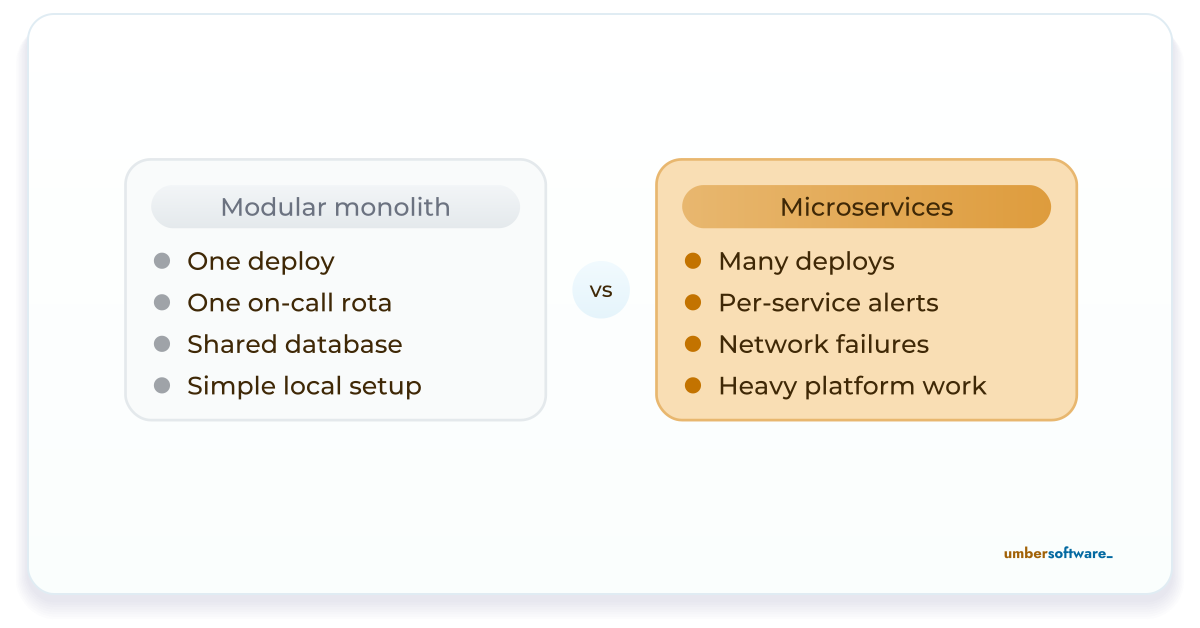
Many top performers delay the split into microservices. They build one deployable application with strict internal module boundaries, and extract a service only when a module needs its own scaling or its own team. This keeps operations simple while the product is still finding its shape.
I have watched three-person teams adopt twelve services and spend their year on deployment pipelines. The modular approach gives you clear boundaries now and an easy cut line later. If two modules always change together, the boundary was wrong, and fixing it inside one codebase costs a day rather than a quarter.
Setting the Boundaries
- Name the business capabilities, such as billing, catalog and identity.
- Give each capability its own module with a public interface.
- Block direct database access across modules.
- Add automated checks that fail the build on boundary violations.
- Extract a module into a service only when you can name the reason.
What to Use
Architecture rule checkers for your language enforce the boundaries in the build. A short written decision record for each extraction keeps the reasoning for later.
Product Teams That Own Outcomes
Strong software strategies assign systems to long-lived teams that own a business outcome, such as order accuracy or onboarding time, together with the code behind it. A project team disbands at launch and leaves a system nobody understands. A product team stays and keeps improving it.
The shift is as much about funding as about org charts. Budget goes to the team for a year with outcome targets, not to a project with a deadline. In the engagements where I saw this work, the first six months felt slower, since teams were learning to say no to feature requests, and after that lead times dropped steadily.
Moving to Ownership
- List your top five systems and who changes them today.
- Group them by the outcome they serve.
- Form one cross-functional team per outcome.
- Agree two or three outcome measures with the business sponsor.
- Fund the team for a year and review quarterly.
Supporting Tools
A shared dashboard of the outcome measures keeps the sponsor and the team looking at the same numbers. Keep the tooling light, because the team structure carries most of the value.
Security Built Into Delivery
Top performers check code for weaknesses on every commit rather than once a year before an audit. Static analysis, dependency checks and secret scanning run in the pipeline, and findings reach the developer who wrote the code within minutes. The strategy decision here is to treat security as a delivery property with an owner and a budget.
It pays to start small. Turn on dependency and secret scanning first, because they have the fewest false alarms. Add code analysis once the team trusts the first two, and set a rule that critical findings block a release. A noisy scanner that nobody reads is worse than none, since it trains people to ignore alerts.
Rolling Out Checks in Order
- Enable secret and dependency scanning on every repository.
- Set a clear rule for severity and response time.
- Add static code analysis to pull requests.
- Run a dynamic scan against a staging environment each release.
- Review findings monthly and tune the rules.
Where to Look
Many platforms bundle scanning into the code host or the pipeline. My ranking of application security tools compares the main options by approach and price.
One Source of Truth Per Data Domain
Customer, product and order data each get a single owning system. Every other system reads from it through an interface and never keeps its own editable copy. That one rule removes most of the reconciliation work that eats finance and operations teams.
The owner decision causes the arguments, so settle it early. Pick the system where the data is created, not where it is displayed. Where two systems both create customer records, you have a process problem to fix first, and a technical fix will only move it around.
Assigning Ownership
- List your key data domains, such as customer, product, order and supplier.
- Find where each is created and where copies live.
- Choose the owning system for each domain.
- Replace editable copies with read access or synced fields.
- Add a monthly check that compares copies against the owner.
Helpful Building Blocks
A data catalog records who owns which domain and where it flows. For small estates, a one-page register that is kept current does the same job.
Stage-Gated Funding With Kill Criteria
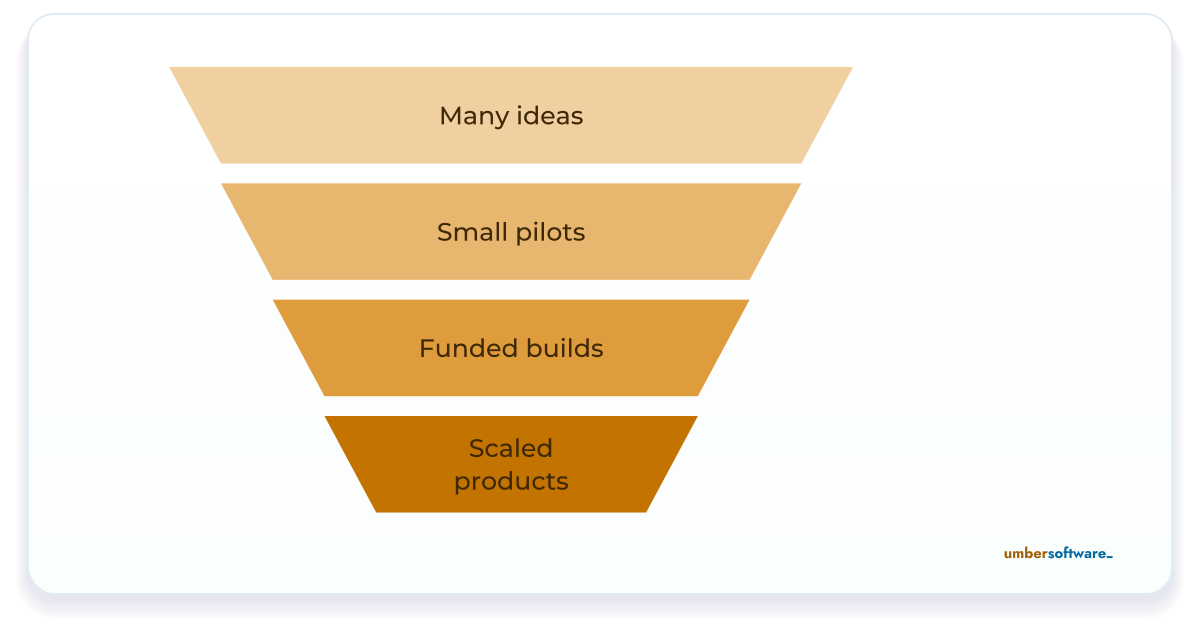
The most disciplined strategies fund initiatives in stages and write down in advance what would make them stop. A discovery stage is small, a pilot is larger and full build money is released only if the pilot meets its targets. This keeps weak ideas from growing into expensive ones.
Kill criteria feel uncomfortable, and that is the reason they work. I ask sponsors to write one sentence at the start, such as: if adoption is below 40 percent after eight weeks, we stop. It turns a political argument later into a simple check against what everyone agreed earlier.
Setting Up the Gates
- Split each initiative into discovery, pilot and scale stages.
- Cap the budget for each stage.
- Write the exit criteria and kill criteria before the stage starts.
- Review results with the sponsor at each gate.
- Publish the decisions so the next team learns from them.
Keeping It Light
A one-page initiative brief per stage is the only artifact you need. Track the gates in the same tool where your roadmap lives.
How These Patterns Fit Together
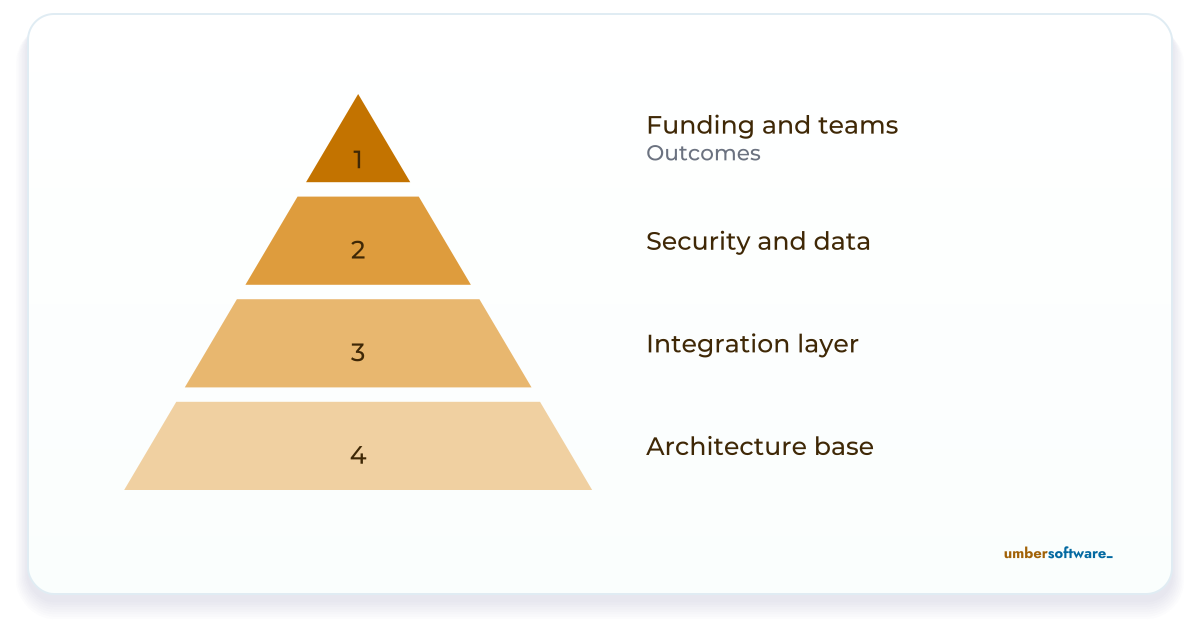
The patterns are not a menu you order from at random. They stack. Buying the commodity and consolidating tools clears the clutter. An API-first layer and clear data ownership make the remaining systems work together. A modular architecture and product teams let you change them quickly. Stage-gated funding and built-in security keep the whole thing honest as it grows.
When I start with a new client, I usually pick the first two from the clutter group and one from the delivery group. Taking on all eight in the same year overloads the organization, and the ones that need cultural change, such as product teams, take the longest. If your roadmap needs a calendar, my software strategy roadmap shows how to order them across twelve months, and the structure behind the decisions is in the software strategy framework.
How to Choose Your First Two Patterns
Match the pattern to the pain you can already see. A few signals point the way:
- Many tools with overlapping features and rising license bills point to one platform per job.
- Staff retyping data between systems point to an API-first layer and one source of truth.
- Slow releases and fear of changing old code point to a modular architecture and product teams.
- Projects that run over budget and never get stopped point to stage-gated funding.
Pick the two with the clearest evidence in your own numbers, write each as a two-sentence rule and share it with the teams affected. Review after a quarter and adjust. Most of the value comes from a short rule that people follow, and a perfect rule that nobody remembers adds nothing.
Questions About Software Strategy Examples
What Is a Software Strategy?
A software strategy is a set of decisions about which systems you build, buy and retire, how they connect and who owns them, tied to business goals. It answers where software money goes and why. Without it, each team picks tools alone, and the estate turns into a pile of overlapping products.
How Is Software Strategy Different from IT Strategy?
IT strategy usually covers infrastructure, support and vendors across the whole company. Software strategy focuses on the applications that run the business and the products you sell, including build or buy choices, architecture and delivery. The two overlap, and in smaller companies one document often covers both.
How Often Should I Revisit My Software Strategy?
Review it every quarter in a short meeting and rewrite it once a year. Quarterly reviews catch drift, such as a new tool that duplicates an existing one. The annual rewrite follows changes in your business, such as a new market or a merger.
Which Example Should a Small Company Start With?
Start with buying the commodity and building only the edge. It costs little, needs no reorganization and stops you from building tools that products already cover. Once that is in place, one platform per job is the next easy win.
Do These Examples Work for Regulated Industries?
Yes, and some of them matter more there. Security built into delivery and one source of truth per data domain make audits easier in healthcare and finance. Check the specific rules that apply to you with your compliance advisers, because requirements differ by country and sector.
How Do I Measure Whether the Strategy Works?
Pick three to five measures that match your goals: lead time for a change, share of spend on run versus change, number of overlapping tools, incident count and time to onboard a new system. Record a baseline before you start so that you can show the movement.
When Do I Need External Help?
Bring in help when the decisions are contested inside the company, when you need an independent view of build versus buy, or when you lack time to run the assessment. A good outside partner shares the scoring method and hands it over, so your team keeps running it.
Please note: this guide is general information and not legal, financial or tax advice. Numbers and examples are typical-project estimates; confirm current details with your providers and advisers.
Did this article help you?
Thanks, noted.
Whitney Sorensen
Whitney leads the Umber editorial team and works with the consultants to turn real client projects into practical guides on software selection, custom development, integration and legacy modernization. Before joining Umber, she spent years writing and editing for engineering and IT teams. She has since reviewed architecture audits, system selections and modernization plans from client projects across industries from manufacturing to healthcare. She works remotely from the USA.