Main Points
- Build the smallest version that tests your riskiest assumption, then expand from real usage.
- Pick a mainstream stack your team knows; hiring and speed matter more than technical novelty.
- Add tests, automated deploys and monitoring in the first weeks. They cost little early and save the most later.
- Track shortcuts as technical debt, and pay them off before they block growth.
A startup lives or dies on how fast it learns what customers want, and software is the tool for that learning. I have watched teams lose a year on a perfect architecture nobody asked for, and others ship a rough first version in six weeks and reshape it around real users. In both groups, outside software development consulting helped most at the same moments: deciding what to build first and what to leave out.
This guide follows four phases, from the first idea to a product that can scale. Each phase has its own goal and its own traps, and the table below gives you the overview before the details.
The Four Phases at a Glance
| Phase | Goal | Typical team | Main trap |
|---|---|---|---|
| 1. Validate | Test the riskiest assumption cheaply | Founders, maybe one developer | Building before talking to customers |
| 2. Build the MVP | Ship the smallest useful product | 2 to 4 engineers | Scope growth and gold-plating |
| 3. Find fit | Improve from usage data and feedback | Small product team | Feature spree with no measurement |
| 4. Scale | Make the product reliable and the team faster | Several teams | Rewriting everything at once |
Phase 1: Validate Before You Write Much Code
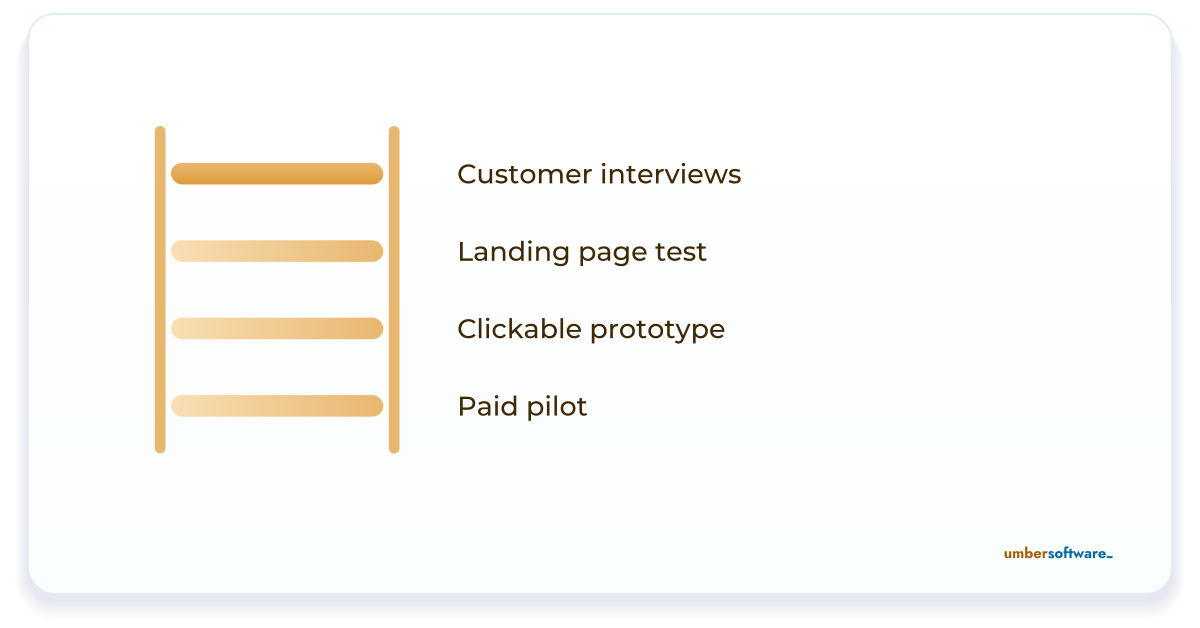
The cheapest software is the code you never write. Before building, test your riskiest assumption with a landing page, a spreadsheet, a clickable mockup or a manual service that you run behind the scenes. If ten target customers will not book a call or pay a deposit, a polished app will not change their minds.
Write down the one sentence that must be true for your business to work, such as "dispatchers will pay to avoid double-booking trucks." Then design the smallest experiment that could prove it wrong. I ask founders to bring that sentence to our first call, because it decides every scoping question that follows.
Phase 2: Build the MVP You Can Be Embarrassed By
An MVP is a learning tool, not a small version of the final product. Pick one user, one job and one flow, and build only that. Anything that does not help you learn whether people want it can wait: admin panels, perfect onboarding, extra roles and settings pages.
Choosing Who Builds It
If a technical founder can build version one, the speed of learning is hard to beat. Otherwise, you can hire a small outside team for a fixed first phase, as long as you own the repository and review the work. My comparison of software development outsourcing against hiring covers the trade-offs in detail. Whatever you choose, keep one person on your side who can read the code.
Choosing the Stack
Pick technology your team already knows and that many developers can work with. TypeScript with a managed Postgres database, Python with Django or C# with .NET all carry products far beyond the first thousand users. A novel framework saves little time and makes every future hire harder.
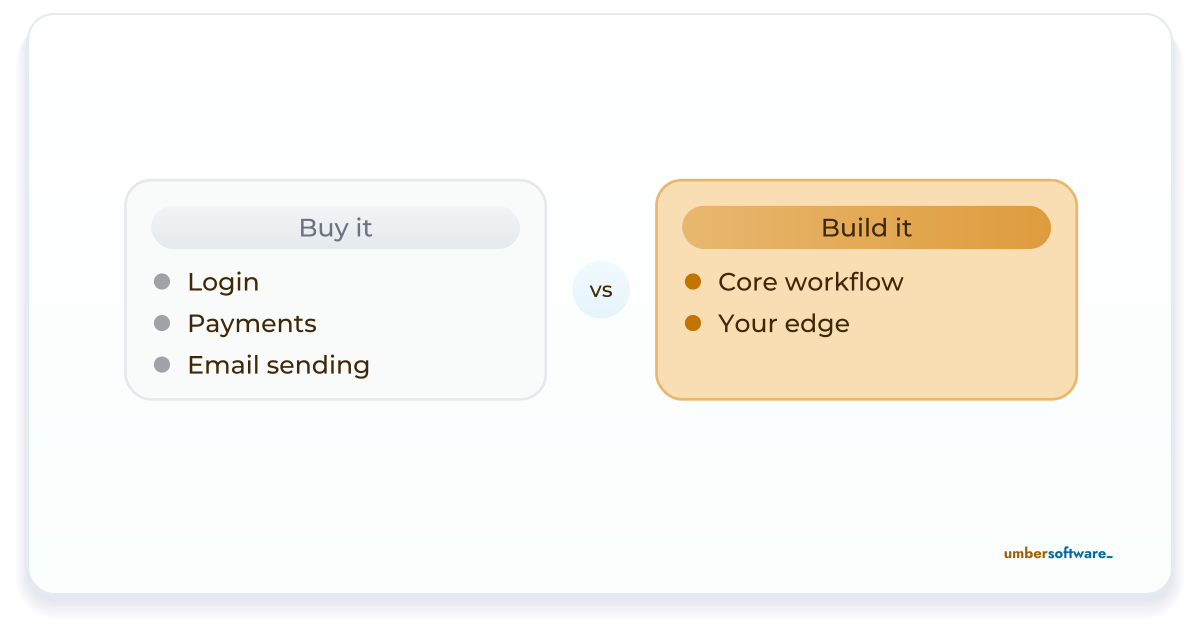
Use managed services for what is not your product: authentication, payments, email and hosting. Each one saves weeks, and you can replace it later if cost or limits become a problem. The right development tools matter too; a free Git host, a shared editor setup and an error monitor cover most early needs.
Habits Worth Starting in Week One
Three habits cost almost nothing early and are painful to add later. Write automated tests for anything that touches money, permissions or customer data. Set up a pipeline that deploys on every merge to the main branch. Add error monitoring, so you hear about bugs before your users tell you.
Skip the rest of the process for now. A startup with three developers does not need sprint ceremonies or an architecture board, but it does need a shared backlog and a rule that every change is reviewed by a second person.
Phase 3: Find Fit With Real Usage
Once real users arrive, your job changes from building to listening. Add basic analytics for the one flow that matters, talk to five users every week and compare what they say with what they do. Features nobody opens are not progress, even if they were requested.
This is also when technical debt starts to show. Shortcuts taken in phase two are fine if you tracked them. I suggest a short debt list with three columns: what the shortcut is, what it will cost when it bites and the trigger that tells you to fix it, such as "at 500 daily users" or "before the second developer joins."
Hiring changes in this phase too. Your first employees should be strong generalists who can own whole features. Specialists come later, when a clear need exists, such as security or data engineering. Until then, short outside engagements can fill the gaps.
Phase 4: Scale the Product and the Team
Scaling is not mainly about servers. For most startups, the first limits are people and process: builds that take twenty minutes, releases that need one person's memory, and a codebase where every change touches ten files. Fix those before you reach for microservices.
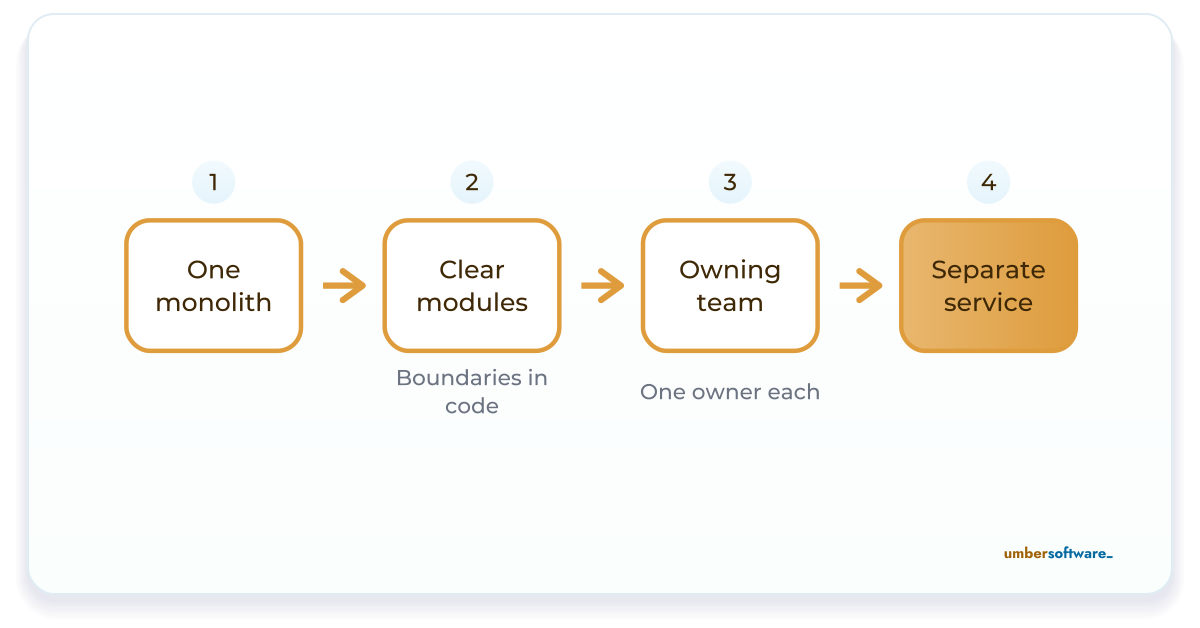
Split the system only when a clear boundary and a clear team exist for each piece. A well-structured single application with modules serves most companies longer than expected, and it is much simpler to test and run. When you do split, move one piece at a time and keep the product live.
This is also the point to look at the bigger shifts in the field. AI coding tools, platform teams and new security expectations are changing how teams work, which I track in my piece on software development trends.
The Risks That Sink Young Products
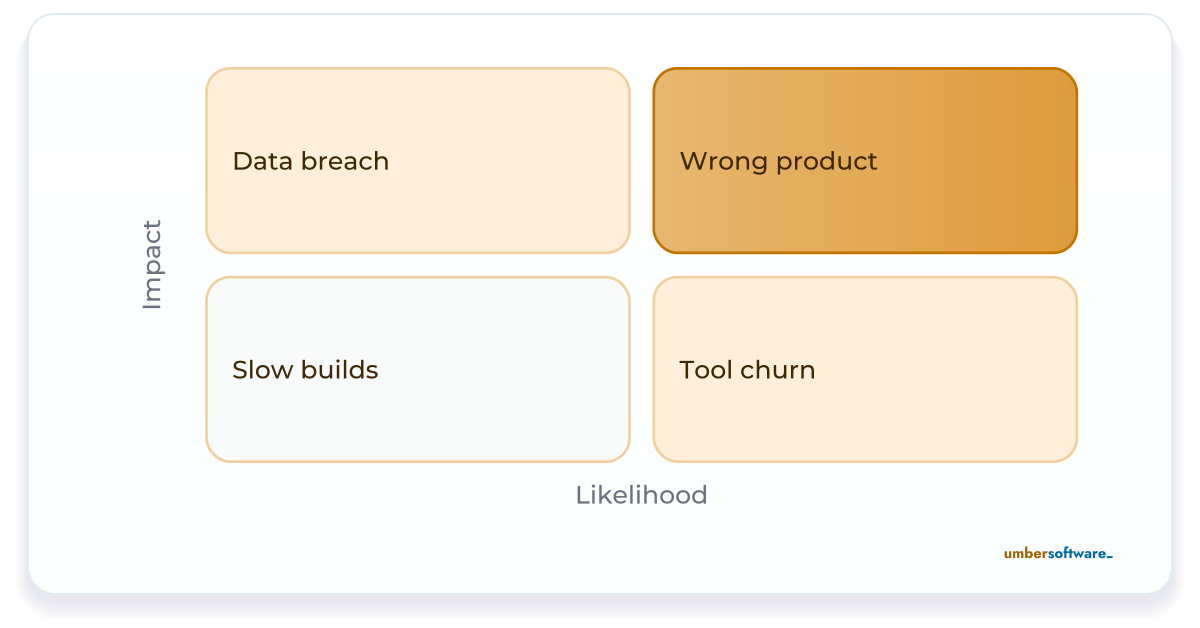
Startups face the same risks as large projects, with less room to absorb them. Key-person dependence is the biggest: if one developer holds all the knowledge, a resignation threatens the company. Pair on critical code, write short runbooks and keep access under shared accounts with named owners.
Security is the second. A breach early in a startup's life can end it, so use managed authentication, keep secrets out of the repository and update dependencies on a schedule. For the full list of what can go wrong and how to spot it early, see my guide to software development risks.
What Early Development Really Costs You
Founders often ask for a number, and the honest answer is a range that depends on scope. What I can describe are the cost drivers, which behave the same everywhere. The number of user roles, the number of integrations, whether you need mobile apps and how much of the data model is unknown all push the price up. A fixed-price quote for a single-page scope is much safer than a loose estimate for a long wish list.
Remember that building is the smaller part of the bill over time. Hosting, monitoring, security updates, support and the next round of changes usually cost as much over a few years as the first version. Budget for a small recurring amount from the day you launch, and treat it as part of the product cost.
Finally, count your own time. Writing specifications, testing releases and answering developer questions takes hours every week. If you cannot spare them, the schedule will slip regardless of who builds the software.
A useful discipline is to review the budget at each phase boundary. At the end of validation, ask whether the evidence justifies building. At the end of the MVP, ask whether usage justifies more features. This keeps spending tied to learning, which is the only reliable way to avoid building a polished product nobody wants.
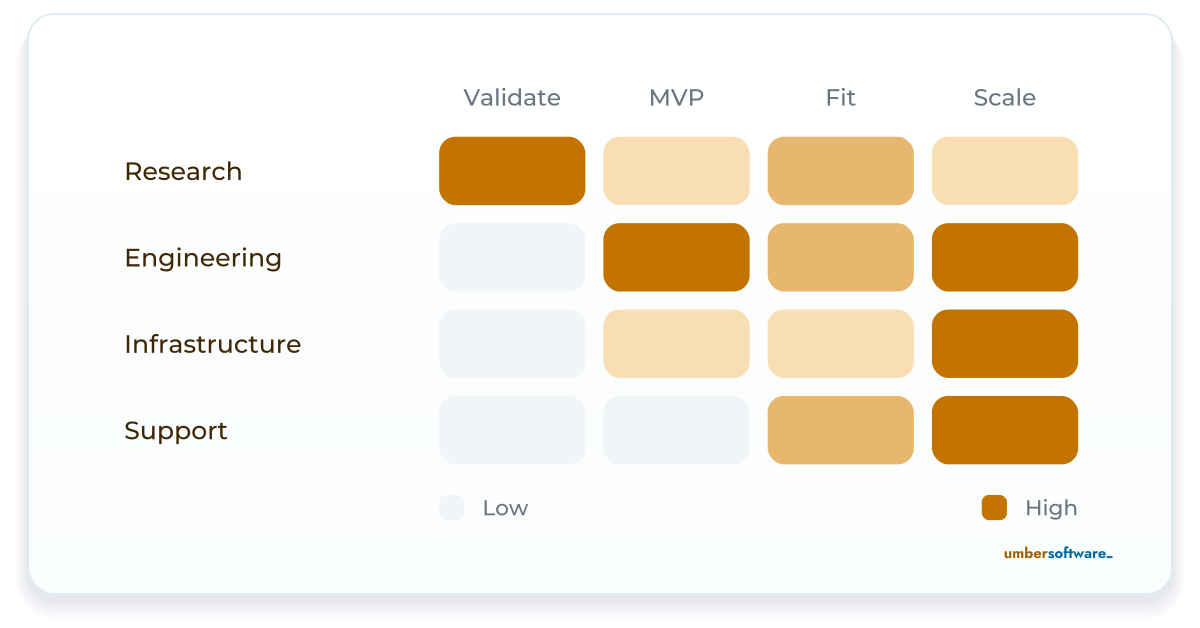
One last practical point: write down your assumptions about users, volume and growth at each phase. When a number proves wrong, you will see exactly which decision to revisit, and you will avoid arguing about opinions.
Investors and early customers will also ask how you protect what you build. Keep a simple record of who wrote which code, make sure every contractor assigns their work to your company in writing and store the repositories under a company account, not a personal one. Have a lawyer in your country confirm the details. It is a small task now and an expensive scramble during due diligence.
Last, plan a short review at the end of each phase with everyone who touched the product. Ask what slowed you down, what you would skip next time and which shortcut worries you most. Thirty minutes of honest discussion at each boundary catches problems long before they grow into rewrites.
How to Choose Your Next Step
Use these checks to see which phase you are really in, since founders often assume they are further along than they are.
- Validate: you have fewer than ten real conversations or no paying commitment yet.
- Build: you have commitment, but no working version a customer can use.
- Find fit: people use the product, but retention or revenue is not yet steady.
- Scale: usage grows, and delivery speed or reliability is your top problem.
Match your spending to the phase. Pay for learning speed in the first two phases and for reliability and team speed in the last two. An outside team works well when you need senior judgment for a few weeks, such as a stack choice, a security review or a rescue of a stalled build.
Questions About Software Development for Startups
Should a Startup Build an MVP In-House or Hire a Team?
If a technical founder can build the first version, do it yourself, because the learning is the point. If not, hire a small outside team for a fixed first phase and make sure you own the code. Move to employees once you know what you are building and have traction.
How Much Does It Cost to Build a Startup MVP?
The range is wide because scope drives everything. A narrow web app with a few user flows can take a small team a couple of months, while anything with payments, integrations and mobile apps takes much longer. Ask for a fixed-price estimate on a version one scope that fits on a single page.
Which Tech Stack Should a Startup Choose?
Choose the stack your team already knows well and that has a large hiring pool. Mainstream choices such as TypeScript, Python or C# with a managed database rarely limit a startup. Exotic stacks save little time and make hiring harder.
When Should We Start Writing Automated Tests?
Write tests for the parts that handle money, permissions and data, from the first week. Cover the rest once the shape of the product settles. A handful of tests on critical paths gives most of the protection for a small cost.
Is Technical Debt Always Bad for a Startup?
No. Taking shortcuts to learn faster is a fair trade when you track them and pay them off before they block you. The danger is untracked debt in the core of the product. Keep a short list of known shortcuts and review it each quarter.
When Is the Right Time to Rewrite the MVP?
Rarely as one big project. Replace the parts that block growth one at a time while the product keeps running. A full rewrite freezes new features for months and often recreates the old problems.
How Do We Keep Delivery Fast as the Team Grows?
Keep services few, keep releases small and automate the path to production early. Fast teams share one backlog, review every change and fix slow builds as soon as they appear. Adding people to a messy process makes it slower.
Disclaimer: This article is general information, not legal or financial advice. Check tax, IP and employment rules with a qualified adviser in your country.
Did this article help you?
Thanks, noted.
Whitney Sorensen
Whitney leads the Umber editorial team and works with the consultants to turn real client projects into practical guides on software selection, custom development, integration and legacy modernization. Before joining Umber, she spent years writing and editing for engineering and IT teams. She has since reviewed architecture audits, system selections and modernization plans from client projects across industries from manufacturing to healthcare. She works remotely from the USA.