Main Points
- Outsource work that is well defined and time-boxed; keep product decisions and architecture ownership in-house.
- Cost per hour is a poor comparison. Count management time, handover and rework on both sides.
- Most outsourcing failures start with a vague brief or no internal owner, not with the vendor's skills.
- A hybrid model, with your own lead engineer and an outside team, fits more projects than either extreme.
Almost every software leader reaches the same decision sooner or later: hire developers, hand the work to an outside company, or split it. I have helped teams make that call many times, and the answer is rarely the one the cost spreadsheet suggests. Good software development consulting starts by asking what the work is, how long it lasts and who inside your company must understand the result.
This guide compares in-house and outsourced development on the points that decide real projects, then gives you a checklist for picking the model and a partner. If you are earlier in the journey, my notes on software development for startups cover the first hires.
The Three Models and What Each One Really Means
People use the word outsourcing for several different arrangements, and mixing them up causes most of the bad contracts I review. Here are the three that matter.
In-house development means employees write and own the software. You control priorities and keep every lesson learned. Hiring takes months, though, and a team needs steady work to stay productive and motivated.
Project outsourcing hands a defined piece of work to an outside company, which delivers it on a fixed price or a capped budget. You manage outcomes, not people. The risk sits in the definition: if the brief is loose, the vendor builds what the document says, and you discover the gap at delivery.
Dedicated team or staff augmentation places outside engineers inside your process for months or years. You manage their work day to day, and the vendor handles contracts and payroll. It feels like hiring, with a shorter start and an easier exit.
In-House vs Outsourced: A Side-by-Side View
No row in this table decides the question alone. Read it by asking which two or three rows matter most for your project, then weigh those.
| Factor | In-house team | Outsourced team |
|---|---|---|
| Time to start | Two to six months of recruiting and onboarding | Often a few weeks once the contract is signed |
| Cost structure | Salary, benefits, equipment, recruiting and management; fixed while the team exists | Day or monthly rate plus your management time; ends when the work ends |
| Control | High; you set priorities daily | Medium; depends on contract and communication rhythm |
| Knowledge retention | Stays in the company | Leaves with the vendor unless you require documentation and tests |
| Flexibility | Hard to scale down | Easy to scale up or down within notice terms |
| Specialist skills | Hard to hire for rare needs | Available for the length of the need |
| Main risk | Under-used capacity and key-person dependence | Unclear scope and loss of context |
The knowledge row gets the least attention and causes the most pain later. When a vendor leaves, the team that remains inherits code it never saw written. I write the handover requirements into the first contract and then check them monthly.
What the Cost Comparison Usually Leaves Out
A day rate comparison is the usual starting point and the least reliable one. A developer from a lower-cost region may bill a third of a local salary equivalent, yet the project still needs someone on your side to write specifications, answer questions and review work. In my client work, that management time ranges from a few hours a week for a well-specified module to a half-time role for an open-ended product.
On the in-house side, the hidden costs are recruiting fees, ramp-up time and idle time between projects. A new developer often needs two to three months to ship confidently in an unfamiliar codebase, so a six-month project barely repays the hire.
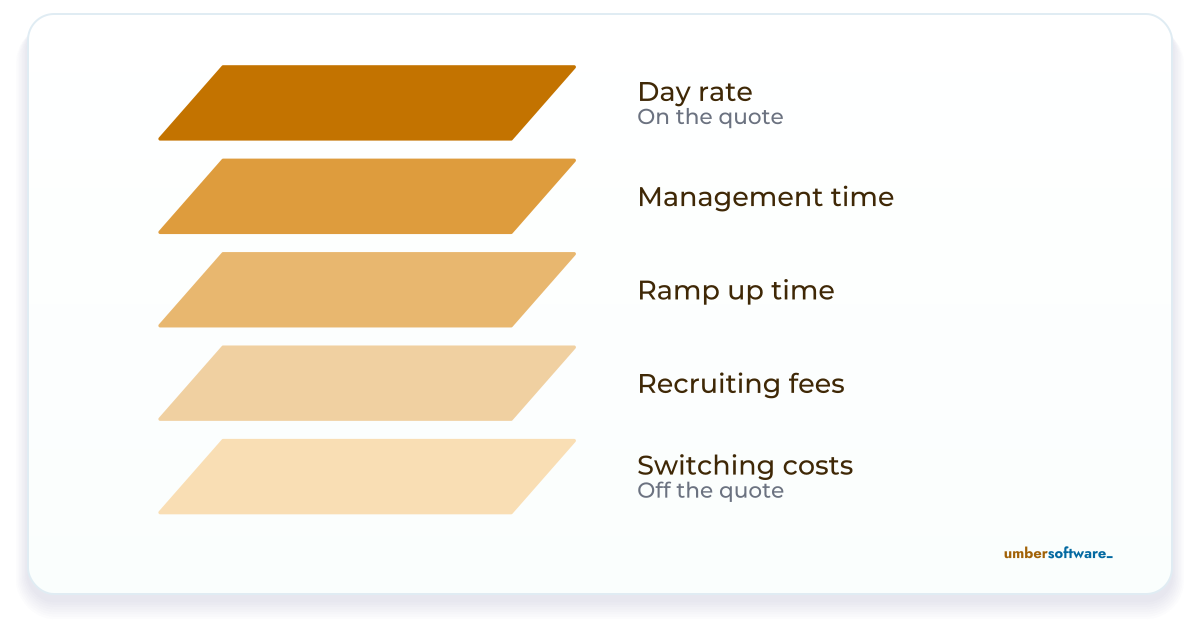
Switching costs belong in the comparison too. Moving a project between vendors typically means a few weeks of lost speed, and moving it in-house costs similar time plus hiring. A clean repository and documentation shrink both numbers, which is why they are worth paying for at the start.
What to Outsource and What to Keep
I sort work into three buckets before any vendor talks start. The first bucket holds work that defines your advantage: pricing logic, core algorithms, anything customers pay you for. Keep it, or at least keep a senior engineer inside who understands every line of it.
The second bucket holds well-defined build work with clear inputs and outputs, such as a mobile client for an existing API, an integration with a payment provider or a data migration with a complete inventory. Vendors do this kind of work well, and you can test the result against a list of acceptance checks.
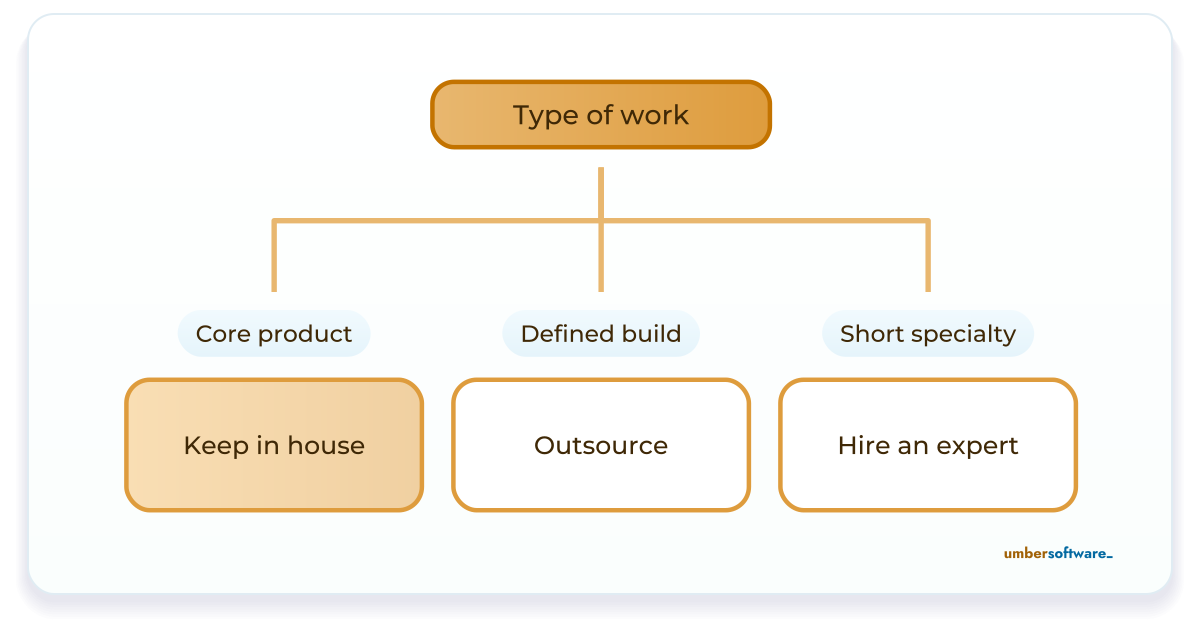
The third bucket holds specialist or short-lived tasks: a security review, a performance study or a one-off port to a new platform. Hiring for these makes little sense, and the tools a vendor brings can speed them up.
Contract Types and When Each One Fits
The contract shapes behavior more than the kickoff speech does. A fixed price rewards the vendor for finishing quickly, which helps when scope is firm and hurts when it is not. Time and materials rewards transparency, but only works if you track progress against a budget.
| Contract | Fits when | Watch for |
|---|---|---|
| Fixed price | Scope is complete and stable, such as a defined migration | Change requests become the vendor's profit; quality can slip to hold the margin |
| Time and materials | Requirements will change as you learn | No natural stop; set a monthly cap and review it |
| Dedicated team | Long-running product work with steady demand | Drift from your standards; include them in onboarding |
| Hybrid | Discovery first, then build | Make the price for phase two depend on what phase one finds |
Whatever you choose, make sure the contract names you as the owner of all code and documents, lists the deliverables for each milestone and states how either side can end the work. Have a lawyer in your country review the wording.
Where Outsourced Projects Go Wrong
A few failure patterns repeat so often that I check for them in the first week of any engagement. The first is the missing owner: nobody on your side has time to answer questions, so the vendor guesses. The second is a brief that describes screens and not outcomes, so the vendor builds exactly what is drawn, including its mistakes.
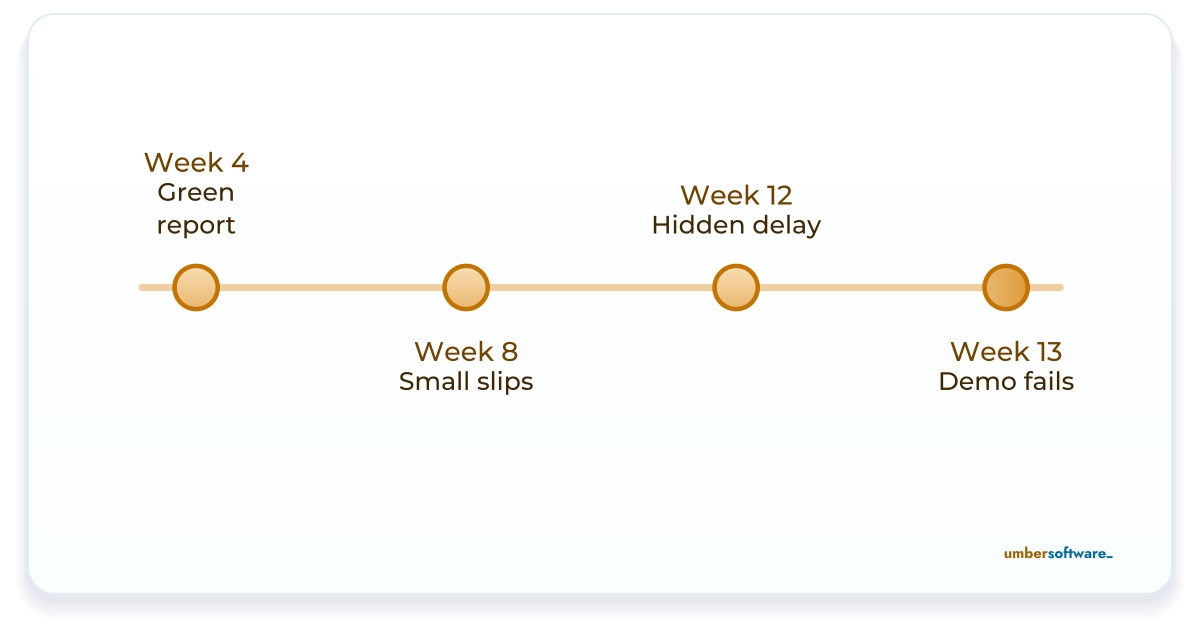
The third pattern is the invisible quarter. Status reports say green for ten weeks, and in week eleven the demo does not work. I ask for a working demo every two weeks, even a rough one, because running software is the only status report that cannot be written optimistically.
The fourth is the silent staffing change. The senior engineers who won the contract move to another account and juniors take over. Ask for named people and notice terms for replacements. For a wider list of what can go wrong across any build, see my write-up on software development risks.
One more habit helps every model: write a short working agreement in the first week. It covers who answers questions and how fast, which channel is used for urgent problems, how code gets reviewed and what happens when a deadline is at risk. Half a page is enough, and it saves many arguments later.
The Hybrid Model Most Teams End Up With
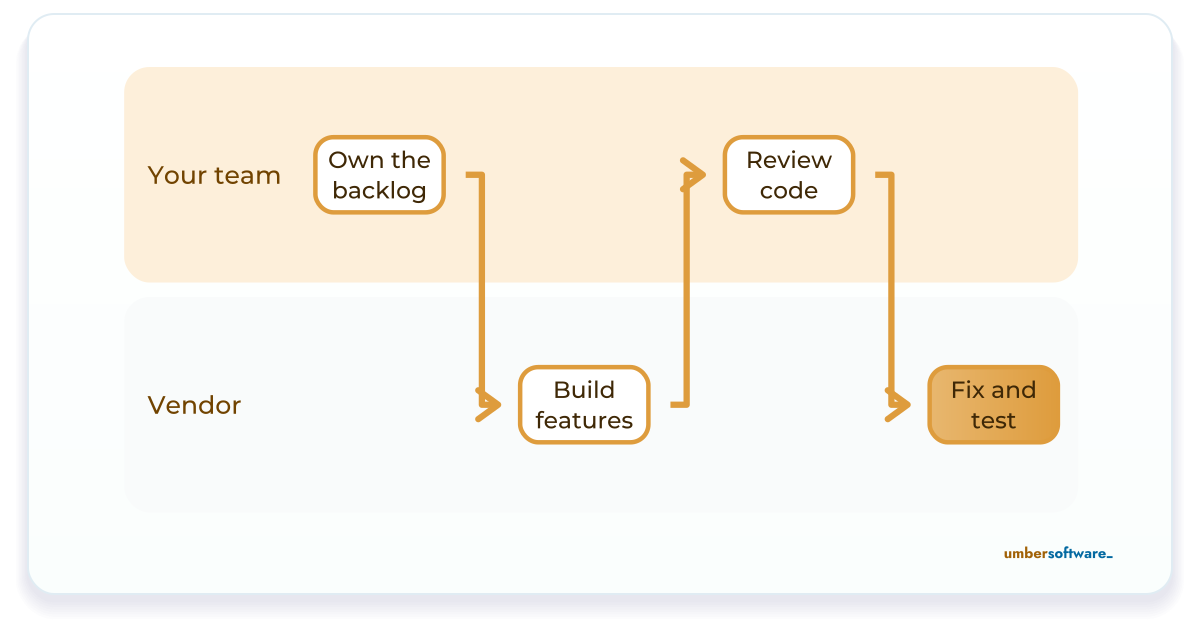
The setup I see work best has one or two of your own engineers who own architecture and review every merge, plus an outside team that builds to that standard. Your engineers keep the knowledge, the vendor supplies capacity, and either side can be scaled without a crisis.
It also protects against the market. Hiring cycles and tech trends change fast, a point I cover in my overview of software development trends, and a mixed team adapts faster than a fixed one. If the vendor relationship ends, you lose capacity but not understanding.
To make a hybrid work, share one backlog, one repository and one set of quality rules. Outsiders should join your stand-ups and use your tracker. Two teams with two processes is the fastest route to the failures listed above.
How to Choose Your Model and Your Partner
Before you ask for proposals, write down your answers to these questions. If you cannot answer them, you are not ready to brief anyone yet.
- What does done look like, and how will you test it?
- How long will the work last, and does it need the same people for years?
- Who on your side owns decisions and answers questions within a day?
- Which parts of the code must your own staff fully understand?
- What do you need back at the end: code, tests, documentation and access?
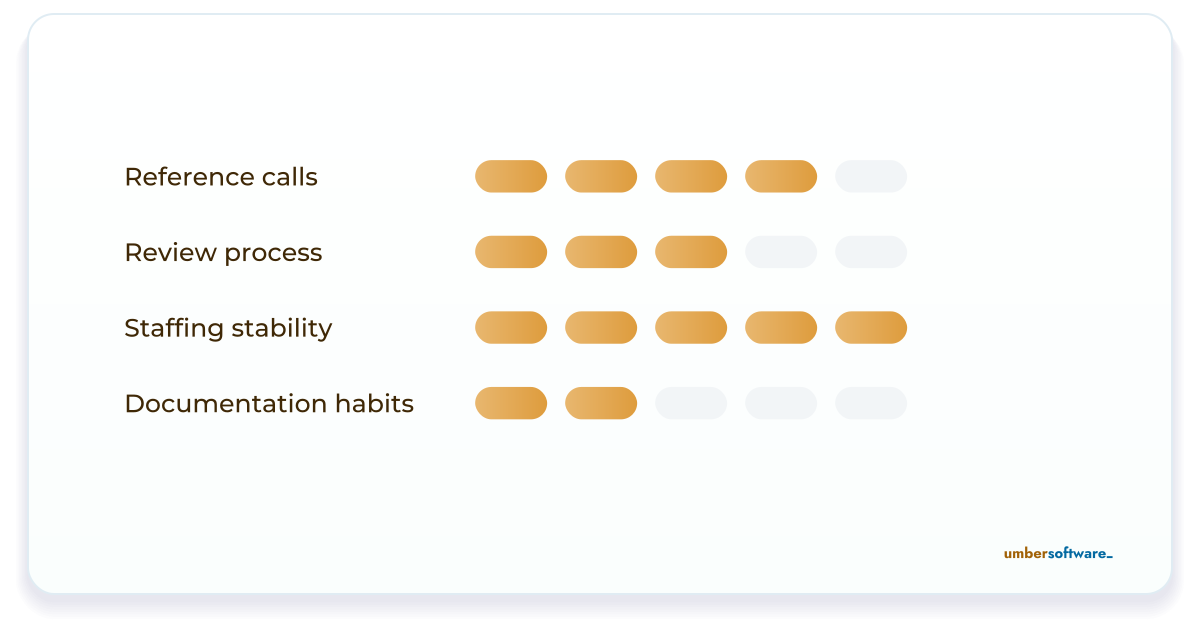
For partners, ask for references you can call, a sample of their review and testing practice and a four-week plan with named people. Run a paid pilot of two to four weeks before you commit to a larger contract. A pilot shows you how they communicate when something goes wrong, which no sales deck can.
Questions About Outsourcing Software Development
Is Outsourcing Software Development Cheaper than Hiring?
Often, but not always. Day rates abroad are lower, yet you also pay for management, handover and rework when the brief is loose. For a project of three to twelve months, outsourcing usually costs less than recruiting and onboarding a team. For work that runs for years on your core product, in-house developers usually cost less per delivered feature.
Which Parts of a Product Should I Never Outsource?
Keep product decisions, architecture ownership and anything that defines your competitive edge inside your company. An outside team can build those parts, but your own people should decide what gets built and review how it is built. If nobody inside can read the code, you have handed over control, not work.
How Do I Pick a Software Outsourcing Partner?
Ask for two references you can call, a sample of their code review and test practice, and a written plan for the first four weeks. Pay attention to the questions they ask you. A good partner pushes back on vague scope before signing, not after.
Fixed Price or Time and Materials: Which Contract Is Better?
Fixed price fits a well-defined scope with few unknowns, such as a migration with a clear inventory. Time and materials fits discovery-heavy work where requirements will change. A hybrid works for many projects: fixed price for the first phase, then monthly capacity.
How Do I Protect My Intellectual Property When Outsourcing?
Use a contract that assigns all work product to you, an NDA before any code is shared and repositories that you own and control. Give vendors access to the minimum they need and remove it at the end. Legal wording varies by country, so have counsel review the contract.
What Time Zone Difference Is Workable?
A four to six hour overlap works for most teams because it leaves room for a daily call and quick questions. Larger gaps can work for well-specified tasks, but each question then costs a full day. Plan the overlap into your working agreement before the project starts.
How Do I Bring Outsourced Work Back In-House Later?
Plan for it from the first week. Keep code in your repositories, require documentation and tests as part of the deliverables, and have one of your engineers review every merge. When the day comes, the handover is a conversation and not a rescue mission.
Disclaimer: This article is general information, not legal or financial advice. Contract and IP terms differ by country, so have a lawyer review any agreement.
Did this article help you?
Thanks, noted.
Whitney Sorensen
Whitney leads the Umber editorial team and works with the consultants to turn real client projects into practical guides on software selection, custom development, integration and legacy modernization. Before joining Umber, she spent years writing and editing for engineering and IT teams. She has since reviewed architecture audits, system selections and modernization plans from client projects across industries from manufacturing to healthcare. She works remotely from the USA.