Main Points
- Write a one-page scope that lists what is out, not only what is in.
- Estimate in ranges and write down the assumptions behind them.
- Review risks and report variance every week, in the same one-page format.
- Price every change in time and money before the sponsor decides.
Most late software projects were late for ordinary reasons: unclear scope, estimates nobody checked and risks that sat in someone's head. In my software project management consulting work, ten habits separate projects that land from projects that drift.
Each habit below has an explanation, one thing to do and one thing to avoid. They are ordered roughly by when they matter in a project, from the first week to the last.
The Ten Practices in One Table
| # | Practice | What it protects you from |
|---|---|---|
| 1 | Write a one-page scope | Silent scope growth |
| 2 | Estimate in ranges | False precision |
| 3 | Name one owner per outcome | Work nobody drives |
| 4 | Break work into small, shippable slices | Big-bang failures |
| 5 | Keep a live risk log | Late surprises |
| 6 | Track dependencies on other teams | Blocked work at the deadline |
| 7 | Report variance weekly | Green status until red |
| 8 | Put every change through a price tag | Budget leaks |
| 9 | Test and demo early | Rework at the end |
| 10 | Hold a short review at the end | Repeating mistakes |
1. Write a One-Page Scope
Scope documents fail because they are long and nobody rereads them. A single page that states the goal, what is in, what is out and who approves changes does more work. The "out" list is the part most teams skip, and it prevents the most arguments.
Review the page with the sponsor and the lead engineer before any estimate is made, and sign it off in writing. Everything that comes later is measured against it.
- Do this: write the scope page with the goal, the inclusions, the exclusions and the approver.
Avoid this: a forty-page specification that nobody reads and nobody updates.
2. Estimate in Ranges
A single number sounds confident and is nearly always wrong. A range such as 12 to 18 weeks, with the assumptions written next to it, is honest and still useful. As assumptions are confirmed or broken, the range narrows, and everyone can see why.
Use your own history. Compare past estimates with actual results and note the average overrun for each type of work. That number is more reliable than a gut feeling.
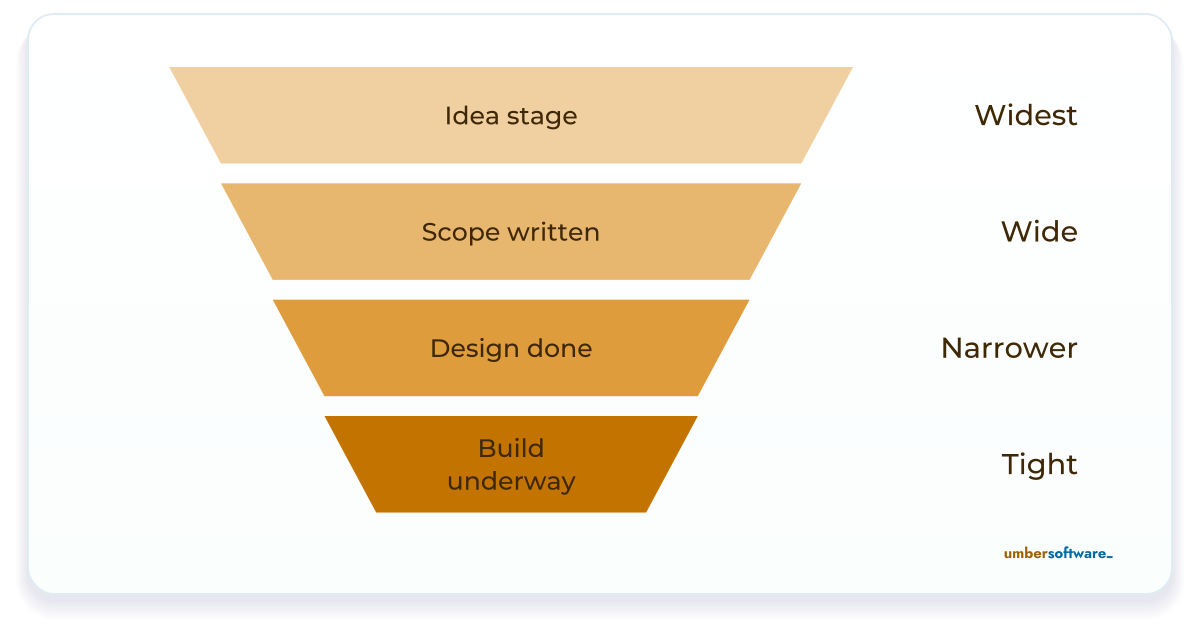
- Do this: give a low, a likely and a high figure, and list the three assumptions that matter most.
Avoid this: turning an early estimate into a commitment before discovery work is done.
3. Name One Owner per Outcome
Shared ownership usually means no ownership. Every outcome needs one name, not a team. That person does not do all the work, but they answer for the result and raise the alarm when it is at risk.
The test is simple: ask who would be called if this slipped. If three names come up, nobody owns it.
- Do this: put one accountable name next to each milestone and each major risk.
Avoid this: assigning an owner who has no authority over the people or budget involved.
4. Break Work Into Small, Shippable Slices
Large pieces hide problems until late. Slices of a week or two show real progress and give an early warning when velocity is lower than planned. Each slice should be something a user or tester can see, not an internal step.
Small slices also make scope cuts painless. When time runs short, you drop the last slice instead of every slice being half done.
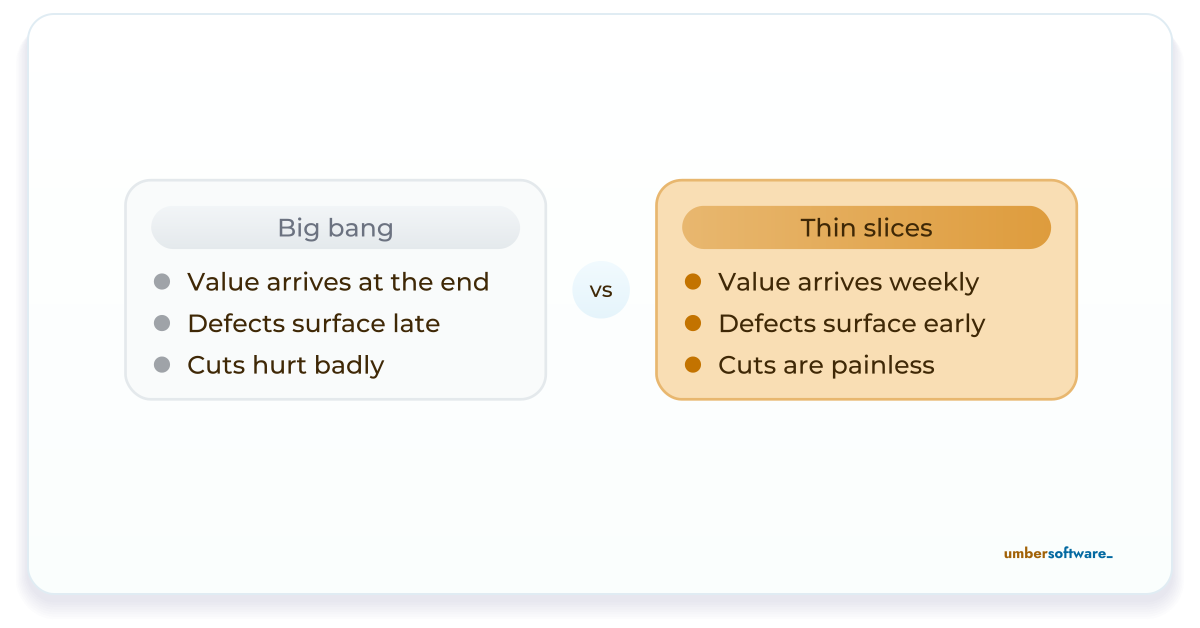
- Do this: plan so that each slice can be demonstrated, and order slices by risk, highest first.
Avoid this: "90 percent done" statuses, which usually mean the hard part has not started.
5. Keep a Live Risk Log
A risk log is a short table: the risk, its likelihood, its effect, an owner and the next action. Its value comes from review, not from writing. Ten minutes in the weekly meeting keeps it alive, and it turns vague worry into named, owned items.
Retire risks once they pass, and add the new ones. A log that only grows is a graveyard.
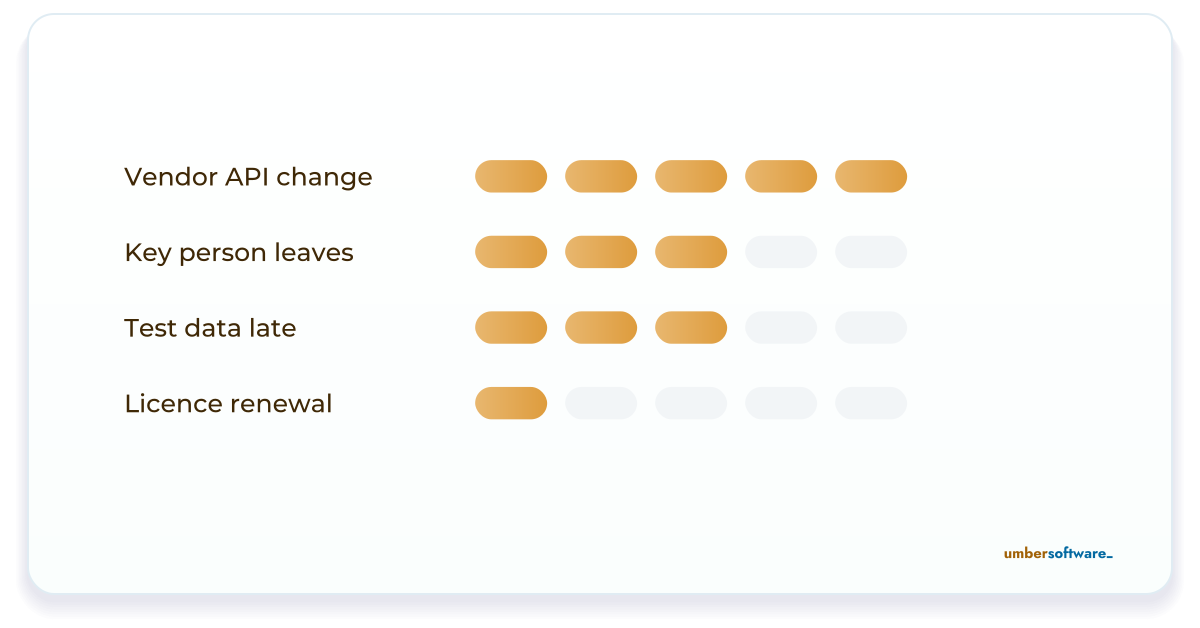
- Do this: review the top five risks weekly and give each one an owner and a date.
Avoid this: listing risks once at kickoff and never opening the file again.
6. Track Dependencies on Other Teams
Many delays come from work outside your team: a vendor API, a security review or a shared platform change. List each dependency with the person who owns it and the date you need it. Then ask that person to confirm the date in writing.
Confirmation matters. A dependency owner who has not agreed to a date is a risk, and it belongs on your risk log until they do.
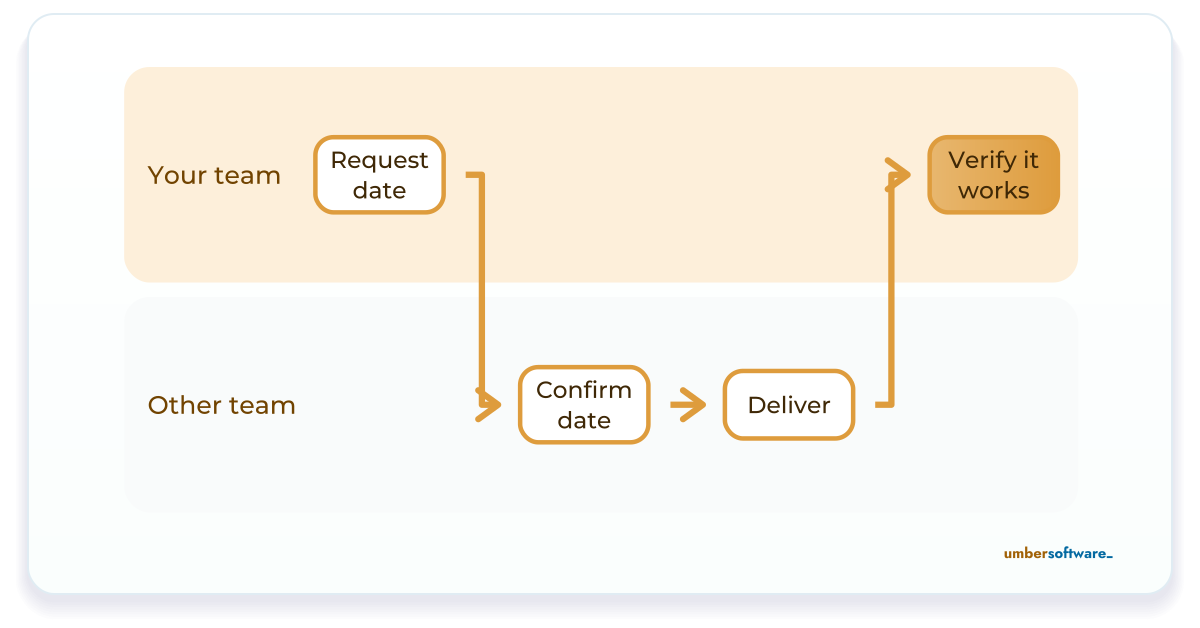
- Do this: list dependencies with a named counterpart and an agreed date, and check them every week.
Avoid this: assuming another team will deliver because they did last time. For tool choices that make dependencies visible, see my guide to software project management tools.
7. Report Variance Weekly
Status colors hide more than they show. Report what changed against the plan: schedule variance, budget variance and the top risk. One page, the same format every week, written so that a sponsor can decide in two minutes whether to act.
Report bad news early and plainly. Sponsors forgive a slipping date reported in week four far more readily than one found in week twenty.
- Do this: show planned against actual for dates and cost, plus one decision you need.
Avoid this: reports written to reassure. If every status is green until the last month, the report is not measuring anything.
8. Put Every Change Through a Price Tag
Scope changes are normal. Unpriced changes are the problem. Each request gets a short note: what it adds, what it costs in time and money and what you would drop to fit it. The sponsor decides, and the decision is recorded.
This habit is not about saying no. It is about making the trade-off visible, so choices are made on purpose.
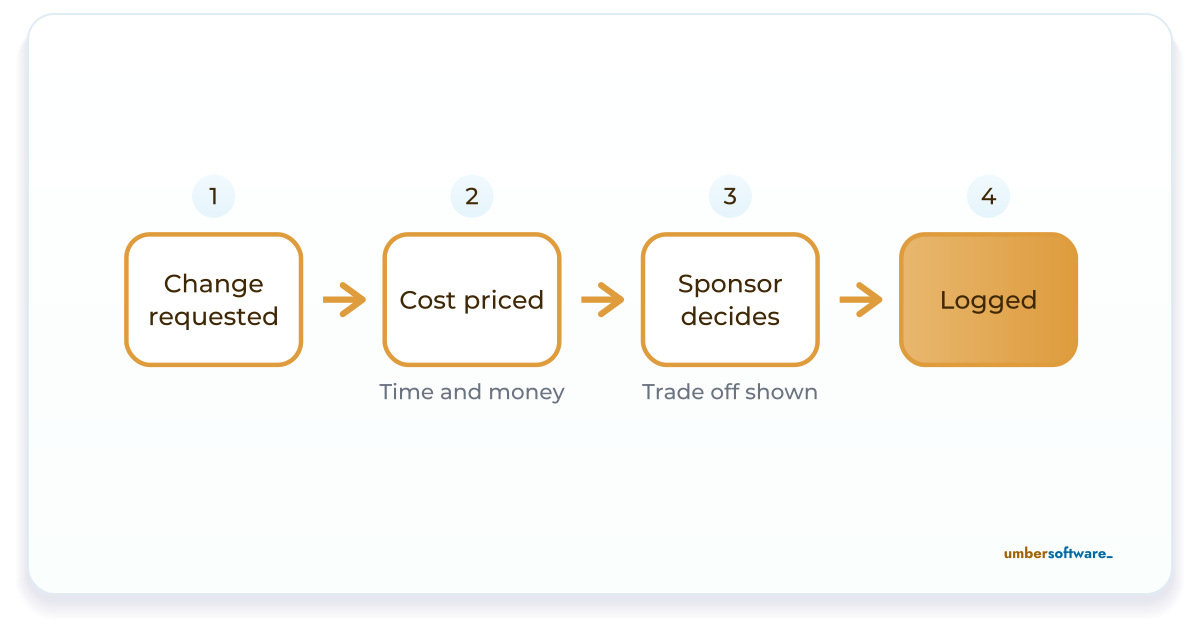
- Do this: keep a change log with a cost, a decision and a date for each request.
Avoid this: agreeing to small changes in meetings and hallways. Ten small ones add up to a missed date.
9. Test and Demo Early
Show working software to real users long before the end. Early demos find misunderstandings when they cost a day, not a month. Testing in parallel with building means quality problems appear while the author still remembers the code. A software project management checklist helps you verify test readiness before each release.
Invite the people who will use the result, not only the sponsor. They notice things the project team no longer sees.
- Do this: hold a demo every two to four weeks and write down what changed because of the feedback.
Avoid this: leaving testing to the last sprint, where every defect found threatens the date.
10. Hold a Short Review at the End
The end of a project is when everyone wants to move on, and it is also when the lessons are clearest. A one-hour review with three questions, what worked, what did not and what to change, gives your next project a head start. Compare the final numbers with your first estimate and update your historical record.
Include the failures. A review that only lists successes teaches nothing. Common causes often overlap with the software project management challenges teams meet again and again.
- Do this: record the actual effort against the estimate and one change for the next project.
Avoid this: blaming individuals. Look at the process that let the problem happen.
Where to Start If Your Project Is Already Running
You do not need to wait for a new project. Mid-flight, start with practices five, seven and eight, because they work on any project at any time. A risk log, a weekly variance report and a change log can be set up in a day, and they quickly show where the plan and reality differ.
Then go back to scope and estimates. Rewrite the one-page scope as it stands today and re-estimate the remaining work in ranges. This reset often reveals that the original date is gone, which is better to learn now than at the deadline. A framework helps you organize the steps, and my software project management framework shows how they fit in sequence.
| Project stage | Practices to focus on | First artifact to create |
|---|---|---|
| Before kickoff | 1, 2, 3 | One-page scope with range estimate |
| Early build | 4, 5, 6 | Slice plan and risk log |
| Mid project | 7, 8, 9 | Weekly variance report and change log |
| After release | 10 | Review notes with actual against estimate |
Adapting the Practices to Your Team Size
A team of five needs the same habits in a lighter form. One shared page can hold the scope, the risk log and the change log, and the weekly report can be four lines. Larger programs need a portfolio view and a clear escalation path, since dependencies between teams grow faster than the headcount.
Vendor-led projects need two additions. First, make the contract support the habits: ask for weekly variance reports and a priced change process in writing. Second, keep one person on your side whose job is to watch the plan. Vendors report on what they control, and you need someone who watches what falls between teams.
Agile teams sometimes feel these practices clash with sprints. They do not. Slices are sprint goals, the risk log is a standing retrospective item and variance is the burndown against the release date. The extra step is connecting the sprint view to the date and budget your sponsor cares about.
How to Make the Practices Stick
Give each practice an owner and a place in the weekly rhythm. Habits survive when they are calendar items, not documents. Review two measures after a quarter: the share of milestones hit on time and the gap between your first estimate and the actual cost.
- Pick two practices to start, not ten.
- Keep each artifact to one page.
- Share the numbers with the sponsor every week.
Questions About Software Project Management Best Practices
What Are the Most Important Software Project Management Best Practices?
A one-page scope, range estimates, a live risk log, weekly variance reporting and a priced change process. These five catch most problems early. The others add safety once the base is working.
How Do I Estimate a Software Project More Accurately?
Use ranges, write down assumptions and compare with your own past projects. Track the gap between estimate and actual for each type of work, then apply it to new estimates. Re-estimate when an assumption changes.
How Often Should I Report Project Status?
Weekly. Use the same one-page format every time, with schedule variance, budget variance, the top risks and any decision you need. Daily updates are noise, and monthly updates arrive too late to act on.
What Is the Best Way to Handle Scope Creep?
Give every change a price in time and money, and let the sponsor decide with the trade-off in view. Record the decision. Most scope creep comes from small, unpriced requests, so the change log matters more than a strict ban.
Do These Practices Work with Agile?
Yes. Slices map to sprint goals, the risk log fits a standing retrospective item and variance is your burndown against the release date. The practices add the date and budget view that sponsors need.
How Long Should a Project Retrospective Take?
About one hour for a mid-sized project. Cover three questions: what worked, what did not and what to change. Record the actual effort against the estimate, and share the notes with the next team.
When Should I Ask for Outside Help on a Project?
When dates have slipped more than once, when status reports do not match reality or when a large project starts with no experienced delivery lead. An outside review finds the gaps fast and shows what to fix first.
Please note: this guide is general information and not legal, financial or tax advice. Numbers and examples are typical-project estimates; confirm current details with your providers and advisers.
Did this article help you?
Thanks, noted.
Whitney Sorensen
Whitney leads the Umber editorial team and works with the consultants to turn real client projects into practical guides on software selection, custom development, integration and legacy modernization. Before joining Umber, she spent years writing and editing for engineering and IT teams. She has since reviewed architecture audits, system selections and modernization plans from client projects across industries from manufacturing to healthcare. She works remotely from the USA.