Main Points
- Gartner expects AI-enabled products to reach 62 percent of cloud ERP spending by 2027.
- AI assistants and agents help most where data is clean and processes are standard.
- Composable and clean-core designs reward planning, ownership and fewer customizations.
- Use trends to ask vendors for references and pricing, not to pick a vendor.
ERP vendors announce something new every quarter, and most of it will not change your next decision. I follow the market through ERP software consulting projects and vendor roadmaps, and these twelve trends are the ones I think will shape what you buy, how you pay and how you run the system over the next few years.
I mark where a claim comes from a named source, and where it is my own judgment from client work. If you are choosing a system now, read each trend with one question: does this change my shortlist or only my demo?
The Twelve Trends and What They Mean for Your Next Decision
| Trend | Maturity | Effect on your decision |
|---|---|---|
| Embedded AI assistants | Shipping now | Test with your data; do not pay extra on a promise |
| AI agents | Early | Pilot one narrow task with approval steps |
| Composable ERP | Established idea, uneven practice | Plan integration ownership first |
| Industry clouds | Mature | Test templates on your hardest process |
| Cloud as default | Mature | Plan legacy exit on your own schedule |
| Clean core | Mature | Keep customization where you differ |
| Embedded analytics | Shipping now | Fix master data before dashboards |
| Low-code extensions | Mature | Set governance for citizen builders |
| Supply chain resilience | Growing | Scope planning modules early |
| Usage-based pricing | Growing | Model cost under growth |
| AI trust and security | Early | Add to your security review |
| Skills and change | Ongoing | Budget training and a platform owner |
1. Embedded AI Assistants Become Standard
Almost every ERP vendor now ships an AI assistant that drafts journal entries, explains variances or answers questions about orders. Gartner forecasts that AI-enabled solutions will account for 62 percent of cloud ERP spending by 2027, up from 14 percent in 2024, and predicts a 30 percent faster close by 2028 for finance teams using embedded assistants. The same release notes that most CFOs are still early in adoption, with data quality, integration and skills as obstacles.
In my project work the assistants help most where data is clean and processes are standard. Ask vendors for reference customers using the feature in production, not a demo.
2. AI Agents Start Doing Multi-Step Work
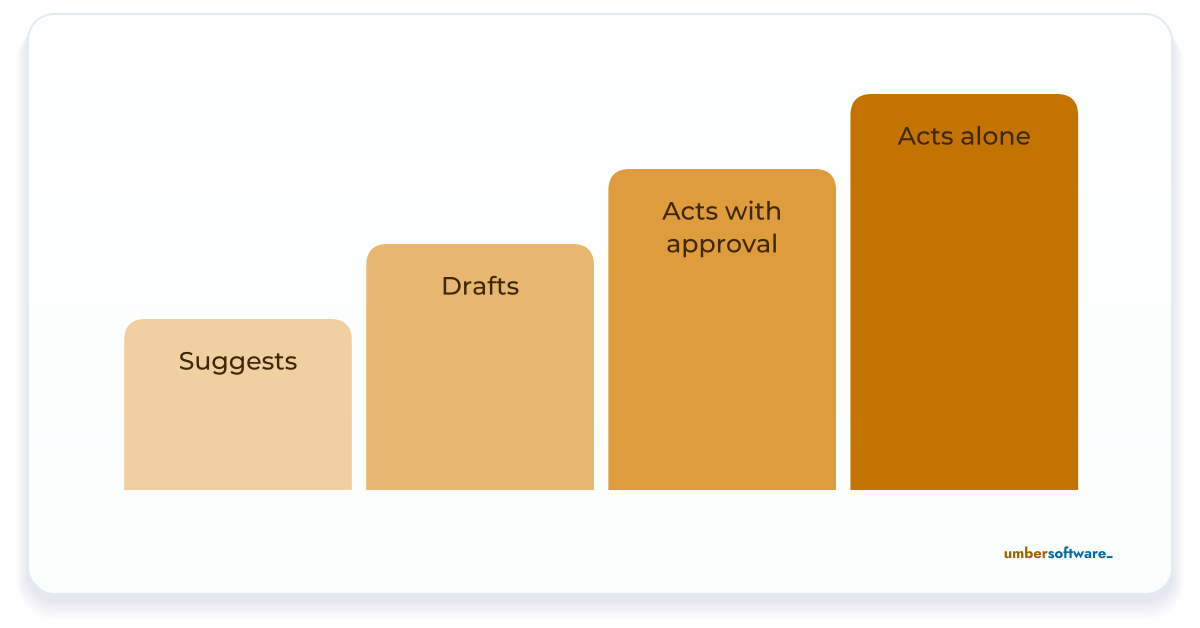
Agents go beyond answering questions. They can match invoices, chase late approvals or reorder stock within limits you set. Gartner's analysts advise choosing cloud ERP with independently validated agentic capabilities.
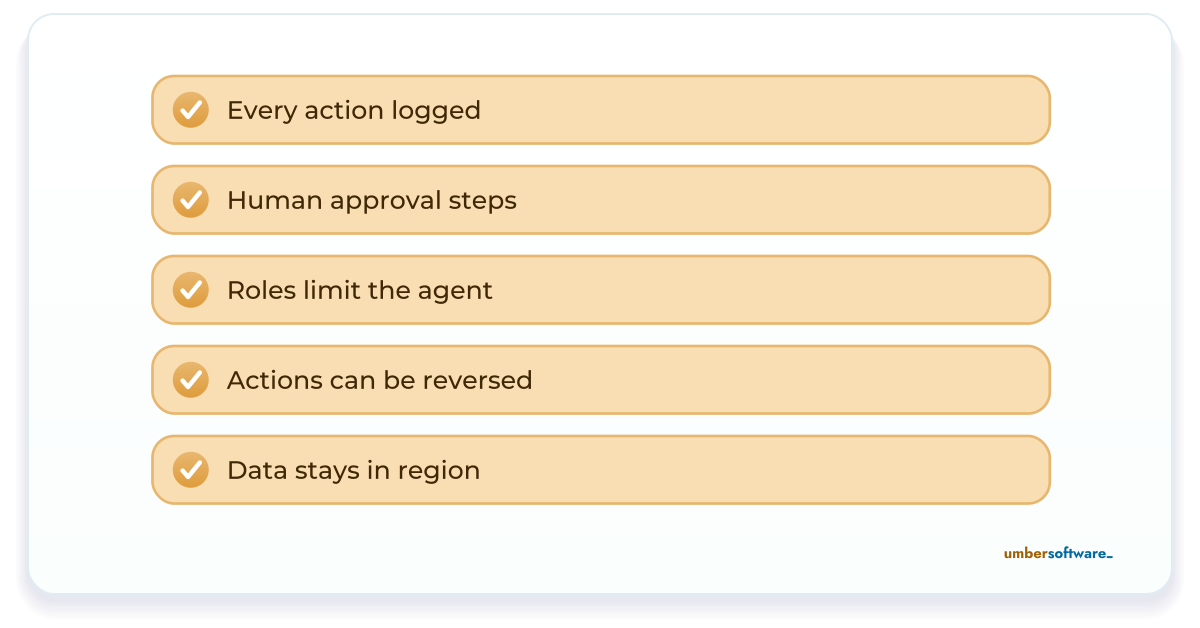
Start with one narrow task, keep a human approval step and log every action. Expect vendor roadmaps to promise more than current releases deliver.
3. Composable ERP and a Thinner Core
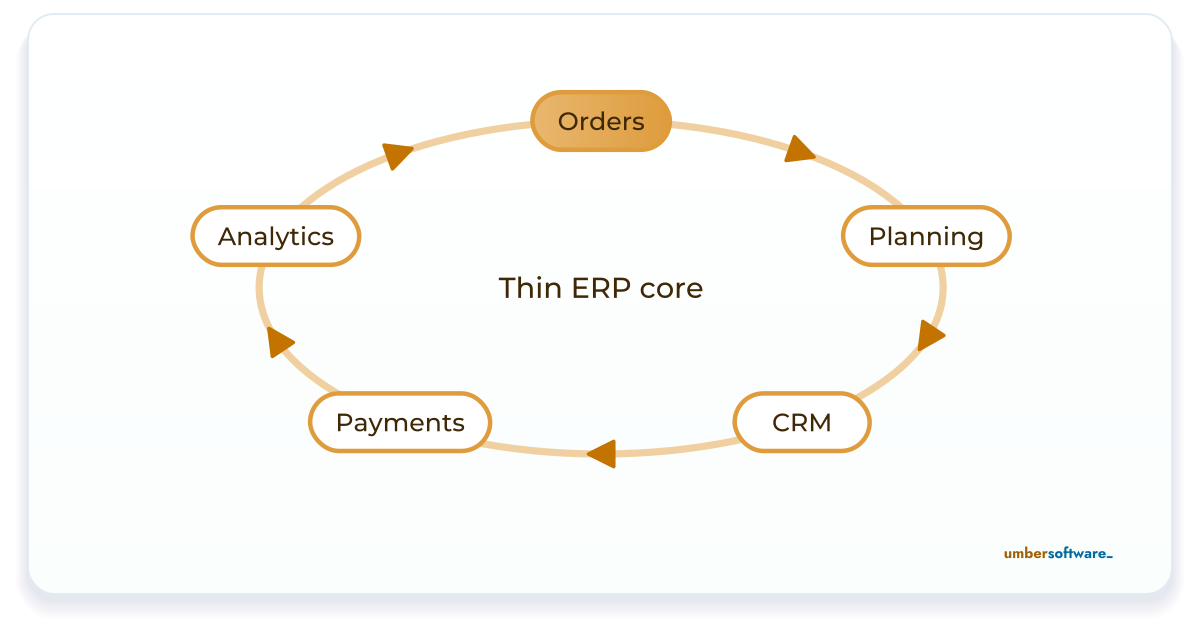
Composable ERP means keeping a stable core for finance and adding best-of-breed apps around it. Gartner lists composable ecosystems as one of five themes for AI in cloud ERP finance.
The idea is sound if integration is planned and owned. Without that, you end up with more systems to keep in sync. A thin core also makes data governance more important.
4. Industry Clouds Replace Generic Templates
Vendors now package processes for sectors such as manufacturing, distribution, healthcare and construction. Infor, IFS and Epicor have built their positioning on this, and large vendors offer industry editions.
Industry templates shorten design if your business matches them. Test the template on your hardest scenario before you accept it.
5. Cloud Becomes the Default, With Deadlines for Legacy
New projects choose cloud almost by default. Vendors also set maintenance timelines for older on-premises products, including SAP's older ECC line.
If you run an older system, check your vendor's current maintenance policy and plan the move on your schedule, not theirs. My notes on software modernization consulting explain how to sequence a migration.
6. Clean Core and Fit-to-Standard Gain Ground
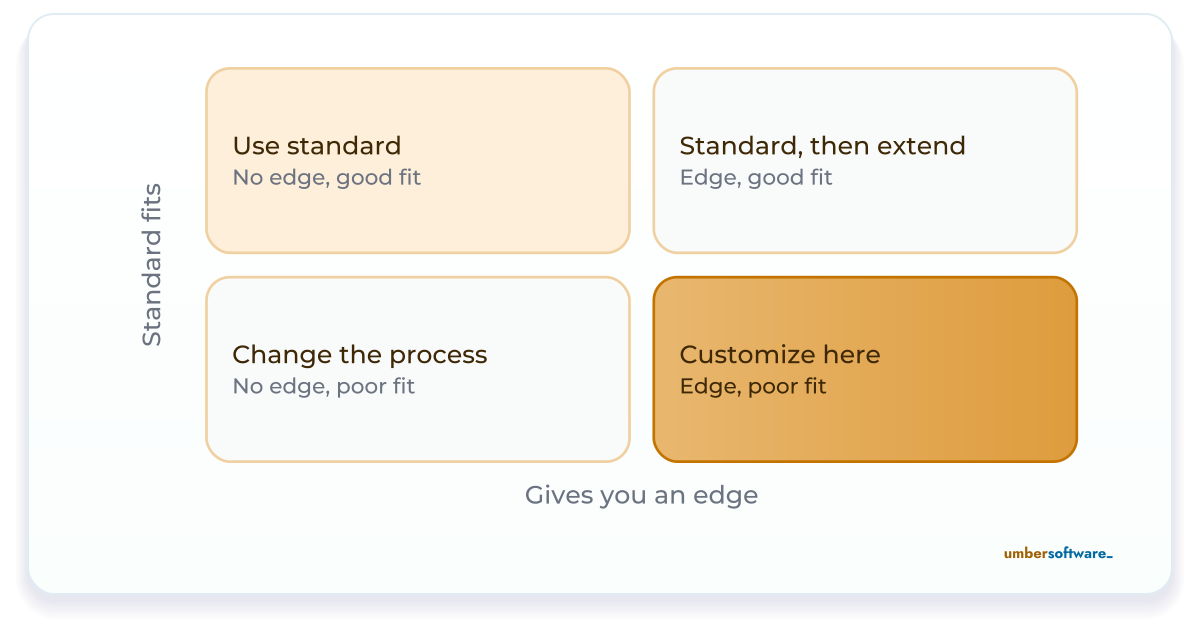
SAP's cloud editions and others push customers to keep custom code outside the core and adopt standard processes. The reason is upgrade cost: regular cloud updates are painful for heavily modified systems.
Decide early which processes make you different, and keep customization there. Everything else should run on standard behavior.
7. Real-Time Analytics Move Inside the ERP
Embedded analytics now sit beside transactions, so a controller can see margin by customer without exporting data. Gartner names adaptive analytics, and planning and forecasting, among its five themes for cloud ERP finance.
The limit is data quality. Fast dashboards on messy master data only make wrong numbers arrive sooner.
8. Low-Code Extension Platforms
Business Central, NetSuite and others offer low-code tools for building apps and flows around the core. They let finance and operations teams solve small problems without a developer queue.
Set governance rules for who can build what, and review apps before they touch financial data.
9. Supply Chain Visibility and Resilience
Companies want ERP to show supplier risk, lead times and alternative sources. After recent disruptions, many projects add supplier collaboration and planning modules.
If you are a manufacturer or distributor, include supply planning in your requirements early rather than as an add-on after go-live.
10. Subscription and Usage-Based Pricing Models
Vendors continue to move toward subscriptions, and some price by usage or resources instead of named users. Acumatica, for example, prices on resources used rather than per user.
Model your cost under each approach, including growth, and ask about renewal caps.
11. AI Trust, Risk and Security Management
Gartner includes AI trust, risk and security management as a theme. As assistants and agents act on financial data, you need controls on access, audit trails and model behavior.
Ask vendors how agent actions are logged and how you can review or reverse them. Add this to your security review.
12. Skills and Change Management Become the Bottleneck
Gartner cites skills gaps among the obstacles to AI in ERP. The technology moves faster than most teams can absorb it.
Budget for training and for a platform owner who follows release notes. Panorama Consulting's 2026 report found that more than a quarter of organizations exceeded project budgets, a reminder that people and process issues still sink projects.
How the Trends Differ by Company Size
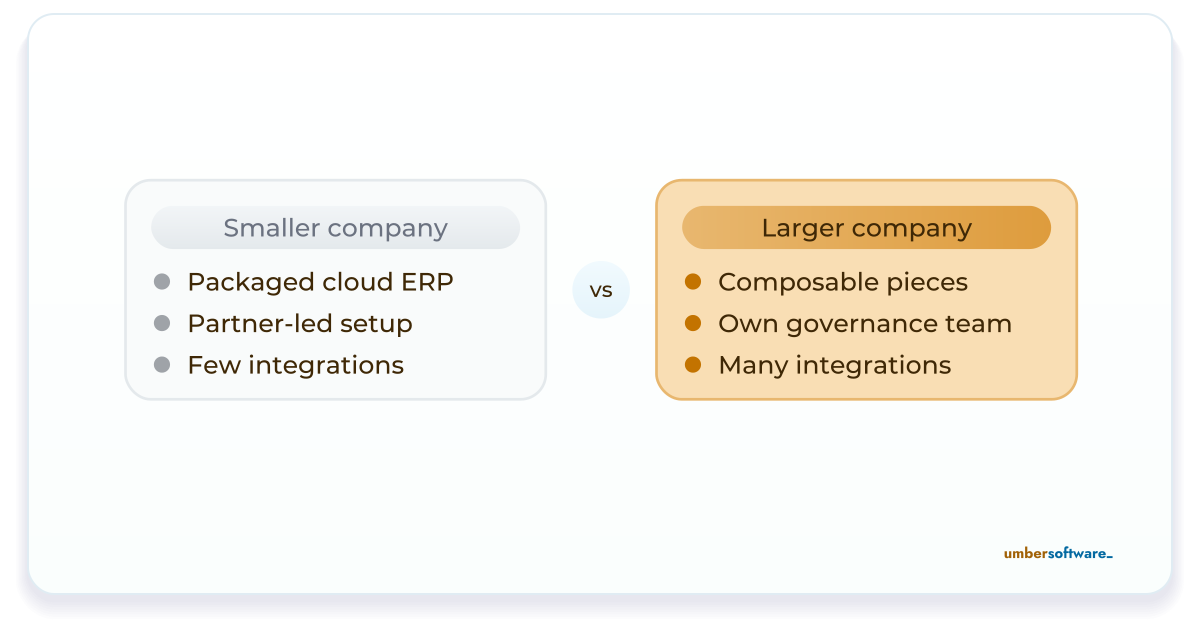
Small and mid-sized buyers benefit most from cloud delivery, standard processes and ready-made industry templates. They rarely have the skills to run a composable architecture or to test agents, so they should pick a platform with strong partners and keep add-ons few. Large buyers have the opposite problem. They have the people to build, but also the legacy systems, entities and controls that make every change slow.
For both groups the safest move is the same: buy for the next three to five years, not the next ten, keep your data clean and choose a vendor whose update cadence you can actually test. Technology that you cannot absorb is not a trend, it is a cost.
What I Would Watch Over the Next Twelve Months
Four signals will tell you more than any press release. Watch whether vendors publish named customers using agents in production. Watch how AI add-ons are priced, as bundled features and separate fees lead to different budgets. Watch update frequency, which affects your testing load. And watch partner capacity: a hot product can overwhelm its partners and quality drops. Check each signal in your next vendor call, and write the answers into your scorecard.
In my experience, the buyers who fare best in a changing market are those with a clear decision rule. They adopt a feature when it solves a named problem and a reference customer proves it. They wait when it does not. That rule is slow only on the surface; it saves the cost of a failed pilot.
It also protects you against a common vendor pattern. A new capability appears in a keynote, a pilot program follows and a price list arrives a year later. If you commit during the pilot, you carry the early adopter risk and rarely get the early adopter discount. Waiting two release cycles costs little and gives you real reference customers, real pricing and a clearer view of the support burden. The exception is when a capability solves a daily pain you already measure, in which case a small, time-boxed pilot with exit terms is a fair bet.
Write the decision rule down and share it with your steering group, so the next keynote does not reopen the debate.
How to Use These Trends in Your Decision
Trends help you ask better questions. They do not replace requirements. Before you add a trend to your shortlist criteria, check three things: does it solve a problem you have today, can the vendor show it in production at a customer like you, and what does it cost in licenses and in your own effort?
- Ask each vendor for two references that use the AI feature in daily work.
- Ask how upgrades are delivered and how much testing falls on your team.
- Ask for pricing with and without AI add-ons for three years.
- Ask where your data is processed and how agent actions are logged.
Use the ERP software checklist to verify these points, compare vendors in my ranking of the best ERP software, and size the budget with ERP software cost. If you want to see whether a trend can pay back, my guide to ERP software ROI shows how to test it, and smaller companies can read how these shifts apply in ERP software for small business.
Sources
- Gartner press release, February 24, 2026
- Panorama Consulting Group: ERP implementation outcomes
- G2: Acumatica reviews
Questions About ERP Software Trends
Which ERP Trend Matters Most for a Small Business?
Cloud delivery and embedded AI assistants matter most, because they lower entry cost and reduce manual work. Treat AI features as a bonus and choose on fit and partner quality. My guide to ERP for small business explains how to keep the first release lean.
Will AI Replace ERP Consultants or Finance Teams?
Not in the near term. Gartner expects AI to speed up tasks such as the financial close by 30 percent by 2028 for teams using embedded assistants, and notes that data quality and skills are still obstacles. People still set rules, review exceptions and own decisions.
What Is Composable ERP?
It is an approach that keeps a stable ERP core for finance and core operations and adds specialized apps around it. The benefit is flexibility. The risk is integration cost, so plan interface ownership and data governance before you start.
Should I Move from On-Premises to Cloud ERP Now?
Most companies are heading that way, and vendors set maintenance timelines for older products. Check your vendor's current policy and plan the move on your own schedule, with data cleanup and process review first, so you do not copy old problems into the new system.
Are AI Agents in ERP Ready for Production?
In narrow tasks with limits and approvals, yes. Broad autonomy is still early. Pilot one task, such as invoice matching, log every action and review results monthly before you expand.
How Does Usage-Based Pricing Affect My Budget?
Usage-based models can lower cost for companies with many occasional users, and raise it when volume grows. Model three scenarios for growth and ask about caps on resource overages and renewal uplifts.
How Do I Stay Current Without Chasing Every Announcement?
Pick a few reliable sources such as vendor release notes, analyst press releases and independent reviews, and check them quarterly. Ask what changes your next decision. Most announcements change nothing about it.
Please note: this guide is general information and not legal, financial or tax advice. Numbers and examples are typical-project estimates; confirm current details with your providers and advisers.
Did this article help you?
Thanks, noted.
Whitney Sorensen
Whitney leads the Umber editorial team and works with the consultants to turn real client projects into practical guides on software selection, custom development, integration and legacy modernization. Before joining Umber, she spent years writing and editing for engineering and IT teams. She has since reviewed architecture audits, system selections and modernization plans from client projects across industries from manufacturing to healthcare. She works remotely from the USA.