Main Points
- The hardest challenge is ownership: a program nobody is accountable for does not survive.
- Stale data and scattered contracts cause most wrong license positions.
- Renewals arrive too late when notice dates are not in a calendar.
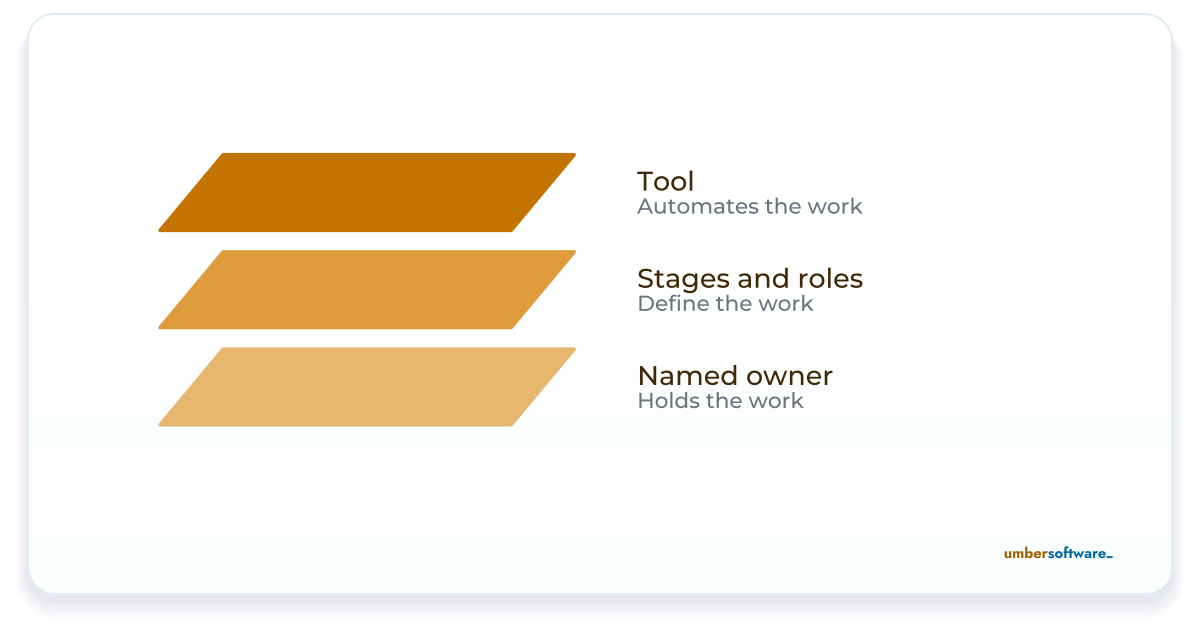
- A tool helps only after the process and the roles exist.
Software asset management looks simple on a slide: count what you have, compare it with what you own and cut the waste. In practice, programs stall on the same ten hurdles. I see them in manufacturers, hospital groups and software companies alike, and the causes rarely depend on the industry.
This list comes from the engagements behind my software asset management consulting work. Each item has the problem as I usually find it and the fix that has worked. You can use the table to spot your own top three.
The Ten Hurdles and Their First Fix
| # | Challenge | First fix |
|---|---|---|
| 1 | Nobody Owns the Program | Name an owner and a backup |
| 2 | Inventory Data Is Stale or Incomplete | Use two or more sources |
| 3 | Contracts Are Scattered | One place for contracts |
| 4 | License Metrics Are Hard to Read | Record the metric per product |
| 5 | Shadow IT and Card-Paid Subscriptions | Fast approvals plus expense data |
| 6 | Virtualization and Cloud Move the Goalposts | Check rights before moves |
| 7 | Renewals Arrive Too Late | 120-day renewal alert |
| 8 | Audit Anxiety Drives Bad Decisions | Run your own audit first |
| 9 | Tools Without a Process | Process before tool |
| 10 | Savings Do Not Reach Leadership | Report money and risk |
The Ten Challenges in Detail
1. Nobody Owns the Program
The problem. Software touches IT, procurement, finance and every department, so each one assumes another is watching. In my reviews, the most common root cause behind a surprise renewal is a missing name, not a missing tool.
What helps. Name one owner, a backup and a finance contact, and give the owner a monthly time slot. Put the role in a job description, so it survives a reorganization.
2. Inventory Data Is Stale or Incomplete
The problem. Device agents miss unmanaged laptops, and retired machines keep reporting. Counts drift from reality within weeks, and every later step inherits the error.
What helps. Combine at least two sources and remove leavers and retired devices before every count. Treat disagreement between sources as a task list, not a nuisance.
3. Contracts Are Scattered
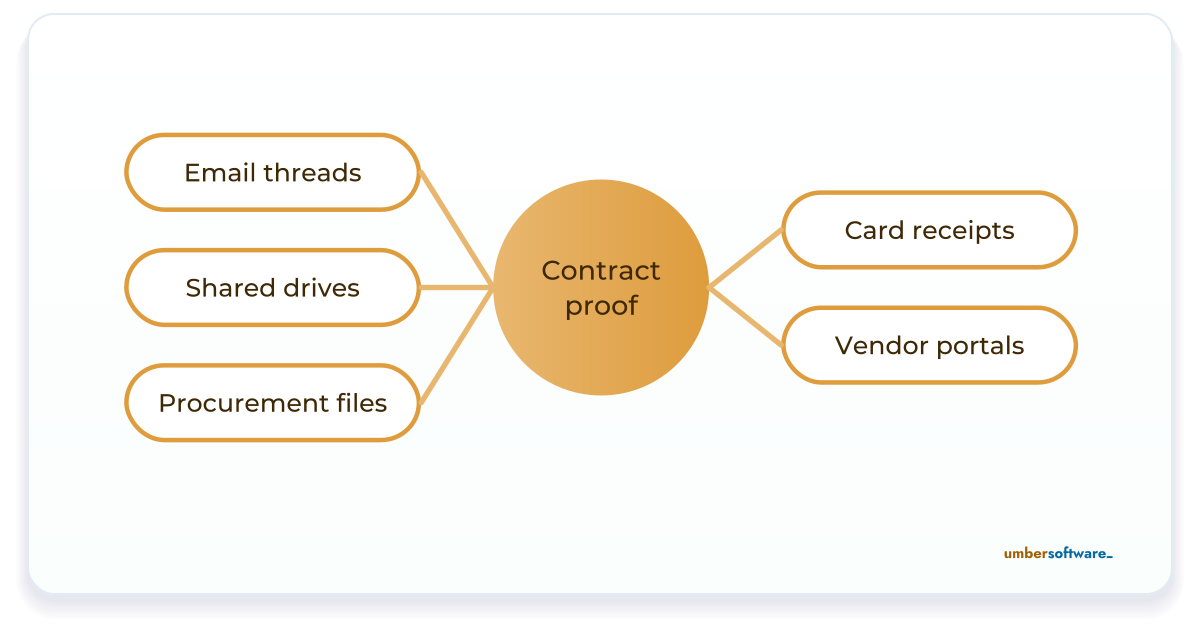
The problem. Order forms live in email, shared drives and the heads of people who left. During one project, finding the proof of purchase for a database took eleven days.
What helps. Store contracts, amendments and invoices in one controlled place and link them to product names. Start with the top ten vendors and add the rest over time.
4. License Metrics Are Hard to Read
The problem. Per-core, per-user, per-device and concurrent metrics each count differently, and some contracts change the definition in an amendment. Teams often compare the wrong numbers and reach the wrong position.
What helps. Record the metric next to every product and have someone who understands both the contract and the architecture check it. A short glossary of your own metrics also helps.
5. Shadow IT and Card-Paid Subscriptions
The problem. Teams buy tools when the official route is slow. These purchases never reach a contract list, and they surface at renewal or in a security review.
What helps. Make the approved path fast and add card and expense data as a discovery source. Ask what problem the tool solves before you consider removing it.
6. Virtualization and Cloud Move the Goalposts
The problem. Workloads that move between hosts or regions change core counts and sometimes license rights. A per-core product that was compliant on one cluster can be short on another.
What helps. Involve your infrastructure team early and record where licensed products may run. Review the rules before any large migration, not after.
7. Renewals Arrive Too Late
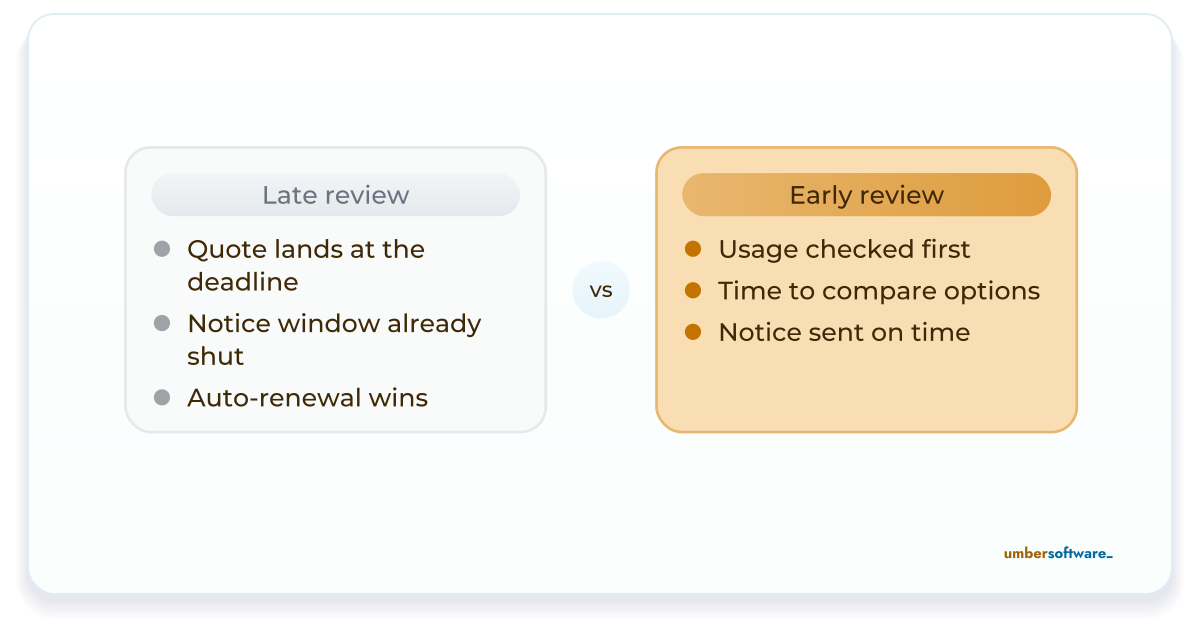
The problem. Auto-renewals and 60 to 90 day notice periods mean the decision window closes before anyone looks. Last-minute renewals are almost always more expensive.
What helps. Put every renewal and notice date in a shared calendar with a 120-day alert and a named reviewer. Start with usage data, then ask for a quote on a smaller count.
8. Audit Anxiety Drives Bad Decisions
The problem. The fear of a vendor audit leads some teams to over-buy and others to hide gaps. Both cost money, and neither fixes the data.
What helps. Run your own internal audit first and decide with evidence. My guide to a software asset management audit shows how to do it in about a month.
9. Tools Without a Process
The problem. A platform bought in a hurry imports poor data and produces a polished report nobody trusts. Teams then blame the tool and buy another one.
What helps. Set up the stages and roles before the tool, or alongside it. The software asset management framework lists them in order.
10. Savings Do Not Reach Leadership
The problem. Programs report install counts and compliance percentages, while executives care about money and risk. The program looks like a cost, and its budget disappears.
What helps. Report three numbers each quarter: recovered spend, open exposure and upcoming renewals. Show the change since the last quarter.
How Three Hurdles Combined at a Hospital Group
A hospital group with about 2,000 staff asked me to look at a jump in clinical software costs. Three hurdles had stacked up. Nobody owned the program, so contracts sat with four departments. Inventory came from one agent that missed medical workstations. And a renewal for an imaging product had auto-renewed at a higher tier two months earlier.
We began with ownership, which took one meeting. Procurement became the owner of contracts, IT owned inventory and a finance partner joined the monthly review. Next we added two discovery sources, single sign-on logs and expense data, which found 19 products without a contract record. Finally, we built a renewal calendar for the top twelve vendors.
The first quarter produced less drama than most clients expect. There was no big compliance finding. There was a steady list of surplus seats, three cancelled products and a renewal negotiated early, on a lower tier, with usage data to back the request. The group then chose a tool, with a process ready to receive it. If you are weighing options, my ranking of software asset management tools shows which ones fit which problem.
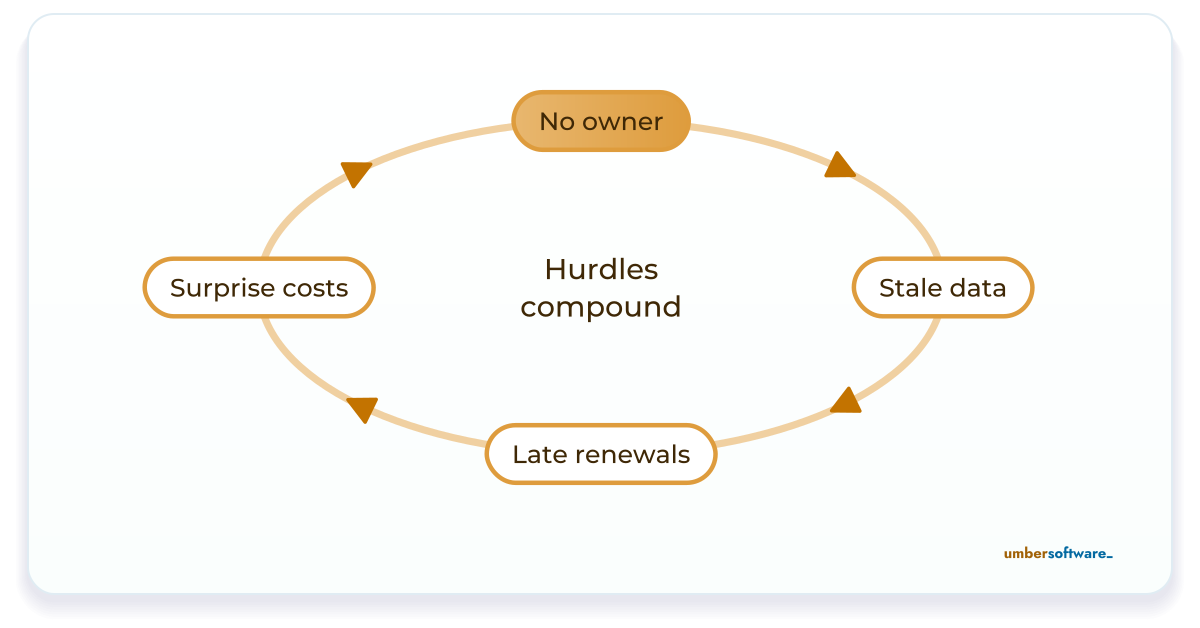
The lesson is that hurdles interact. A missing owner makes stale data worse, and stale data makes every renewal a gamble. Fixing the first one, cheaply, changes the odds on the others.
Which Hurdles to Tackle in Which Order
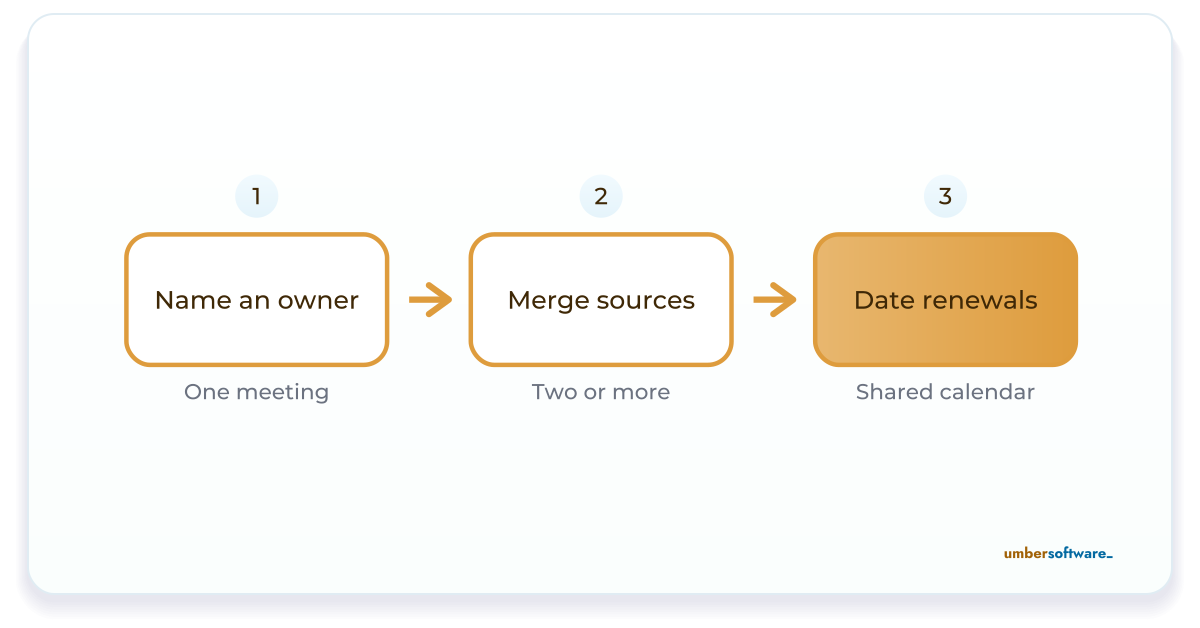
You do not need to fix all ten at once. Ownership comes first, because every other fix needs a person to carry it. Inventory and contracts come second, since they feed everything else. Renewals come third, because they turn the work into savings you can show.
The remaining hurdles are easier once those three work. Shadow IT shrinks when approvals are quick and you can see discovered tools. Audit anxiety fades when you know your own position. Reporting improves when you have savings to show. For a dated plan that follows this order, read the software asset management roadmap.
Many of these hurdles disappear when habits are in place. The companion list of software asset management best practices pairs each habit with the mistake it prevents.
The People Side of the Hurdles
Several of these challenges look technical and are really about behavior. People buy tools outside the process because the process is slow. They skip updating records because nobody reads them. They hide a gap because the last person who reported one was blamed. Culture decides how much of your data is honest.
I suggest you set three norms early. Report gaps as decisions, not mistakes. Give requesters a quick answer, even if it is no. Share savings with the teams that made them, for example by funding a tool they wanted. These norms cost nothing, and they make the data better than any scanner can.
Expect resistance in the first month. Department heads lose control over a few purchases, and some will complain. Hold steady, show the numbers and keep the approval path fast, so the new process feels like help and not like a new layer of control. After one or two renewals that go well, most of the complaints stop.
What Ignoring These Hurdles Costs
The cost shows up in three places. Waste is the easiest to measure: seats nobody uses, products nobody remembers and support paid on retired licenses. A mid-sized company with a dozen major vendors often finds that a noticeable share of annual software spend falls into that group.
Risk is the second place. An unknown shortfall on a core-based product can cost far more than the license would have cost to buy properly. The third is time: staff spend days answering a vendor's questions with data they have to build from scratch. All three shrink once the basics work, and the first quarter usually pays for the effort.
How to Choose Where to Get Help
Some of these hurdles you can fix alone. Others benefit from an outside view. Consider help when:
- A vendor has already sent an audit notice or a questionnaire.
- Core-based database or middleware products are in your contracts.
- The team has tried twice and the data never became trustworthy.
- Leadership needs an independent view of spend and risk.
Whatever you choose, make sure the outcome includes an owner, a process and a calendar, not only a report. Ask any outside reviewer how they will hand the work back to your team, and what your own people will be able to run on their own after the engagement ends.
Questions About Software Asset Management Challenges
Which Software Asset Management Challenge Is the Hardest?
Ownership. Technical problems have technical fixes, but a program without an accountable person does not survive. I put effort into that first with every client, because it shapes every other hurdle.
How Long Does It Take to Overcome These Challenges?
The first three to five usually ease within a quarter if you name an owner and clean the data. Others, such as shadow IT and executive buy-in, improve over six to twelve months as results become visible.
Do Small Companies Face the Same Challenges?
Yes, in a lighter form. A company with fifty people still has scattered contracts, card-paid tools and missed renewals. The fixes are simpler, but the causes are the same.
Can a Tool Solve These Challenges?
A tool helps with stale data, scattered records and renewal alerts. It does not fix ownership, approval speed or reporting. Compare options in my ranking of <a href="/software-asset-management-tools/">software asset management tools</a> once the process is clear.
Where Should I Start If All Ten Apply to Me?
Start with ownership, then inventory, then renewals. These three give the fastest visible result. The rest become easier once you have a trusted list of vendors and dates.
How Do I Deal with a Team That Resists the Process?
Show them what they gain: faster approvals, no surprise renewals and fewer license questions from vendors. Resistance often comes from a process that adds work without a benefit, so remove steps before you add rules.
How Do I Know the Challenges Are Improving?
Track recovered spend, renewals reviewed 120 days early and the share of vendors with a trusted inventory. When all three rise for two quarters in a row, the hurdles are under control.
Please note: this guide is general information and not legal, financial or tax advice. Numbers and examples are typical-project estimates; confirm current details with your providers and advisers.
Did this article help you?
Thanks, noted.
Whitney Sorensen
Whitney leads the Umber editorial team and works with the consultants to turn real client projects into practical guides on software selection, custom development, integration and legacy modernization. Before joining Umber, she spent years writing and editing for engineering and IT teams. She has since reviewed architecture audits, system selections and modernization plans from client projects across industries from manufacturing to healthcare. She works remotely from the USA.