Main Points
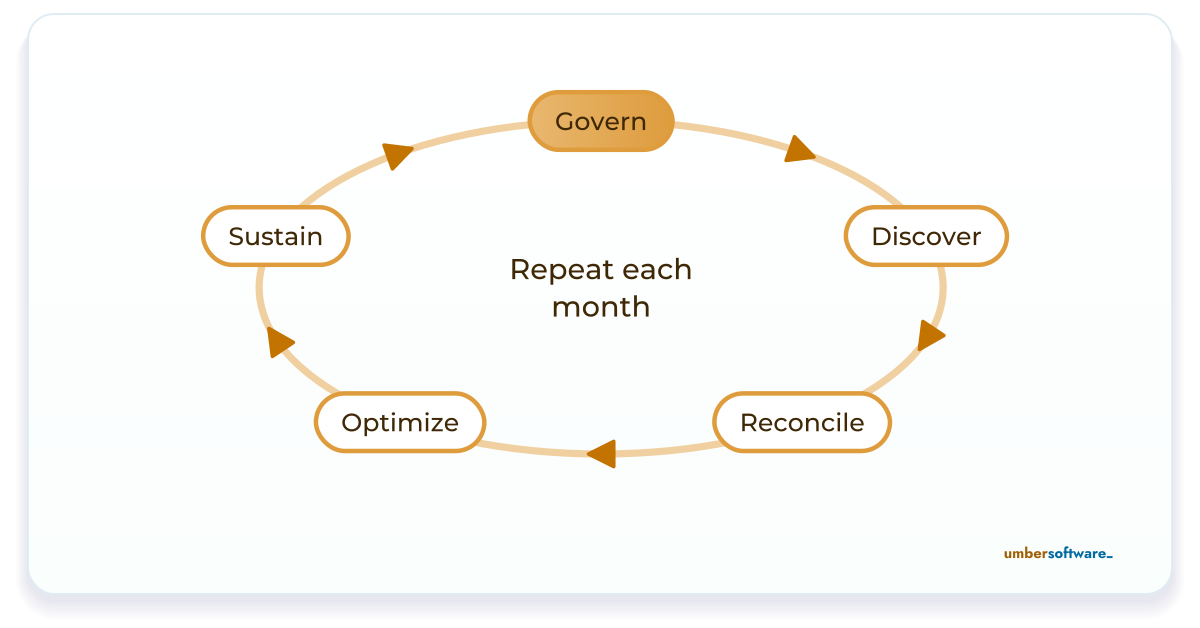
- The framework has five stages: govern, discover, reconcile, optimize and sustain.
- Four records must stay linked: inventory, entitlements, contracts and spend.
- Each stage ends with a decision gate, so you move on only when the data is trusted.
- A light version fits a small company in a spreadsheet and a monthly review.
Software asset management needs a model before it needs a tool. Without one, teams collect data in whatever order it appears and end up with an inventory nobody can reconcile. This framework is the version I use with clients, trimmed to the parts that matter for a mid-sized company.
It follows the structure of the software asset management consulting process: five stages, each with an owner, an output and a gate. You can use it as a one-time project or as a standing cycle that runs every quarter.
The Five Stages Compared
| Stage | Main question | Output | Decision gate |
|---|---|---|---|
| 1. Govern | Who owns software and what are the rules? | Owner, policy, vendor list | Scope signed by finance and IT |
| 2. Discover | What do we run or subscribe to? | Inventory from several sources | Inventory covers the vendor list |
| 3. Reconcile | What do we own, and where are the gaps? | Position per product | Assumptions written and reviewed |
| 4. Optimize | What should we cut, buy or change? | Savings and risk actions | Actions have owners and dates |
| 5. Sustain | How do we keep it accurate? | Monthly cycle, renewal calendar | Two clean cycles in a row |
The Four Records Behind Every Stage
The framework works because four records stay linked. The inventory says what exists. Entitlements say what you may use and under which metric. Contracts hold terms, dates and prices. Spend shows what you pay. When a product appears in one record and not in the others, you have found a gap.
Most programs fail by building one record well and ignoring the rest. A beautiful inventory without contracts tells you what you run but not whether you may run it. A contract list without an inventory tells you what you bought but not whether anyone uses it.
Stage 1: Govern
Start by deciding who owns software. Name a program owner, a finance contact and a technical contact. Write a one-page policy that covers who may buy software, how requests are approved and which tools are standard. Then choose the vendors in scope, ranked by spend and audit risk.
The gate is a signed scope. If finance and IT disagree on which vendors matter, the rest of the framework will argue about it later. This stage often takes a week and saves a month.
Stage 2: Discover
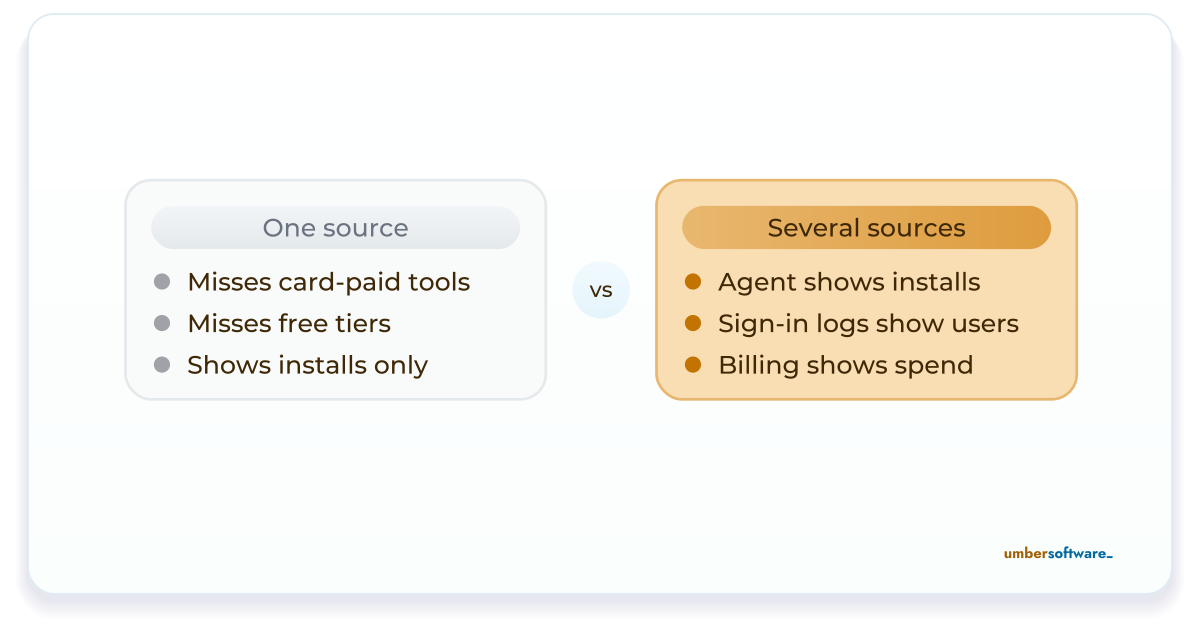
Build the inventory from more than one source. Device agents see installed desktop and server software. Single sign-on and admin consoles see cloud and SaaS. Billing and expense data catch purchases that skip both. Combine them in one table per vendor.
Differences between sources are information. A product found only in expense data is shadow IT. One found only on devices may be an old install that nobody uses. The gate is coverage: every vendor on your list has an inventory you could defend. The software asset management tools I rank automate much of this stage.
Stage 3: Reconcile
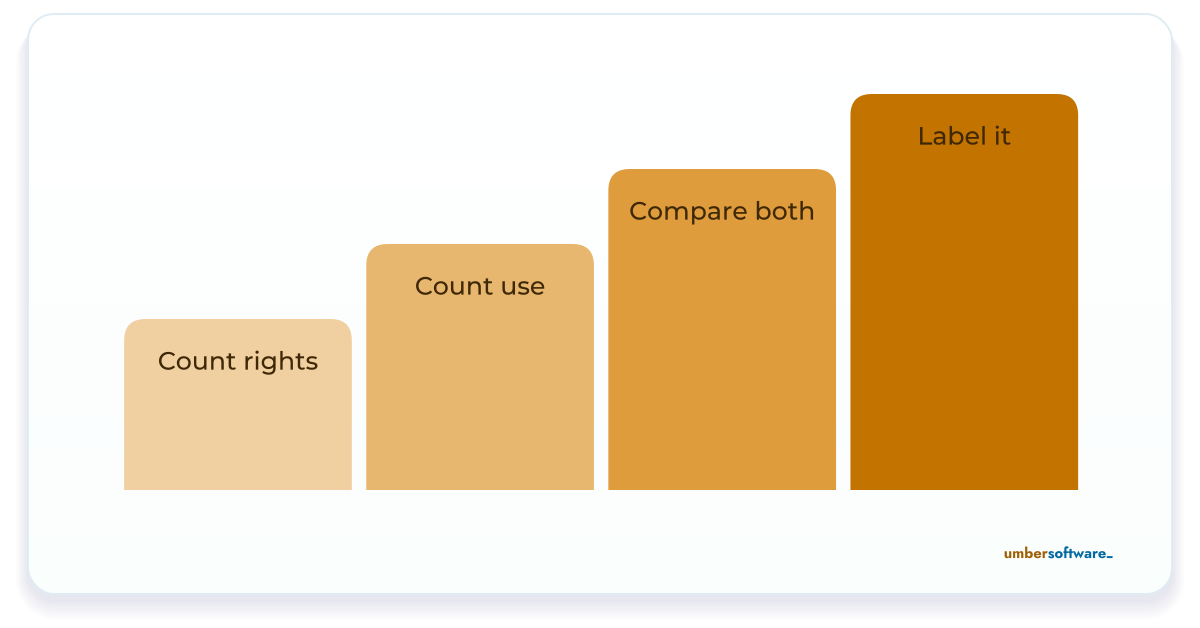
Compare inventory with entitlements using the metric in each contract. A per-user product needs a de-duplicated user count. A per-core product needs core counts from physical and virtual hosts. Record every assumption beside the number.
The output is a position per product: compliant, short or surplus, with the quantity and the cost. That position is what a vendor audit would test, so treat it as the most sensitive document in the program. The full method is in my guide to a software asset management audit.
Stage 4: Optimize
This stage turns positions into money and lower risk. For surplus, reduce seats at renewal, reassign licenses or cancel products. For shortfalls, remove installs, buy licenses or change the product. Rank actions by value and effort, and give each an owner and a date.
Negotiation sits here too. Better data gives you leverage: you can say how many seats you use and what you will drop. Pair it with a software contract negotiation checklist so you check terms such as price caps, audit rights and exit clauses before every renewal.
Stage 5: Sustain
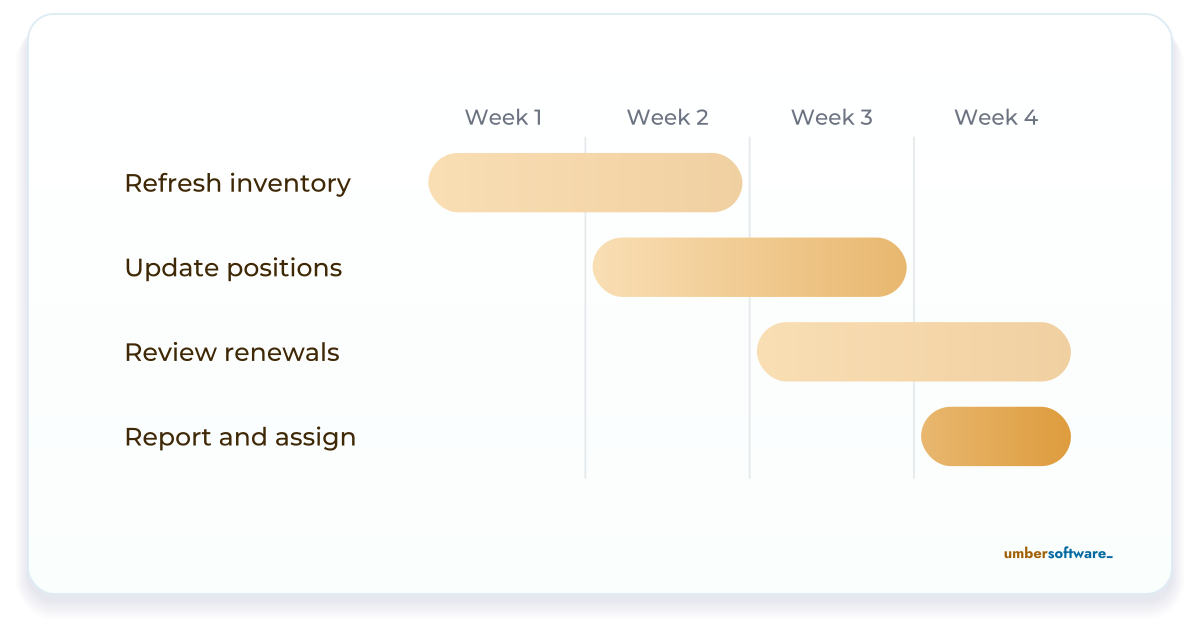
A single clean-up decays within a year. Sustain means a monthly cycle that refreshes inventory, updates positions and reviews the renewal calendar. Keep it short, one to two hours, and keep the same agenda each month.
The gate is two clean cycles in a row with no surprises. After that, move to quarterly reviews for stable vendors and keep monthly reviews for the largest ones. The habits behind this stage are collected in my list of software asset management best practices.
The Framework in Action at a Regional Logistics Company
A logistics company with 600 employees and three depots used the framework over one quarter. In the govern stage, the head of IT became owner, finance named a contact and both agreed on eight vendors. The policy was one page, and it said that any software over a small monthly amount needed an approval, answered within two days.
Discovery took two weeks. Device data covered the dispatch software and office tools. Identity data showed 47 SaaS products, of which eleven had no contract record. Expense data added six more. Reconciliation then showed three things: surplus seats on a collaboration suite, a shortfall on a routing product installed on spare laptops and a support fee on a database retired the year before.
Optimize closed all three. Seats were cut at renewal, the spare-laptop installs were removed and the support fee was cancelled. The savings covered the cost of the quarter's work, and the sustain stage kept the data current with a monthly one-hour review. The company did not change any tool during the quarter. It changed how it counted and who was accountable, and that was enough for a visible result.
What to Measure at Each Stage
A stage without a measure drifts. These are the numbers I ask clients to track, and each one needs only data you already have by then.
| Stage | Measure | Healthy sign |
|---|---|---|
| Govern | Share of spend with a named owner | Nearly all spend in scope has an owner |
| Discover | Vendors with a multi-source inventory | Every vendor in scope covered |
| Reconcile | Products with a written position | Positions reviewed by a second person |
| Optimize | Recovered spend and closed gaps per quarter | A rising line for two quarters |
| Sustain | Renewals reviewed 120 days early | No renewal handled in a hurry |
Roles and Responsibilities
Four roles cover most companies. The program owner runs the cycle and reports results. Procurement holds contracts and renewals. Finance validates spend and funds the savings plan. Technical owners supply inventory data and make changes, such as removing an install.
In smaller companies one person holds two roles, which is fine. What is not fine is a role with nobody in it. The most common empty seat is the contract owner, and it is why many programs find renewals too late. When roles are unclear, you meet the hurdles I describe in software asset management challenges.
Decision rights deserve a line of their own. Agree up front who may approve a new purchase, who may accept a compliance risk and who may sign a renewal. When these rights are written down, the monthly review takes minutes. When they are not, every open item turns into a meeting, and the meeting usually ends without a decision.
Finally, decide where the records live. One shared workspace with controlled access beats five personal folders. Limit edit rights to the owners, keep a change history and review access twice a year, so the data stays trustworthy when people join and leave.
A Light Version for Small Teams
If you have fifty people and a dozen vendors, you do not need workshops. Use one spreadsheet with a tab per record, a monthly one-hour review and a calendar for renewals. Keep the five stages as headings and walk through them once in a half-day session.
As you grow, add discovery automation first, because manual counting becomes the first thing that breaks. Add contract storage second. Leave advanced optimization for when your data is trusted for two cycles.
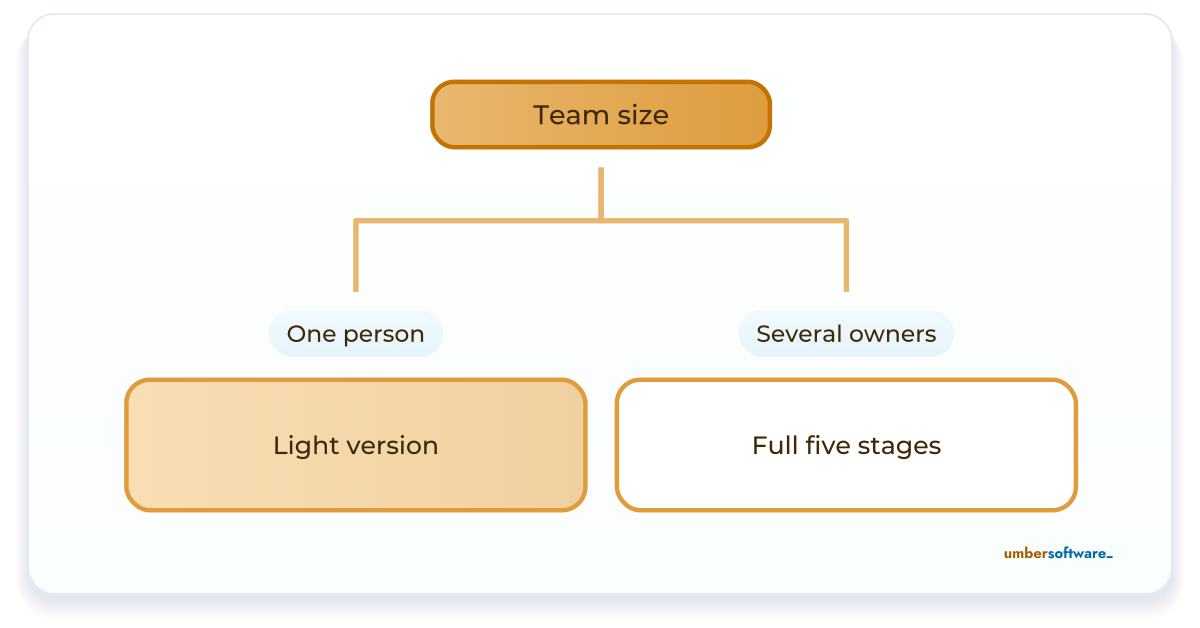
When you adapt the model, change the depth of each stage, not the order. Discovery before reconciliation and reconciliation before optimization is a sequence that holds in every company I have worked with. Skipping ahead produces savings claims that fall apart the first time a vendor or a finance partner asks how a number was calculated, and that damages trust in the whole program.
Putting the Framework on a Calendar
Stages one to three usually take six to ten weeks for the top ten vendors. Optimize begins as soon as the first position is reviewed, since savings do not need to wait for every vendor. Sustain starts in the third month. To place these stages on actual dates, use the software asset management roadmap, which spreads them over twelve months.
Resist the urge to add stages. I have seen frameworks with twelve steps that nobody finished. Five stages, run well, beat twelve run badly, and any stage that has no output is a candidate for deletion.
How to Choose the Right Depth for Your Company
Match the depth of the framework to your risk:
- Under 100 staff and few vendors: the light version in a spreadsheet.
- 200 to 2,000 staff or any audit history: the full five stages with discovery automation.
- Several business units, mergers or heavy database licensing: the full model plus outside review of the reconciliation stage.
Whatever depth you choose, protect the gates. Moving on with untrusted data is the shortcut that costs the most later.
Questions About the Software Asset Management Framework
What Is a Software Asset Management Framework?
It is the set of stages, roles and records that keeps your software inventory, contracts and spend connected. A framework tells you what to collect, who owns each piece, how often to compare them and what to do with the gaps.
Do I Need to Follow ISO/IEC 19770?
No. It is a useful reference, and larger organizations or those with customers who ask for it often use it. Most mid-sized companies get the value from a lighter model like the five stages here, then borrow from the standard where it fits.
How Many People Does the Framework Need?
One accountable owner plus part-time input from procurement, finance and the teams running your systems. A mid-sized company usually needs the owner for one to two days a week, mostly in the first six months.
How Is a Framework Different from a Tool?
A framework is the process and the roles. A tool automates parts of it, mainly discovery and reconciliation. Without the framework, a tool produces data nobody acts on, so set up the framework first or alongside the tool.
Where Do Cloud and SaaS Fit?
They use the same stages with different data sources. Discovery comes from identity, billing and admin consoles instead of device agents. The govern and optimize stages work the same way, and renewals matter even more.
How Do I Measure Whether the Framework Works?
Track four numbers: share of spend covered by a trusted inventory, number of renewals reviewed 120 days early, recovered spend per quarter and the count of open compliance gaps. Report each quarter, in money where possible.
Can a Small Company Use a Framework Like This?
Yes. With fifty employees and a dozen vendors, the five stages fit into a spreadsheet and a monthly one-hour review. The stages stay the same; only the amount of data changes.
Please note: this guide is general information and not legal, financial or tax advice. Numbers and examples are typical-project estimates; confirm current details with your providers and advisers.
Did this article help you?
Thanks, noted.
Whitney Sorensen
Whitney leads the Umber editorial team and works with the consultants to turn real client projects into practical guides on software selection, custom development, integration and legacy modernization. Before joining Umber, she spent years writing and editing for engineering and IT teams. She has since reviewed architecture audits, system selections and modernization plans from client projects across industries from manufacturing to healthcare. She works remotely from the USA.