Main Points
- The plan has four phases: foundation, visibility, optimization and automation.
- Month one is about an owner, a vendor list and a renewal calendar, not a tool.
- Buy a tool after month three, when you know what data you have.
- Each phase ends with a result you can show leadership in money or dates.
A roadmap turns good intentions into dates. Most software asset management programs begin with energy and then fade because nobody agreed what comes first. The plan below is the order I use with clients, stretched over twelve months so a part-time team can follow it.
If you want help adapting the plan to your vendors, software asset management consulting begins with exactly that. The plan is also the practical companion to my software asset management framework, which explains the stages behind it.
The 12 Months at a Glance
| Phase | Months | Main work | Result you can show |
|---|---|---|---|
| 1. Foundation | 1 to 3 | Owner, policy, vendor list, contracts, renewal calendar | Top ten vendors documented, renewals dated |
| 2. Visibility | 4 to 6 | Discovery from several sources, first reconciliation | A position for each top vendor |
| 3. Optimization | 7 to 9 | Seat cuts, shortfall fixes, negotiation | Recovered spend in money |
| 4. Automation | 10 to 12 | Tool rollout, monthly cycle, yearly audit plan | A cycle that runs without heroics |
Months 1 to 3: Foundation
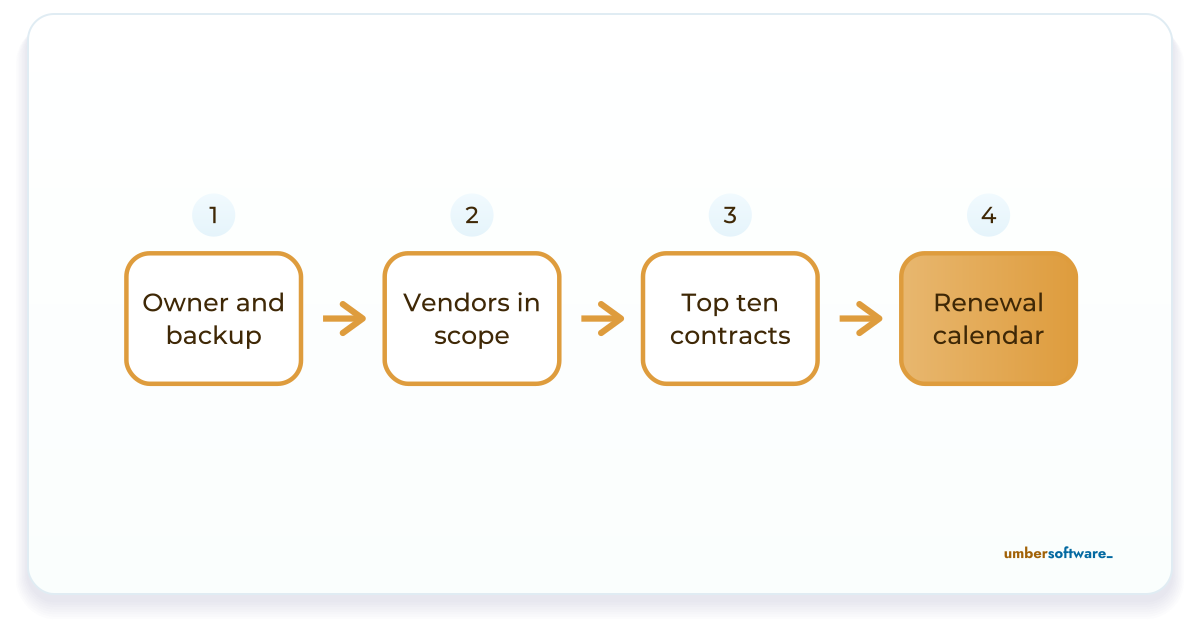
The first month has four jobs. Name the program owner and a backup. Agree with finance on the vendors in scope, ranked by spend and audit risk. Collect contracts and order forms for the top ten. Put every renewal and notice date into a shared calendar.
Months two and three add the policy and the intake. Write a one-page rule for who may buy software, how approvals work and what counts as a standard tool. Set a two-day answer time for requests, so people use the process. The best habits to start with are listed in my guide to software asset management best practices.
Months 4 to 6: Visibility
Now you build the inventory. Combine device data, identity and sign-on logs, billing and expense data. Remove leavers and retired devices, then compare the result with entitlements for each of the top ten vendors. Record the license metric and your assumptions for every product.
By the end of month six, each top vendor should have a written position: compliant, short or surplus, with a quantity and a cost. This is the point to decide about a tool, because you now know what data you hold and what you are missing. The steps behind this work are described in my guide to a software asset management audit.
Months 7 to 9: Optimization
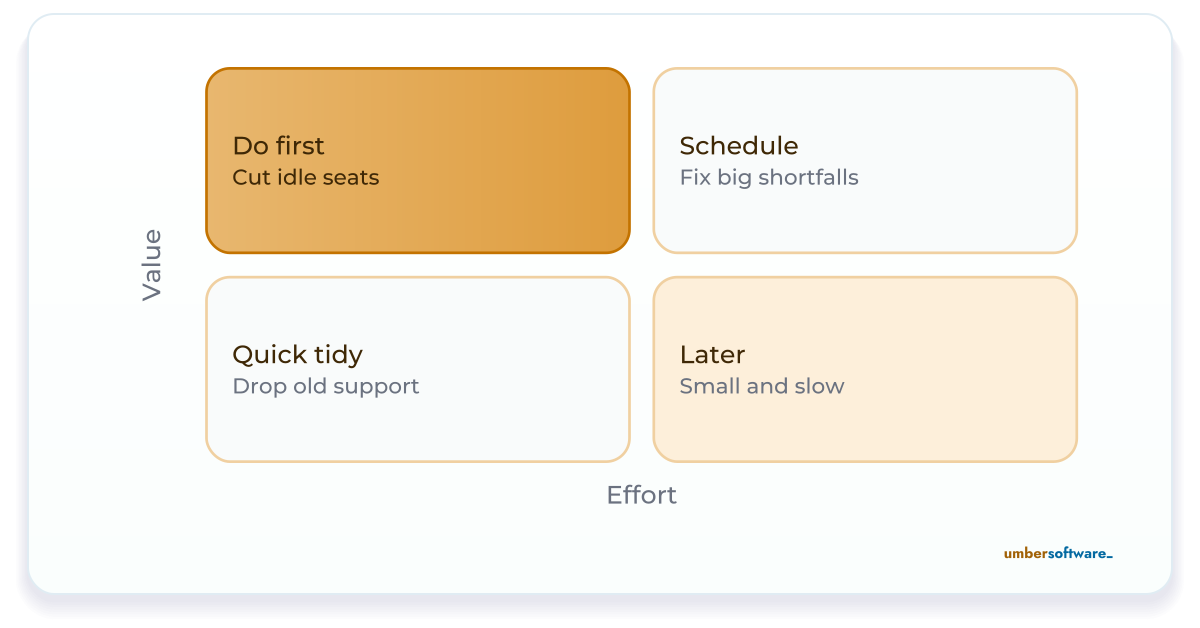
Savings come from this phase. Reduce seats at the next renewals, cancel idle products, drop support on retired licenses and fix shortfalls in the cheapest way: remove installs, buy only what you need or change the product. Rank every action by value and effort and assign it to a named person.
Negotiation becomes realistic now, since you can say how many seats you use. Prepare each talk with a checklist, and my software contract negotiation checklist covers the terms to review. Report the first recovered spend at the end of month nine, even if it is small. A small number with a method behind it earns more trust than a large estimate.
Months 10 to 12: Automation
With clean data and two quarters of habits, a tool pays off. Choose one that matches your biggest risk and load it with data you already trust. My comparison of software asset management tools helps you narrow the list to two or three demos.
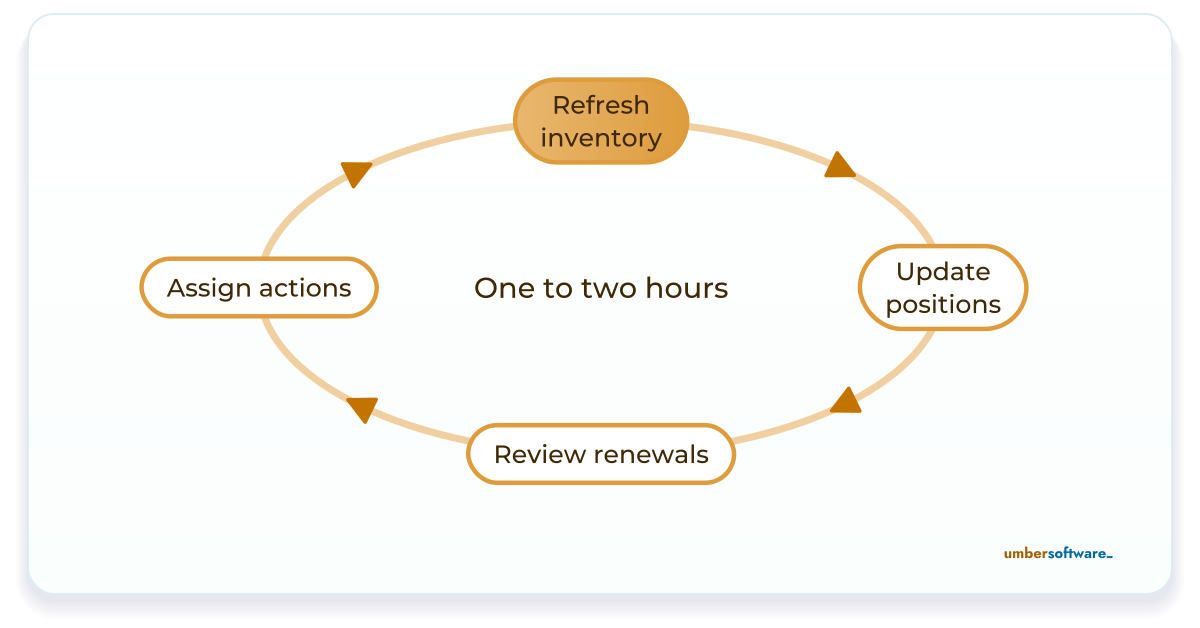
At the same time, fix the monthly cycle: refresh inventory, update positions, review renewals, assign actions. Keep it to one to two hours. Plan the first yearly internal audit and put it in the calendar. By month twelve, the program should run without extra effort from the owner.
What the Plan Asks of Your Team
Effort is lumpy. The owner carries most of it in the first six months, and finance and procurement join for specific tasks. Technical teams give time when exports are needed and when installs have to be removed. Plan for these asks in advance, so nobody is surprised.
| Role | Months 1 to 6 | Months 7 to 12 | Main tasks |
|---|---|---|---|
| Program owner | 1 to 2 days a week | About half a day a week | Cycle, reporting, decisions |
| Procurement | A few hours a month | A few hours a month | Contracts, renewals, negotiation |
| Finance | One hour a month | One hour a month | Spend validation, savings tracking |
| Technical owners | Short bursts for exports | Short bursts for removals | Inventory, install changes |
Hours are estimates for a mid-sized company, and they vary with how many business units and plants you run. If your owner has less than a day a week, extend the plan to eighteen months instead of squeezing the same work into less time.
What to Report at the End of Each Quarter
A short quarterly note keeps leadership behind the plan. Keep the same four items each time so readers learn to scan them: spend recovered, exposure still open, renewals coming in the next six months and the main milestone for the next quarter. Use money and dates, never counts alone.
In the first quarter you will have no savings to report, and that is normal. Report the contracts collected, the renewals found and the owner named. Leaders accept a quiet first quarter when the milestones are clear and the next one has a date attached.
Be open about delays. A note that says phase two moved by a month, with the reason, builds more credibility than one that glosses over it. Programs that hide slippage lose their sponsors the first time a number does not match.
Where Roadmaps Slip and How to Absorb It
Roadmaps rarely run to schedule. Contracts take longer to find than anyone expects, owners get pulled onto other projects and a merger can add a hundred products overnight. Plan for roughly a month of slack in phase one and another in phase two.
The usual causes of delay are listed in my article on software asset management challenges. When a milestone slips, cut scope, not quality. Move the vendors with the smallest spend to the next quarter and keep the large ones on schedule. A roadmap that keeps its largest contracts on track still delivers most of the value.
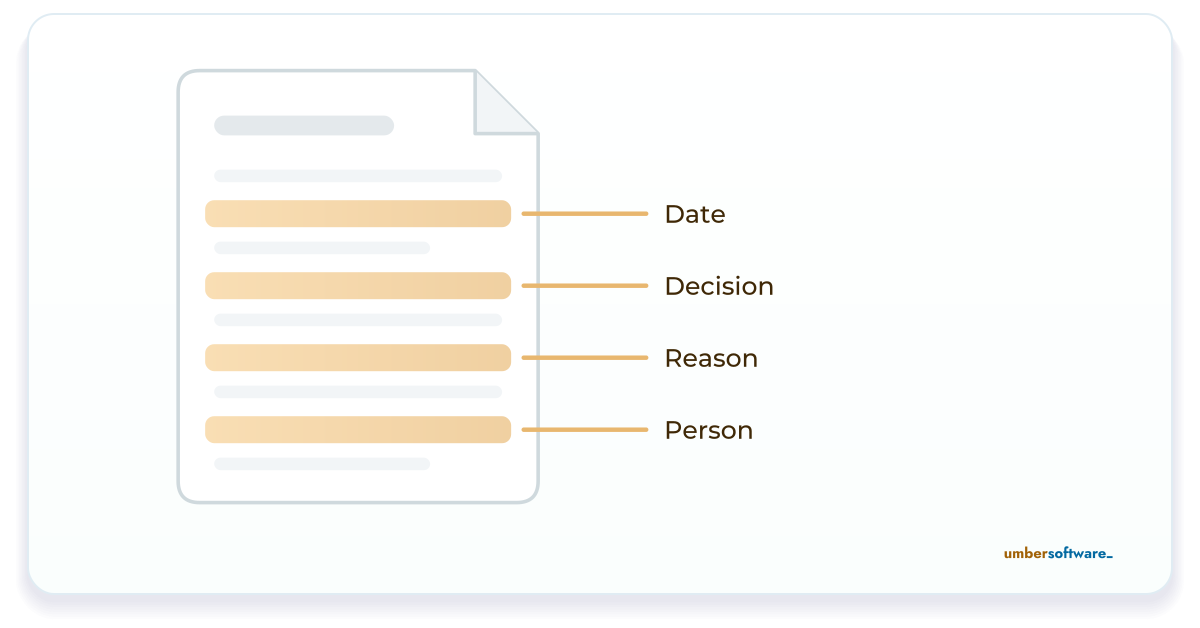
Keep a short decision log through all four phases. Each entry needs a date, the decision, the reason and the person who made it. When a vendor asks why a number changed, or a new owner takes over in month nine, the log answers the question in minutes. It also stops the same debate from restarting every quarter, which is a quiet drain on small teams.
A Realistic Example: A 500-Person Manufacturer
A manufacturer with 500 employees started in January with no owner and 14 contracts in three locations. The head of IT took the job at one day a week. By March, nine contracts were in one folder, and the renewal calendar showed four renewals in the next five months. One of them, a design suite, had a notice date six weeks away.
That first catch paid for the quarter. Usage data showed 38 of 140 seats unused, and the renewal was negotiated down. By June, discovery had found 22 SaaS products without a contract. In September, the team cut seats on three products and cancelled two. In November, it chose a mid-priced tool. The year ended with a monthly review that took ninety minutes.
The plan did not run perfectly, and the owner said later that the monthly review was the habit that made the biggest difference. Phase two took two months longer because a plant had its own purchasing. Slack in the plan absorbed it. The result at month twelve was a trusted inventory for the top vendors, a calendar with every renewal and a plan for the yearly audit.
Buying the Tool at the Right Moment
Tool timing deserves its own note, because it is where roadmaps most often go wrong. A tool in month one has nothing to work with. A tool in month ten has a clean base and a team that knows what it wants from the product. The extra six months of manual work are not wasted. They teach you which data sources you trust and which reports you will actually read.
When you do buy, write the shortlist criteria from the gaps you found. If your problem is installed software with strict publisher rules, you need entitlement logic. If it is SaaS sprawl, you need discovery from sign-on and billing data. Ask each vendor to load a sample of your own data in the demo, and judge the result on your numbers, not on their showcase.
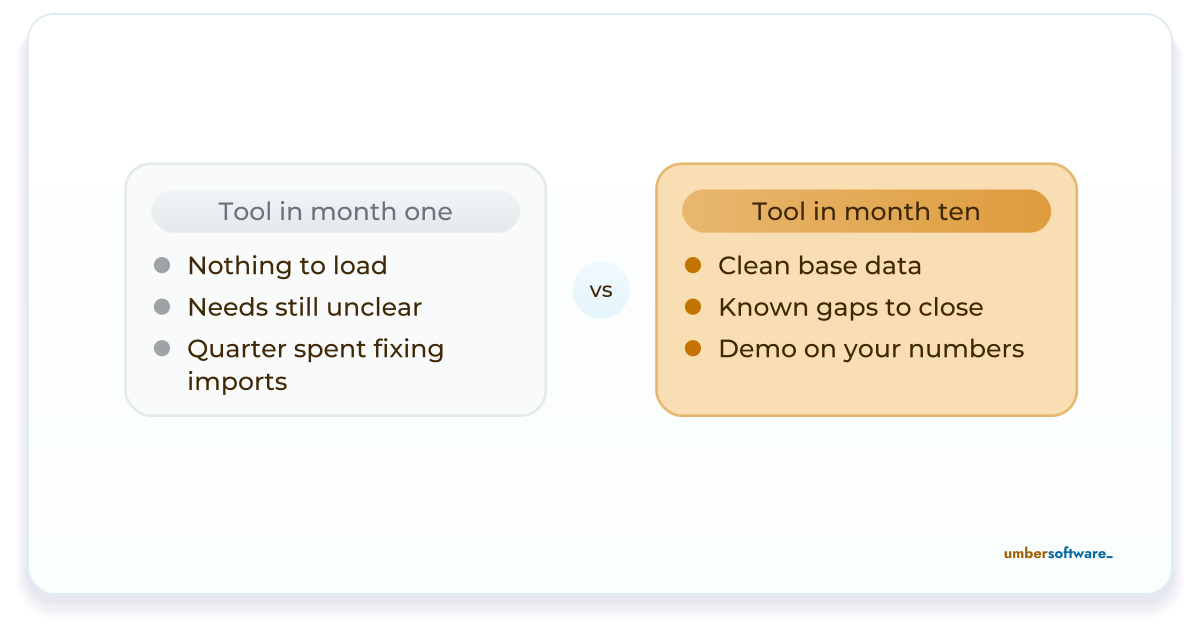
Finally, plan the rollout as a small project of its own: a pilot with two vendors, a review after four weeks and a decision on the rest. Teams that switch everything on at once usually spend their first quarter fixing imports instead of finding savings.
Choosing Your First Step
Not every company starts at month one. Adjust the entry point to what you already have:
- No owner and no contract list: start at month one and follow the plan in order.
- Contracts in one place but no inventory: begin at phase two and add the renewal calendar now.
- A tool already in place with poor data: spend the first quarter on data and owners, not on new features.
- A vendor audit notice: reorder the plan so that vendor comes first.
Whatever the entry point, keep the order of the phases. Visibility comes before optimization and optimization before automation.
Questions About the Software Asset Management Roadmap
Can I Finish a Software Asset Management Roadmap in Less than 12 Months?
A small company with a dozen vendors can reach a stable cycle in four to six months. Twelve months is realistic for a mid-sized company with several business units, because contract hunting and data clean-up take longer than expected.
What Should Be Done in the First 30 Days?
Name the owner, agree on the vendor list, collect the contracts for the top ten vendors and put every renewal date into a calendar. Those four steps cost little and prevent the most expensive surprises.
When Should I Buy a Tool?
After month three, when you know which data you have and what is missing. Buying earlier risks loading poor data into an expensive platform. Run a manual pass first, then pick the tool that fits the gaps.
What Budget Does the Roadmap Need?
The main cost is staff time: roughly one to two days a week for the owner in the first six months, plus part-time input from procurement, finance and IT. Tool and outside help come on top, and the first renewals saved usually cover them.
What If a Vendor Audit Arrives Mid-Roadmap?
Pause the schedule for the audited vendor and put that vendor first. Your discovery and reconciliation work for it becomes your response material. The rest of the roadmap continues in parallel.
How Do I Show Progress to Leadership?
Report recovered spend, open exposure and renewals reviewed early at the end of each quarter. Add a short note on what changes next quarter. Money and dates make the roadmap easy to defend.
What Happens After Month Twelve?
You move to a steady cycle: monthly reviews for the largest vendors, quarterly for the rest, and a yearly internal audit. New vendors join the program as they are bought, not later.
Please note: this guide is general information and not legal, financial or tax advice. Numbers and examples are typical-project estimates; confirm current details with your providers and advisers.
Did this article help you?
Thanks, noted.
Whitney Sorensen
Whitney leads the Umber editorial team and works with the consultants to turn real client projects into practical guides on software selection, custom development, integration and legacy modernization. Before joining Umber, she spent years writing and editing for engineering and IT teams. She has since reviewed architecture audits, system selections and modernization plans from client projects across industries from manufacturing to healthcare. She works remotely from the USA.